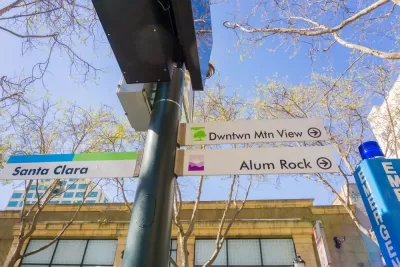
Strapped for cash and faced with rapidly declining ridership, the Valley Transportation Authority (VTA) is reorganizing its service in the hopes of stopping the bleeding.


[Updated 5/8/2017]
Gary Richards reports from the South Bay Area:
Faced with a $21.4 *million operating shortfall and a staggering loss of riders, the Valley Transportation Authority on Thursday is expected to approve major changes to its bus and light rail routes, focusing on more service on San Jose’s east side and downtown and reducing its reach in outlying areas like Gilroy and the west valley.
The article includes a rundown of the various causes of VTA's woes, from low gas prices, to delayed transit services, and cannibalization of transit ridership by transportation network companies like Uber and Lyft. All those anti-transit forces are succeeding despite a robust economy and the worsening congestion that results.
For more info on the details of the changes to VTA service, see an announcement requesting public comment on the Transit Service Redesign Draft Plan, as released in January 2017, along with previous articles for the Mercury News by Julia Baum in March and Gary Richards in January.
[The story was corrected to state the correct dollar total for the agency's operating shortfall.]
Read the full story: VTA to approve massive transit changes
Change of Plans: Transit Funding Priorities Shift in the Silicon Valley
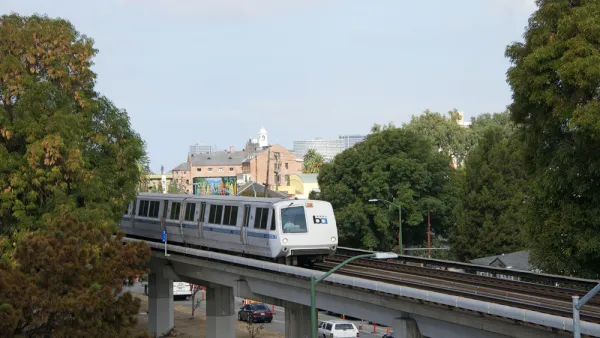
Santa Clara County cities rebel against the agency's proposed plan to spend most of the Measure B funds on a Silicon Valley BART extension.
Financial Woes at Santa Clara Valley Transportation Authority
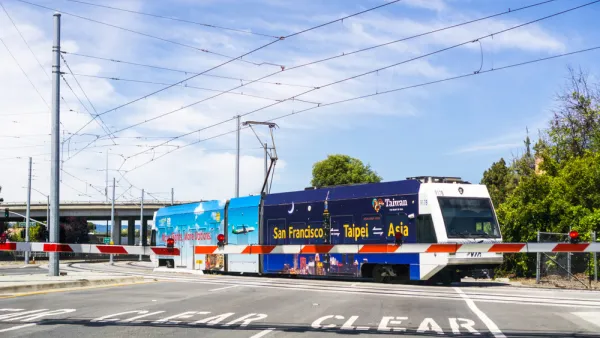
A $25 million operating deficit will inspire some soul searching, and structural changes.
Speeding Up Trains and Improving Traffic Safety in San Jose
At-grade light rail has a hard time safely and efficiently traversing Downtown San Jose on Second Street. A new pilot project will look to improve the situation.

Planetizen Federal Action Tracker
A weekly monitor of how Trump’s orders and actions are impacting planners and planning in America.

Eastern Nebraska is running out of electricity
Data centers and electrification are straining eastern Nebraska’s grid, throttling economic development.

Study reveals best places in the U.S. for cycling, walking
New research from Streetlight Data examines bicycle and pedestrian miles per capita in the 100 largest U.S. cities by population.

San Antonio is using environmental review to stall ICE detention center
San Antonio sued last month to pause work on the new detention center until the federal government studied its effect on the surrounding area.

Austin plans light rail extension — before breaking ground on light rail
The planned extension is three miles long and will take riders straight to Austin-Bergstrom International Airport.

Chicago cuts ribbon on $300,000, self-cleaning public toilet
The public toilet is the city’s first, and may pave the way for a rollout of similar facilities.

FREE Course: Walkable City 1: Why Walkability?
After describing his path towards focusing on walkability as the essence of good planning, Jeff Speck marches through his five principal reasons for making more walkable places.
Reinventing Malls: Planning Alchemy—Turning Gray Fields Into Gold
The course focuses on the opportunities and imperatives that shape reinvention of mall sites.

City of Charlotte
City of Rosemead
Rutgers University, Edward J. Bloustein School of Planning and Public Policy
University of Michigan School for Environment and Sustainability (SEAS)
Hunter College, City University of New York (CUNY)
The Architects Foundation
City of Cambridge
The Pocatello Development Authority
The Urban Renewal Agency of the City of Pocatello