A research study has found that increasing house sizes in the Los Angeles area have drastically reduced the number of trees shading the region's landscapes—regardless of geographic location of socioeconomic status.


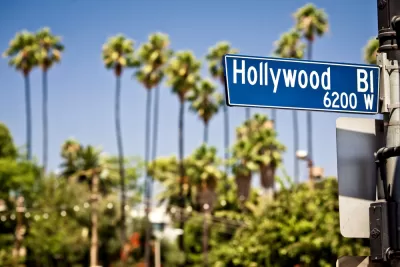
Researchers with the USC Spatial Sciences Institute, led by Su Jin Lee, Professor Travis Longcore, Catherin Rich, and John P. Wilson have published a study finding that green cover for single-family home lots declined anywhere from 14 to 55 percent the Los Angeles area, with almost no single area spared from decline.
The study was published in the journal Urban Forestry & Urban Greening and announced in a press release on EurekaAlert.
As noted in the study, much of the "de-greening" of Los Angeles occurred as the city implemented a "Million Trees" campaign. The researchers began by taking an inventory of single-family parcels in the largest 20 largest cities in the Los Angeles basin, starting with the parcels that had added square footage to the home since 2007.
Baldwin Park led all areas in reduction, seeing a 55 percent loss of green cover on single-family residential lots in the mere span of nine years.
Other areas in the study that had at least 20 percent loss in cover included Pomona, Downey, Sylmar, Compton, and San Pedro/Port of Los Angeles.
The study noted one prominent exception: Pasadena, which maintained its verdant condition.
"[Study author] Longcore believes changing social views on the preferred size of single-family homes is the largest driver of tree cover loss, along with the increase in paved surfaces like walkways, driveways and swimming pools that come with home expansion," according to the press release.
Read the full story: When single-family homes killed L.A.'s urban forest

LA’s Tree Canopy is Nearing a ‘Point of Failure’
Calls to 311 for “tree emergencies” are rising, endangering a resource that helps bring down urban temperatures and reduce air pollution.
LA’s Tree Emergency Goes Beyond Vandalism
After a vandal destroyed dozens of downtown LA trees, Mayor Karen Bass vowed to replace them. Days later, she slashed the city’s tree budget.
Updating LA’s Tree Rules Could Bring More Shade to Underserved Neighborhoods
A new USC study finds that relaxing Los Angeles’ outdated tree planting guidelines could significantly expand urban tree canopy and reduce shade disparities in lower-income neighborhoods, though infrastructure investments are also needed.

Planetizen Federal Action Tracker
A weekly monitor of how Trump’s orders and actions are impacting planners and planning in America.

Amtrak, CN end decades-long dispute with eight-year agreement
The new operating agreement establishes an updated framework for the companies to work together, including processes to resolve disputes.

Judges permit Denver to divert 77,000 acre feet from the Colorado River for reservoir expansion
Overuse and climate change have caused the Colorado River’s water levels to plummet.

NYC DOT wants faster, more permanent street upgrades
The city is examining ways to build more concrete infrastructure without getting entangled in 'decades-long' projects.

'Something we’ve never seen before:' rising utility rates could strain city finances nationwide
Data centers, climate change and other factors have caused utility rates in the United States to increase by 38% since 2020.

Trump to overrule local leaders, lease millions of acres of America’s Pacific Island territories’ seafloors to mining companies
International law says that the Indigenous people of America’s territories have a right to prior and informed consent regarding projects that impact their countries.

FREE Course: Walkable City 1: Why Walkability?
After describing his path towards focusing on walkability as the essence of good planning, Jeff Speck marches through his five principal reasons for making more walkable places.
Reinventing Malls: Planning Alchemy—Turning Gray Fields Into Gold
The course focuses on the opportunities and imperatives that shape reinvention of mall sites.

Harvard University Graduate School of Design
KFH Group Inc.
Greater Baltimore Committee
The Architects Foundation
University of Cincinnati Online
The Pocatello Development Authority
The Urban Renewal Agency of the City of Pocatello