Gondolas seem to find their way into the public transit investment conversation again and again over the years, taking up space and air that could be devoted to more substantive issues of investment, maintenance, and operation.


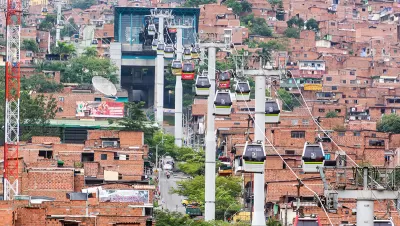
Angie Schmitt collects evidence from around the country to argue that gondola proposals in the United States "have mainly served as a distraction from bigger problems facing urban transit systems."
Exhibit A: Washington, D.C., where Arlington County recently pulled out of a proposed gondola project that would cross the Potomac River. Schmitt links to examples of gondola proposals in Austin and Cleveland as well. To explain why gondola proposals get so much traction in the media, while never getting off the ground, Schmitt has this to say:
Projects like these have a certain appeal to media outlets. They’re new! They’re flashy! But too many cities are wasting too much time and money on gimmicky distractions instead of the meat and potatoes of running a functional transit system.
Read the full story: Enough With the Gondolamania Already

BRT Boom in U.S.
A new study says that Los Angeles, Cleveland, Las Vegas, Eugene and Pittsburgh are leading the surge with the best bus rapid transit (BRT) systems in the nation.

Learning loss and urban schools, part 2
Did test scores in progressive cities drop more post-COVID than test scores in moderate ones?
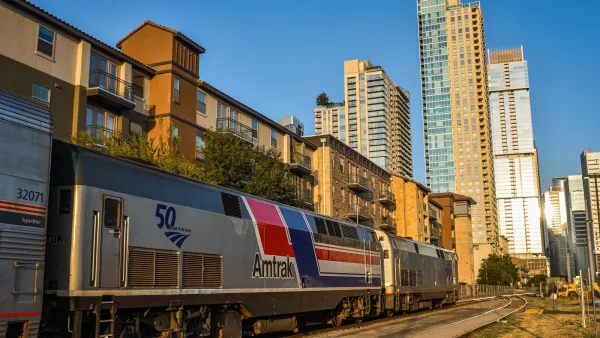
Texas DOT report outlines options for commuter rail between Austin and San Antonio
Amtrak currently operates just one trip per day between the two cities.

Planetizen Federal Action Tracker
A weekly monitor of how Trump’s orders and actions are impacting planners and planning in America.

California plans to bury El Niño’s downpour
If the state plays its cards right, it may be able to store a billion acre-feet of El Niño’s water in aquifers.

Chicago breaks ground on $3 billion megadevelopment
The new neighborhood, titled Foundry Park, will one day host 3,700 residences.

California High-Speed Rail Authority CEO resigns after $600,000 scandal
Under Ian Choudri, the authority used taxpayer dollars to fund first class flights and trips to nightclubs.

Want to study the Missouri River? Soon, you may need unanimous approval from 10 states
Legislation would require 10 governors’ permission to study or build projects moving water outside the basin.

Desperate measures: Advocates weigh draining Lake Powell to fill Colorado River
Draining the reservoir could reduce evaporation losses by a couple hundred thousand acre-feet.

FREE Course: Walkable City 1: Why Walkability?
After describing his path towards focusing on walkability as the essence of good planning, Jeff Speck marches through his five principal reasons for making more walkable places.
Reinventing Malls: Planning Alchemy—Turning Gray Fields Into Gold
The course focuses on the opportunities and imperatives that shape reinvention of mall sites.

City of Rosemead
Rutgers University, Edward J. Bloustein School of Planning and Public Policy
One Hundred Miles
Hunter College, City University of New York (CUNY)
The Architects Foundation
University of Cincinnati Online
City of Cambridge
Montrose County
The Pocatello Development Authority