A planning consultant hired by FirstEnergy is putting out the first speculative ideas for the future of a contaminated lakefront site of a most demolished power plant.


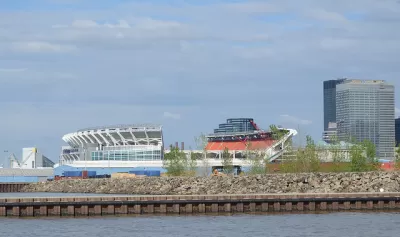
"The contaminated site of the largely demolished FirstEnergy lakefront power plant at East 72nd Street could become a park, or it could host housing, commercial and institutional development, a creative zone for small-scale innovators, or a food production center," reports Steven Litt, sharing the details of a presentation by planning firm CRTKL to the St. Clair Superior Development Corp. in late March.
The recent meeting was the second of the year, "in a fast-moving process" aimed at providing guidance to FirtEnergy and the city for the future of the site. "FirstEnergy is paying for the study to satisfy part of an agreement under which the city allowed it to demolish the former coal-fired plant and to prepare for its eventual sale," reports Litt.
The article includes a lot more detail about the planning study and outreach process so far, the political situation (including the opinions of a group of local advocates called the Green Ribbon Coalition), and the environmental concerns about the site.
Read the full story: FirstEnergy lakefront site could host parks, housing, gardens and more, planner says
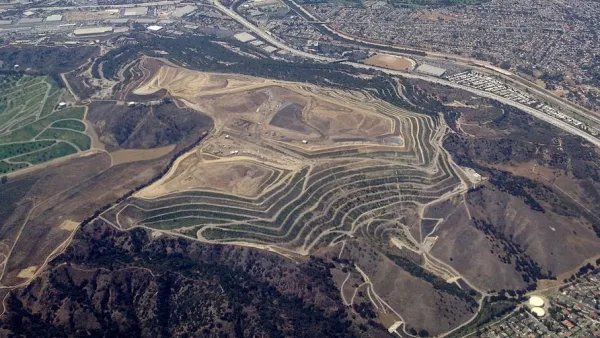
Creating a New Regional Park by Restoring Degraded Lands
Los Angeles County is transforming 142 acres of the Puente Hills Landfill into parkland, creating the first new regional park in the county in over 35 years. The recently released concept plan and renderings show what the park will look like.
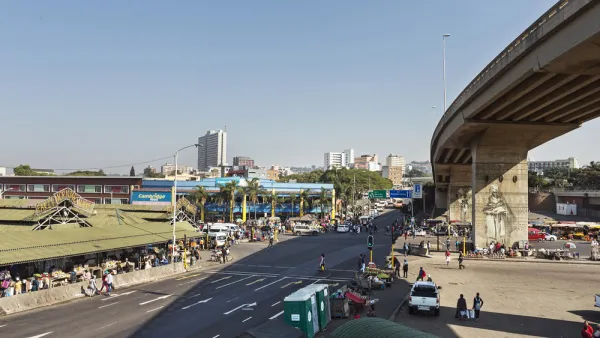
6 International Models of Urban Revitalization
The New York Times recently published an article exploring six cities from around the world reinventing themselves for the 21st century: Paris, Sydney, Medellin, Lisbon, Singapore, and Durban.
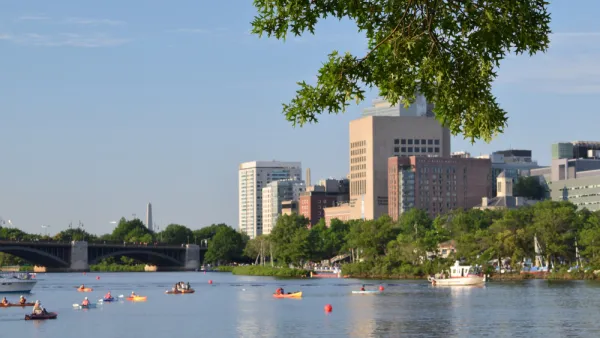
Urban Rivers Everywhere Follow the Cuyahoga's Lead
On the 50th anniversary of the Cuyahoga River catching fire in Cleveland, it's a good time for urban river keepers everywhere to reevaluate their work and redouble their efforts to make safe and healthy rivers for everyone.

Planetizen Federal Action Tracker
A weekly monitor of how Trump’s orders and actions are impacting planners and planning in America.

California plans to bury El Niño’s downpour
If the state plays its cards right, it may be able to store a billion acre-feet of El Niño’s water in aquifers.

Desperate measures: Advocates weigh draining Lake Powell to fill Colorado River
Draining the reservoir could reduce evaporation losses by a couple hundred thousand acre-feet.

Mamdani’s pied-à-terre tax survives legal challenge
A panel of judges found that the plaintiffs failed to demonstrate injury as a result of New York City's implementation of the tax.

Eastern Nebraska is running out of electricity
Data centers and electrification are straining eastern Nebraska’s grid, throttling economic development.

Seattle passes record-breaking transit services expansion
Proposition 1 will double the city’s transit tax to add 95,000 more bus trips and preserve 180,000 bus trips annually.

FREE Course: Walkable City 1: Why Walkability?
After describing his path towards focusing on walkability as the essence of good planning, Jeff Speck marches through his five principal reasons for making more walkable places.
Reinventing Malls: Planning Alchemy—Turning Gray Fields Into Gold
The course focuses on the opportunities and imperatives that shape reinvention of mall sites.

City of Rosemead
Rutgers University, Edward J. Bloustein School of Planning and Public Policy
One Hundred Miles
University of Michigan School for Environment and Sustainability (SEAS)
Hunter College, City University of New York (CUNY)
The Architects Foundation
City of Cambridge
Montrose County
The Pocatello Development Authority