When the newest section is complete, the Grand Parkway will connect I-69 southwest of Sugar Land, Cinco Ranch and Cypress, unincorporated Harris County and Spring, and Harris, Montgomery, Liberty, and Chambers counties.


Dug Begley reports that 44 miles of the northeast segment of Houston's Grand Parkway is ready to move from the drawing board to construction.
The Texas Transportation Commission on Tuesday chose Grand Parkway Infrastructure – a joint venture of road builders Ferrovial Agroman US, Granite Construction Co. and Webber, LLC – as the team to design and build the upcoming stretch from Interstate 69 near New Caney, also U.S. 59 in the Houston area, to Interstate 10 east of Baytown.
The project was recently scaled back as growth along the route has slowed. Previously the plan called for two toll lanes in each direction. "The project now includes a single lane in each direction, with sections where a second lane in each direction will allow for passing," report Begley. The tollway could still; be expanded if growth and traffic picks up, according to officials.
Begley also reports on that other critical concern: how much the tollway will cost drivers to drive. The entire new 44-mile section will cost $10.17 to drive when it opens in Spring 2022. That might seem like a high price, but the already constructed sections of the Grand Parkway tollway handled 10.1 million transactions in the most recent month with available data, so the price has yet to scare away demand.
Make sure to click through the slideshow at the top of the article to check out graphics created by the Houston Chronicle to give perspective on the size of the loop created by the Grand Parkway: the Parkway route is superimposed on famous locations like Rome, Italy; Washington, D.C.; and all of Jamaica.
Read the full story: Texas officials advance next sections of Grand Parkway

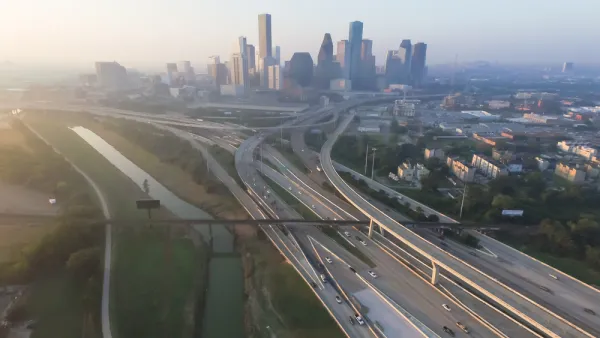
Environmental Study Released for $7 Billion Houston Highway Project
The final environmental impact statement for the controversial North Houston Highway Improvement Project is available for public comment, courtesy of the Texas Department of Transportation.
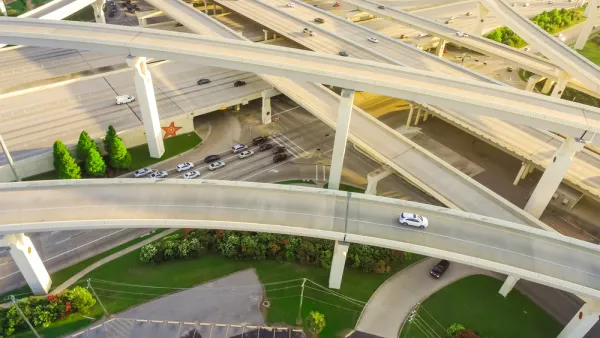
Local Officials Deal With Fallout of State's Decision on Toll Roads
Texas state legislators are holding to a promise not to spend voter-approved transportation funds on new toll roads. Local officials are scrambling.
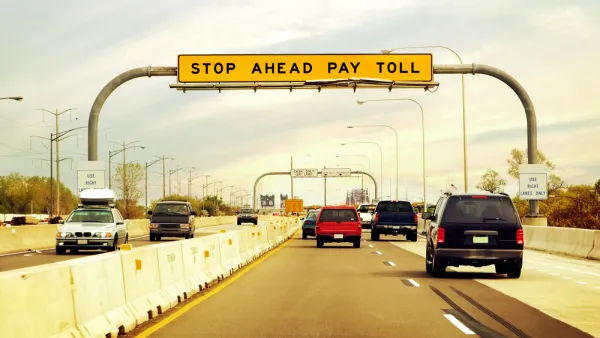
Texas Would Need $24 Billion to End Highway Tolls
Texas politicians are wondering how much it would cost to remove tolls from hundreds of miles of roads around the state. Though the political cost of tolling is high, the actual cost, it turns out, is higher.

Planetizen Federal Action Tracker
A weekly monitor of how Trump’s orders and actions are impacting planners and planning in America.

Amtrak, CN end decades-long dispute with eight-year agreement
The new operating agreement establishes an updated framework for the companies to work together, including processes to resolve disputes.

Judges permit Denver to divert 77,000 acre feet from the Colorado River for reservoir expansion
Overuse and climate change have caused the Colorado River’s water levels to plummet.

Boston has spent millions making the Green Line more accessible — and there’s no end in sight
While the city has invested millions into expanding and adding platforms to the Green Line to make it more accessible, new train cars set to arrive next year will be too tall for disabled passengers to board without raising the current platforms.

Idaho may see an 18% drop in federal surface transit funding — the largest estimated cut in the US
Transit systems in rural communities are much more reliant on federal funding to provide their services.

How ‘post-disaster gentrification’ alters neighborhoods after natural calamities
After hurricanes, fires or other calamities, the original residents of a community are often replaced by younger, wealthier residents.

FREE Course: Walkable City 1: Why Walkability?
After describing his path towards focusing on walkability as the essence of good planning, Jeff Speck marches through his five principal reasons for making more walkable places.
Reinventing Malls: Planning Alchemy—Turning Gray Fields Into Gold
The course focuses on the opportunities and imperatives that shape reinvention of mall sites.

Harvard University Graduate School of Design
KFH Group Inc.
Greater Baltimore Committee
The Architects Foundation
University of Cincinnati Online
The Pocatello Development Authority
The Urban Renewal Agency of the City of Pocatello