As President Trump rolls back climate and energy regulations, many states are attempting to require utilities to get more power from renewable sources. Also, fewer states are attempting to reduce or eliminate renewable energy requirements.



"Today, 29 states require utilities to secure a certain percentage of their electricity from sources like wind and solar," reports Benjamin Storrow for E&E News. "In all, 10 states are considering an increase in renewable portfolio standards (RPS), according to the National Conference of State Legislatures (NCSL)," including:
- Massachusetts and California lawmakers are contemplating proposals to go 100 percent renewable (Climatewire, March 13).
- Legislators in Nevada and New Jersey have laid out plans to get 80 percent of their power from low-carbon sources.
- Efforts in Connecticut and Minnesota, where policymakers are debating boosting renewable energy mandates to 50 percent, are relatively modest by comparison.
Click on the map on the NCSL webpage to see the standards for states and U.S. territories.
However, the RPS, while effective at reducing greenhouse gas emissions, is not the best tool, according to Jay Apt, co-director of the Electricity Industry Center at Carnegie Mellon University. But from a political perspective, meaning one of most effective tools that stand a chance of being passed into law, they do well, he adds.
Many economists would prefer a carbon tax or cap-and-trade regimen to a mandate. A carbon price is more flexible and less costly, they reason. Instead of requiring power companies to adopt technologies like wind and solar, a cap or tax leaves it to the market to identify the least-costly compliance options.
No state has passed a carbon tax. Washington voters rejected a type of carbon tax last November. California is the only state to operate a cap-and-trade program, though it's future is questionable unless new legislation passes. Oregon is considering a program as well.
On the other side of the RPS debate, "[f]our states are considering bills to lower their current standards," writes Storrow. "Ohio and New Hampshire are considering full repeals. Concerns over costs are driving those debates."
In addition, "Americans for Prosperity, a conservative advocacy group funded by the Koch brothers, has been instrumental in many of the efforts to reduce or repeal state RPS mandates," adds Starrow. The group is also promoting a bill to repeal tax credits for electric vehicles in Colorado, reports Hiroko Tabuchi, business reporter for The New York Times.
FULL STORY: More states consider boosting renewable fuel mandates

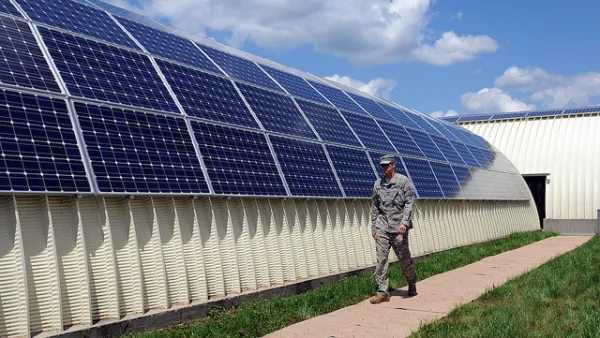
Arizona and Nevada to Vote on Renewable Energy Initiatives
Voters in two Western states next month will determine whether to require energy utilities to increase their share of electricity from renewable sources to 50 percent by 2030. In Arizona, the campaign has become the costliest in state history.

Carbon Neutrality: What Does it Mean, and Is it Possible?
Are 'zero carbon' goals the most effective way to cut greenhouse gases, or are they the most politically feasible strategies? NPR climate and environment reporter, Nathan Rott, explores the challenge in an interview on All Things Considered.
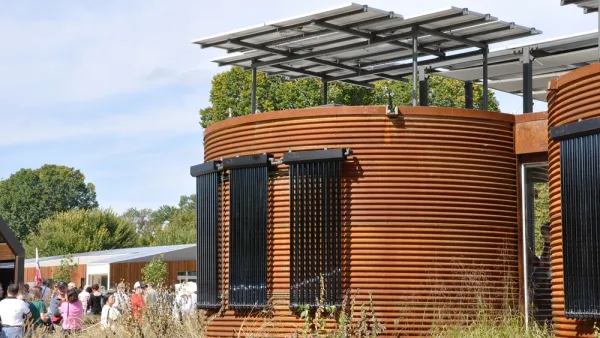
District of Columbia to Adopt the Nation's Strongest Renewable Energy Target
Move over, Hawaii and California, with your ambitious goals of going to 100 percent renewable electricity generation by 2045. The District's city council passed legislation on Tuesday that sets 2032 as the target to reach 100 percent renewable.

Planetizen Federal Action Tracker
A weekly monitor of how Trump’s orders and actions are impacting planners and planning in America.

The state-sanctioned urbicide of Austin
People don’t kill cities. Freeways do.

US to reduce Colorado River water deliveries to Mexico
A new Colorado Treaty amendment reduces Mexico’s Colorado River water allocation by 250,000 acre feet.

Mamdani overhauls NYC's Vision Zero plan with 100 new policy goals
The overhaul aims to reduce traffic deaths and make streets safer for pedestrians, cyclists and drivers through lower speed limits, new safety infrastructure and more.

Amtrak not solely to blame for New Jersey commuter rail's unreliability, report finds
A new study from the Garden State Initiative found that NJ Transit’s budget grew 20% across a 4 year period, but reliability declined significantly over the same period.

EPA erases limits on planet-warming pollution from power plants
Under Monday’s plan, power plants would still have some limits on how much mercury, arsenic and other contaminants they can emit.

FREE Course: Walkable City 1: Why Walkability?
After describing his path towards focusing on walkability as the essence of good planning, Jeff Speck marches through his five principal reasons for making more walkable places.
Reinventing Malls: Planning Alchemy—Turning Gray Fields Into Gold
The course focuses on the opportunities and imperatives that shape reinvention of mall sites.

Eagle County Government
Harvard University Graduate School of Design
Nashville Planning Department
The Architects Foundation
University of Cincinnati Online
The Pocatello Development Authority
The Urban Renewal Agency of the City of Pocatello
Journal of the American Planning Association