The agency released a draft of a study examining potential ways to offer more frequent train service.


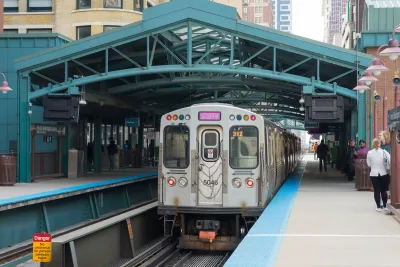
Metra has released a draft of a new study detailing what needs to change for the agency to offer more frequent train service. The study’s Regional Rail 1.0 plan explores how Metra could offer trains every 30 to 60 minutes, and the Regional Rail 2.0 plan demonstrates how trains could run every 15 to 30 minutes.
“Metra estimates the bill for Regional Rail 1.0 would be $2.7 billion in capital costs and $269 million in additional operating costs while Regional Rail 2.0 would cost an additional $6.4 billion and $411 million more in operating costs,” Brandon Lewis writes for Mass Transit.
Under the drafted plan, some lines would simply see increased service, where others would see trains serving an inner and an outer zone. Metra has already made some progress toward regional rail by simplifying its train schedules and improving service for reverse commuters.
Read the full story: New Metra study examines possible service increase

Chicago-area transit gains new regional authority
The new leadership will preserve all previous services and bus and train operators.
Metra Announces Price Hikes
Metra, Chicago's regional rail provider, has announced that it will increase fares starting in February 2012. For over 300,000 weekday riders, the price increase will mean hundreds of dollars more in fares per year.
Chicago’s new transit authority has ‘unprecedented’ land development power
The Northern Illinois Transit Authority is allowed to buy and develop land for reasons unrelated to transit, a power that is fairly unique among transit authorities.

Planetizen Federal Action Tracker
A weekly monitor of how Trump’s orders and actions are impacting planners and planning in America.

California plans to bury El Niño’s downpour
If the state plays its cards right, it may be able to store a billion acre-feet of El Niño’s water in aquifers.

Desperate measures: Advocates weigh draining Lake Powell to fill Colorado River
Draining the reservoir could reduce evaporation losses by a couple hundred thousand acre-feet.

Non-stop party: Chicago voters weigh permanent festival grounds
A stable place for bleachers, stages and drainage may streamline the setup and teardown of large events.

Metra may invest $9.1 billion in regional rail
The agency released a draft of a study examining potential ways to offer more frequent train service.

California city breaks ground on transit connector
The project includes three mobility hubs and a pedestrian bridge.

FREE Course: Walkable City 1: Why Walkability?
After describing his path towards focusing on walkability as the essence of good planning, Jeff Speck marches through his five principal reasons for making more walkable places.
Reinventing Malls: Planning Alchemy—Turning Gray Fields Into Gold
The course focuses on the opportunities and imperatives that shape reinvention of mall sites.

City of Rosemead
Rutgers University, Edward J. Bloustein School of Planning and Public Policy
One Hundred Miles
Hunter College, City University of New York (CUNY)
The Architects Foundation
University of Cincinnati Online
City of Cambridge
Montrose County
The Pocatello Development Authority