Metra, Chicago's regional rail provider, has announced that it will increase fares starting in February 2012. For over 300,000 weekday riders, the price increase will mean hundreds of dollars more in fares per year.


Like many other transit agencies, Metra has faced repeated budget deficits during the recession, according to reporter Scott Martin.
Martin also explains that the reason Metra has decided to apply these increases is because, as stated by new management, "the need for capital investment is reaching a tipping point, risking safety, speed, and service. The 2012 budget will end the pattern of using capital funds for operating expenses, leaving a $53 million gap in the budget."
In 2008, fares were last increased by 10 percent. This time around, service cuts were proposed, but riders strongly rejected them. Instead, Martin said that Metra put forward the current plan of fare increases averaging 25 percent.
Read the full story: Chicago regional rail passengers to be hit with sharp fare hikes

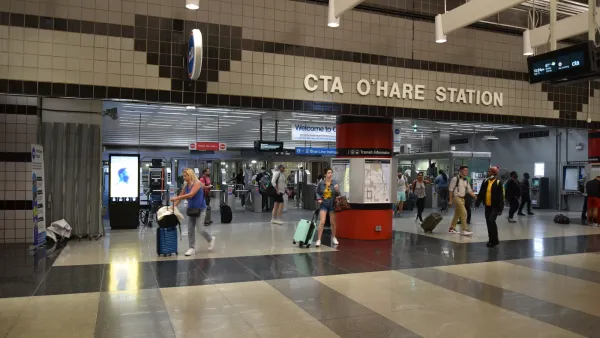
The Vast Majority of Riders Suspended by Chicago Transit Agencies are Black or Latino
The agencies are allowed to ban riders who are accused of violent or threatening behavior.
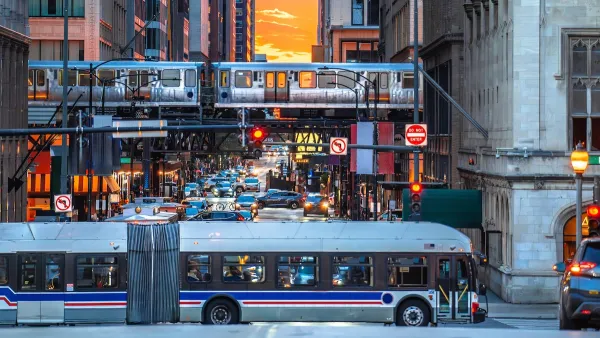
Chicago Transit Agencies on Brink of Major Crisis
Without additional funding, regional transit agencies will be forced to cut services by 40 percent.
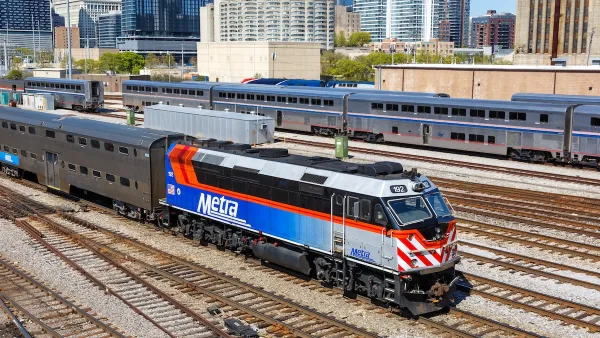
Chicago Transit Faces Severe Service Cuts
Metra officials warn the agency could cut service by as much as 40 percent to make up for a massive budget shortfall.

Planetizen Federal Action Tracker
A weekly monitor of how Trump’s orders and actions are impacting planners and planning in America.

Amtrak, CN end decades-long dispute with eight-year agreement
The new operating agreement establishes an updated framework for the companies to work together, including processes to resolve disputes.

Judges permit Denver to divert 77,000 acre feet from the Colorado River for reservoir expansion
Overuse and climate change have caused the Colorado River’s water levels to plummet.

NYC DOT wants faster, more permanent street upgrades
The city is examining ways to build more concrete infrastructure without getting entangled in 'decades-long' projects.

'Something we’ve never seen before:' rising utility rates could strain city finances nationwide
Data centers, climate change and other factors have caused utility rates in the United States to increase by 38% since 2020.

Trump to overrule local leaders, lease millions of acres of America’s Pacific Island territories’ seafloors to mining companies
International law says that the Indigenous people of America’s territories have a right to prior and informed consent regarding projects that impact their countries.

FREE Course: Walkable City 1: Why Walkability?
After describing his path towards focusing on walkability as the essence of good planning, Jeff Speck marches through his five principal reasons for making more walkable places.
Reinventing Malls: Planning Alchemy—Turning Gray Fields Into Gold
The course focuses on the opportunities and imperatives that shape reinvention of mall sites.

Harvard University Graduate School of Design
KFH Group Inc.
Greater Baltimore Committee
The Architects Foundation
University of Cincinnati Online
The Pocatello Development Authority
The Urban Renewal Agency of the City of Pocatello