While much has been made of the suburban shopping mall's decline, successful urban retail spaces are taking their inspiration from the humble city street.


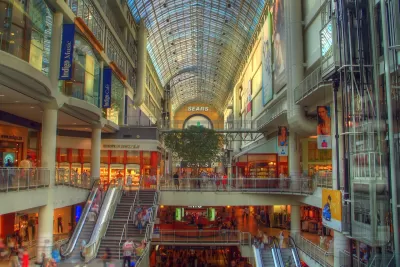
Across the world, booming cities are constructing spaces that meld the traditional shopping mall with the traditional city street. Stefan Al discusses some prominent examples, starting with New York City's Oculus. "Oculus was Westfield's $1.4bn bet that New York, a city known for its love of the street, could also have a successful mall."
Oculus exemplifies how "a new breed of shopping centre is integrating so seamlessly into its urban surroundings that it can be difficult to draw any line between city and mall whatsoever."
These projects have gained recent popularity in China. On a Beijing shopping space, Al writes, "Rather than designing the whole complex himself, [architect Chris Law] created a masterplan with an urban design framework for other architects to fill in, making it appear as if the complex grew organically."
Open-air "street-style" malls can be attractive places, but they also prompt questions about the uses of public versus private space. They can also fall into the urban design version of the uncanny valley if developers and architects aren't careful.
Read the full story: All under one roof: how malls and cities are becoming indistinguishable

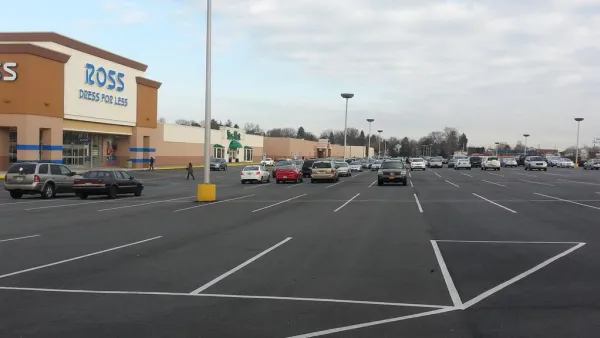
On the Life Cycle of Suburban Malls
Using Greenwood, Indiana as an example, Eric McAfee discusses how the value of individual suburban malls depreciates over time. Shiny new shopping centers compensate for inevitable vacancies in older ones.
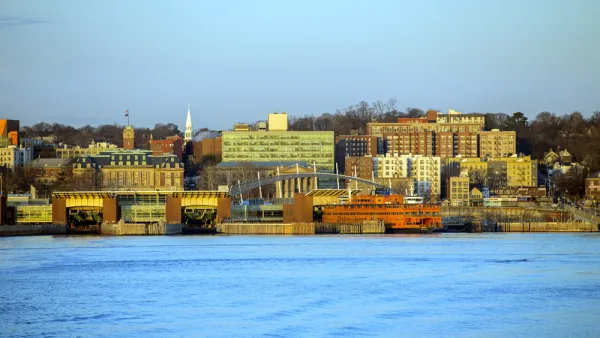
New York City's First Outlet Mall Still a 'Ghost Town'
Perched on the northeastern tip of Staten Island next to the ferry terminal, Empire Outlets has only filled 26 of its 75 storefronts since a grand opening in May.
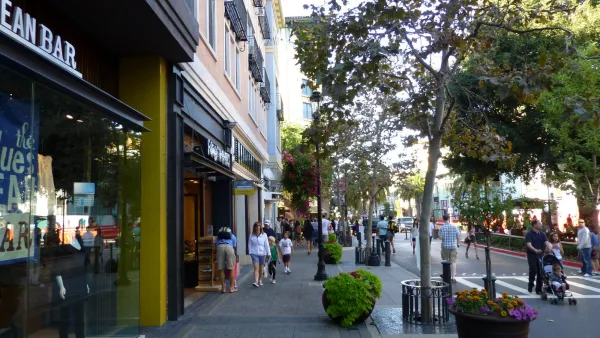
Innovative Approaches May Save Physical Retail
In places like San Jose, "new approaches to the storefront" are paying dividends for physical retailers willing to experiment.

Planetizen Federal Action Tracker
A weekly monitor of how Trump’s orders and actions are impacting planners and planning in America.

‘Going backwards:’ Baltimore mayor, students rally against state's transit funding plan
Maryland's proposed six-year plan provides no funding for Baltimore’s BMORE bus program and reduces its road maintenance funding.

Detroit to transform waterfront with $2.2 billion investment
Developers will convert about 18 acres of unused parking lot space into civic spaces.

HUD modernizes 50-year-old manufactured housing framework
The Next Generation Manufactured Housing Action Plan establishes new energy-efficiency standards for manufactured homes, and new guidelines for anchoring them.

New CA housing laws tear down development red tape
Recently-signed legislation makes building starter homes and ADUs cheaper and faster in California.

Metrolink finishes first expansion in 20 years
The transit agency is now one of very few in the United States to connect two major airports.

FREE Course: Walkable City 1: Why Walkability?
After describing his path towards focusing on walkability as the essence of good planning, Jeff Speck marches through his five principal reasons for making more walkable places.
Reinventing Malls: Planning Alchemy—Turning Gray Fields Into Gold
The course focuses on the opportunities and imperatives that shape reinvention of mall sites.

One Hundred Miles
County of Mendocino
planning NEXT
The Architects Foundation
University of Cincinnati Online
Montrose County
Northern Illinois Transit Authority (NITA)
The Pocatello Development Authority