In places like San Jose, "new approaches to the storefront" are paying dividends for physical retailers willing to experiment.


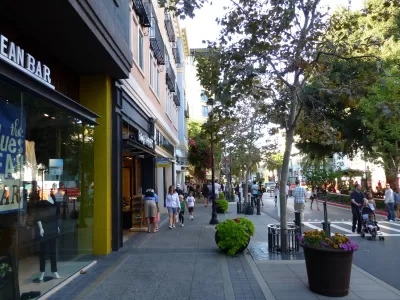
Confronted with the so-called "retail apocalypse," stores in San Jose have found success with creative approaches that do things traditional malls (and Amazon) cannot. These include experiential offerings, adaptable spaces, and a willingness to merge online shopping with brick and mortar.
For SPUR, Kathryn Exon Smith and Jaclyn Tidwell write, "Lifestyle shops now make up a higher percentage of retail space in both malls and downtown strips, replacing traditional goods and apparel stores with restaurants, entertainment and other services."
Greater adaptability lets retailers cater to demand more closely. "Communal spaces are on the rise in downtown San Jose as well, with food halls like the SoFA Market and San Pedro Square Market, maker spaces like Tech Shop, and co-working companies such as NextSpace and WeWork setting up downtown in recent years. The lifespan of retail spaces is changing, too, with property owners trying out more flexible, interim uses."
Other methods meld online and in-person shopping. "Many are offering the option to buy online and pick up in store, such as the Amazon package pick-up location that has recently opened on the long-vacant downtown corner at 2nd and San Fernando streets."
FULL STORY: How New Approaches to the Storefront Are Reviving Retail

Ross May Be Immune from the Amazon Effect
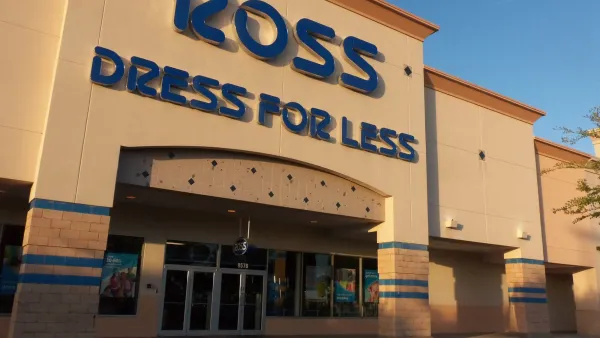
Ross Stores continues its expansion in the face of a much-foretold retail apocalypse. The shopping experience it provides may be one reason it can stand up to Amazon.
Phoenix Mall Sold for Mixed-Use Redevelopment
The former Paradise Valley Mall will undergo a conversion to a mixed-use community with homes, offices, and stores.
The End of the Mall? Navigating the Shifting Retail Landscape
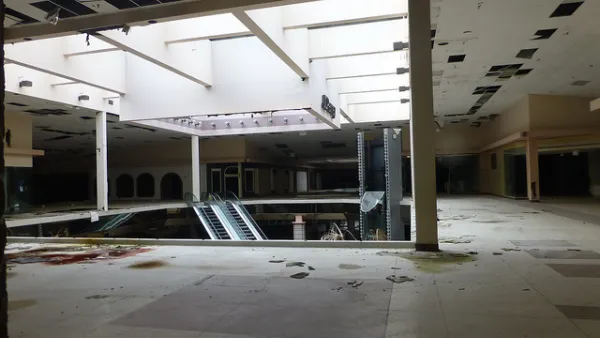
More online shopping means fewer consumers are spending money at brick-and-mortar stores, with suburban malls hit especially hard. But municipalities are looking for creative strategies to navigate a post-mall world.

Planetizen Federal Action Tracker
A weekly monitor of how Trump’s orders and actions are impacting planners and planning in America.

The state-sanctioned urbicide of Austin
People don’t kill cities. Freeways do.

US to reduce Colorado River water deliveries to Mexico
A new Colorado Treaty amendment reduces Mexico’s Colorado River water allocation by 250,000 acre feet.

5 New England states march closer to 800 megawatt wind energy project
Securing federal approval for the project may be complicated under the Trump administration, which has historically been hostile towards domestic wind power.

Baltimore to break ground on $50 million Transit Priority Project
The project will bring faster bus trips, safer streets and better bike connections to Baltimore.

Airbnb launches $250 million 'last-dollar financing' housing accelerator, makes first investment in Austin
The company will put $6.4 million towards affordable housing development in Texas’ capital.

FREE Course: Walkable City 1: Why Walkability?
After describing his path towards focusing on walkability as the essence of good planning, Jeff Speck marches through his five principal reasons for making more walkable places.
Reinventing Malls: Planning Alchemy—Turning Gray Fields Into Gold
The course focuses on the opportunities and imperatives that shape reinvention of mall sites.

Eagle County Government
Harvard University Graduate School of Design
Nashville Planning Department
The Architects Foundation
University of Cincinnati Online
The Pocatello Development Authority
The Urban Renewal Agency of the City of Pocatello
Journal of the American Planning Association