The Wicker Park and Bucktown neighborhoods in Chicago will update their master plan to keep pace with the north side Chicago growing wealth and popularity.


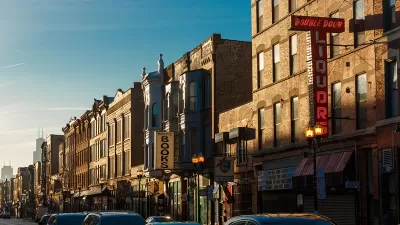
Wicker Park has been a gentrifying neighborhood for so long, Josh Hartnett made a movie named after it in 2004. In the decade plus that followed, the neighborhood's profile has only risen, "…with rents rising, development pressure increasing and a growing demand for multimodal links among the neighborhood’s many transportation assets," Jen Kinney writes in Next City.
To accommodate the development in the area, Wicker Park and Bucktown updated their 2009 master plan, making the neighborhood safer for its many active commutes and pedestrians. The plan includes new infrastructure like bump outs, additional cross walks, and protected bike lanes. According to Brent Norsman who chairs the WPB commission, "an increase in national chains like Toms Shoes has some residents worried about the future of local, independently owned shops, which are experiencing rising rents," Kinney reports. To fight the issue, the WPB plan includes a financing program for small retailers. Some fear that losing the small stores and music venues (like the Double Door, which recently closed) would kill the character that made the neighborhood so attractive in the first place.
Read the full story: Neighborhood Updates Master Plan With Changing Chicago in Mind

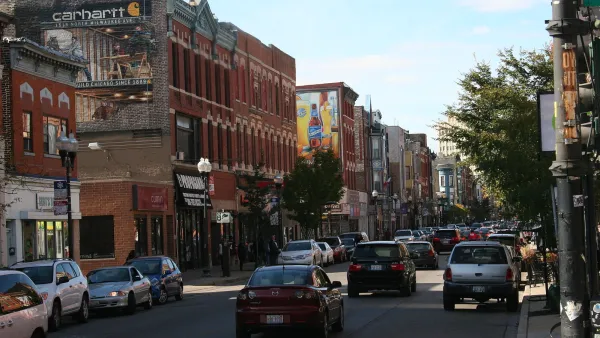
Opinion: Repurpose Parking for Bike Lanes and Outdoor Seating
With car parking banned from two blocks of Chicago's Milwaukee Avenue on weekend nights, the city could take the opportunity to permanently adapt the space for other uses.
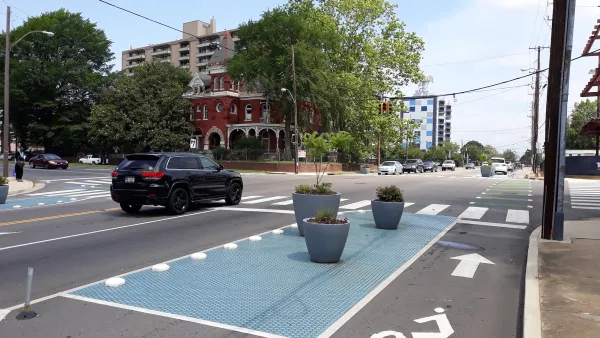
Memphis Street Goes on a Road Diet
Separated bike lanes and new pedestrian infrastructure have replaced traffic lanes on a mile of Manassas Street in Memphis.
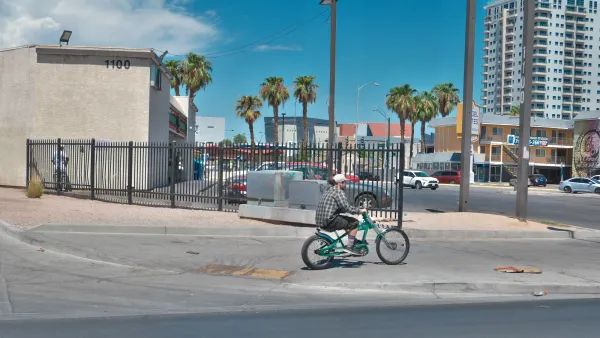
Las Vegas is building its first protected bike lane
The new lane connects Henderson and the Las Vegas Raiders headquarters via Starr Avenue.

Planetizen Federal Action Tracker
A weekly monitor of how Trump’s orders and actions are impacting planners and planning in America.

Amtrak, CN end decades-long dispute with eight-year agreement
The new operating agreement establishes an updated framework for the companies to work together, including processes to resolve disputes.

Judges permit Denver to divert 77,000 acre feet from the Colorado River for reservoir expansion
Overuse and climate change have caused the Colorado River’s water levels to plummet.

South Chicago development proposal would 'upzone' neighborhoods to increase density
The South Chicago Land Use Framework plan also aims to promote pedestrian and transit-oriented developments.

Boston has spent millions making the Green Line more accessible — and there’s no end in sight
While the city has invested millions into expanding and adding platforms to the Green Line to make it more accessible, new train cars set to arrive next year will be too tall for disabled passengers to board without raising the current platforms.

Idaho may see an 18% drop in federal surface transit funding — the largest estimated cut in the US
Transit systems in rural communities are much more reliant on federal funding to provide their services.

FREE Course: Walkable City 1: Why Walkability?
After describing his path towards focusing on walkability as the essence of good planning, Jeff Speck marches through his five principal reasons for making more walkable places.
Reinventing Malls: Planning Alchemy—Turning Gray Fields Into Gold
The course focuses on the opportunities and imperatives that shape reinvention of mall sites.

City of Wisconsin Rapids
Harvard University Graduate School of Design
KFH Group Inc.
The Architects Foundation
University of Cincinnati Online
The Pocatello Development Authority
The Urban Renewal Agency of the City of Pocatello