Los Angeles seems primed for a development boom, but when developments are built near highways there can be serious health consequences.


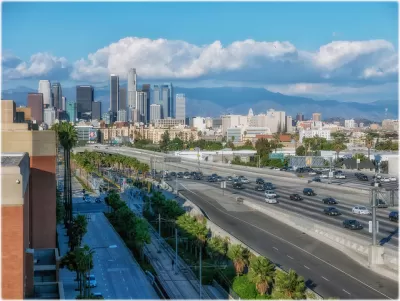
Living in Los Angeles can be very expensive, and the city is exporting its poor in part because of high housing costs. But recent developments near highways have raised health concerns. "People there suffer higher rates of asthma, heart attacks, strokes, lung cancer and pre-term births. Recent research has added more health risks to the list, including childhood obesity, autism and dementia," Tony Barboza and Jon Schleuss report for the Los Angeles Times. In a city of 2.5 million, city zoning choices impact a lot of people. "In Los Angeles alone officials have approved thousands of new homes within 1,000 feet of a freeway — even as they advised developers that this distance poses health concerns," Barboza and Schleuss report.
When asked for comment mayor Eric Garcetti said, “I take this stuff very seriously, but I also know that in looking for housing we have a very constricted city,” Barboza and Schleuss report. Garcetti favors stricter regulations on building design and tail pipe emissions over limiting developments near highways.
FULL STORY: L.A. keeps building near freeways, even though living there makes people sick

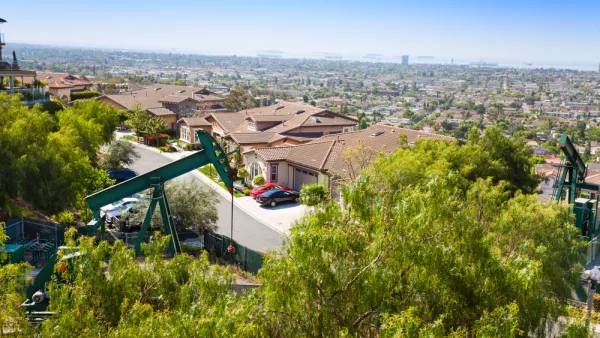
Study: L.A. County's Urban Oil Wells Are Too Close to Homes and Schools
The Department of Public Health recommends taking action to better protect residents from oil operations that are sometimes only a few feet from where people live, work, eat, play and study.
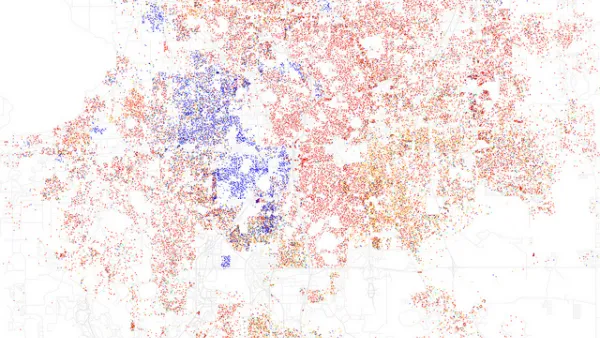
Pollution Does Discriminate in Orlando’s Parramore Neighborhood
Poor air quality has decimated the health of residents in this predominantly black community ringed by highways.
More on those Freeway-Adjacent Affordable Housing Developments
The Los Angeles Times follows-up an earlier article on the dangers of building too close to freeways. It's a trade-off that the California Air Resources Board acknowledged last April with new guidelines that recognize the dire need for housing.

The state-sanctioned urbicide of Austin
People don’t kill cities. Freeways do.

US to reduce Colorado River water deliveries to Mexico
A new Colorado Treaty amendment reduces Mexico’s Colorado River water allocation by 250,000 acre feet.

New Jersey’s second-largest city bans standalone data centers
Jersey City will continue to allow co-location facilities, such as those meant for research institutions that store their own data.

Amtrak not solely to blame for New Jersey commuter rail's unreliability, report finds
A new study from the Garden State Initiative found that NJ Transit’s budget grew 20% across a 4 year period, but reliability declined significantly over the same period.

EPA erases limits on planet-warming pollution from power plants
Under Monday’s plan, power plants would still have some limits on how much mercury, arsenic and other contaminants they can emit.

Phoenix announces new on-demand transit service, more frequent RAPID buses
Both new services will launch in October, and are part of Phoenix's Project Effective Access Solutions for Easing Congestion.

FREE Course: Walkable City 1: Why Walkability?
After describing his path towards focusing on walkability as the essence of good planning, Jeff Speck marches through his five principal reasons for making more walkable places.
Reinventing Malls: Planning Alchemy—Turning Gray Fields Into Gold
The course focuses on the opportunities and imperatives that shape reinvention of mall sites.

Eagle County Government
Harvard University Graduate School of Design
Nashville Planning Department
The Architects Foundation
University of Cincinnati Online
The Pocatello Development Authority
The Urban Renewal Agency of the City of Pocatello
Journal of the American Planning Association