In Ireland, there's one house for every 2.35 people. According to industry experts, that's twice as many vacant homes as a normal, healthy market should have. So why then is the country considered to be in a housing crisis?


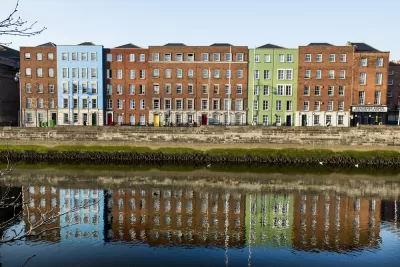
"The number of vacant homes in Ireland is at twice the level of a normal functioning marketplace," according to an article by Mark Hillard. "Today, the country has just over 2 million dwelling units for a population of 4.75 million, translating to exactly one unit for every 2.35 people."
Hillard is sharing information reported at the Joint National Housing Conference held at Dublin Castle recently. Minister of State for Housing Damien English was in attendance, giving a speech at the event, who described the counter-intuitive state of the Irish housing market: "It is a crazy situation that we have so many vacant properties and so many people who actually need a home and we have to match that up."
The rest of the article by Hillard discusses more of the large themes from the event, including calls to remake the planning and zoning models in the country. James Kelly, a conservation architect from Kelly & Cogan Architects, said the country should look to Florence, Italy "as a paradigm of a city where tradespeople worked in the same areas where people lived."
Writing for the same publication a day later, Eoin Burke-Kennedy shared the findings of a report by Standard and Poor’s (S&P) that predicts it will take a decade to match supply and demand in the country's housing market. The S&P report also sheds some light on the disconnect between vacant housing and unmet demand—the country is still emerging from the effects of the Great Recession, with high levels of household debt, though improvement has been apparent in recent years. "Economy-wide debt-to-disposable income ratio in Ireland fell to 150 per cent last year, down from 170 per cent a year earlier, and from above 230 per cent at its peak in 2009," explains Burke-Kennedy.
FULL STORY: ‘Twice as many’ empty homes in Ireland as a normal market

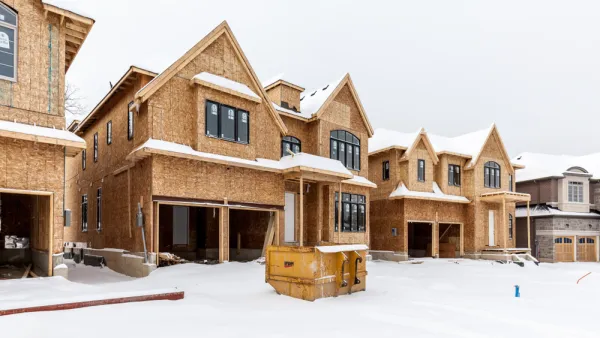
U.S. Faces Historic Housing Shortages, With Roots in the Recession and Local Zoning Restrictions
The long-term effects of the Great Recession were timed very poorly for millions of Millennials aging into homebuying years. The pandemic and the traditional zoning preferences of communities aren't doing first-time homebuyers any favors.
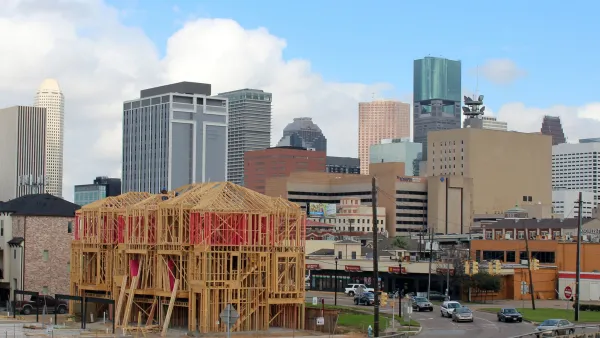
Vacancies Define the Houston Office Market in 2016
Industries over leased and developers over built. The city of Houston's office market has gone from boom to bust in only a few years.
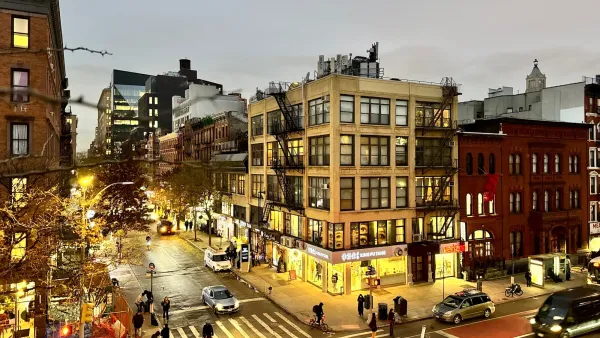
Average Manhattan Rent Topped $5,400 This Year
The borough’s vacancy rate is just aboe 2 percent.

Planetizen Federal Action Tracker
A weekly monitor of how Trump’s orders and actions are impacting planners and planning in America.

The state-sanctioned urbicide of Austin
People don’t kill cities. Freeways do.

US to reduce Colorado River water deliveries to Mexico
A new Colorado Treaty amendment reduces Mexico’s Colorado River water allocation by 250,000 acre feet.

Mamdani overhauls NYC's Vision Zero plan with 100 new policy goals
The overhaul aims to reduce traffic deaths and make streets safer for pedestrians, cyclists and drivers through lower speed limits, new safety infrastructure and more.

Amtrak not solely to blame for New Jersey commuter rail's unreliability, report finds
A new study from the Garden State Initiative found that NJ Transit’s budget grew 20% across a 4 year period, but reliability declined significantly over the same period.

EPA erases limits on planet-warming pollution from power plants
Under Monday’s plan, power plants would still have some limits on how much mercury, arsenic and other contaminants they can emit.

FREE Course: Walkable City 1: Why Walkability?
After describing his path towards focusing on walkability as the essence of good planning, Jeff Speck marches through his five principal reasons for making more walkable places.
Reinventing Malls: Planning Alchemy—Turning Gray Fields Into Gold
The course focuses on the opportunities and imperatives that shape reinvention of mall sites.

Eagle County Government
Harvard University Graduate School of Design
Nashville Planning Department
The Architects Foundation
University of Cincinnati Online
The Pocatello Development Authority
The Urban Renewal Agency of the City of Pocatello
Journal of the American Planning Association