Industries over leased and developers over built. The city of Houston's office market has gone from boom to bust in only a few years.


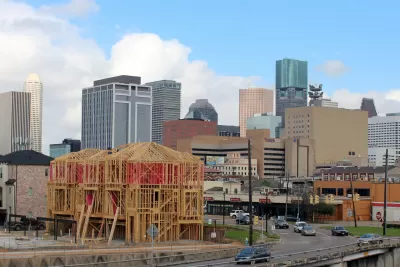
"Houston’s once-thriving office market is quickly losing energy," according to Eliot Brown. "In all, 28% of the city’s office space now sits empty or otherwise available for lease, up from 20% in early 2012," reports Brown, using data from real-estate services firm JLL.
"The trouble extends from small engineering and drilling companies to oil giants and their namesake towers," according to Brown, after two years of the worst slump for the city since the oil bust of the 1980s. The city hasn't reached 1980s level of pain, however, thanks to a more diverse economy. "Back then, the city became notorious for its forest of empty skyscrapers. Today, by contrast, Houston is still producing jobs as areas like health care are thriving."
As Brown explains, oil companies projected years of growth and were far to optimistic with their leasing activities in 2012, 2013, and 2014. Developers, reacting to that overly optimistic demand, built new office spaces at a breakneck pace. In 2014, "nearly one-fifth of all the office space under construction in the U.S. was located in Houston."
[The article might be behind a paywall for some readers.]
FULL STORY: Office Pileup Gets Worse in Houston

Oil Bust: Houston's Housing Surplus is Driving Rents Down
With a multitude of new high-end apartment complexes coming online, Houston residents are reaping the rewards of lowered rents as landlords struggle to fill vacancies due to a slowing oil economy.
Downtown Chicago Vacancy Rates at All-Time High, Slashing Building Values
Record vacancy rates and the high cost of borrowing money are fueling a commercial real estate crisis in downtown Chicago.
Signs of Financial Distress Among Office Properties
The foreclosure risk facing a pair of high-profile office buildings highlight the debt difficulties facing the office sector as it deals with the fallout of the pandemic. The trend could be on the verge of picking up steam.

Planetizen Federal Action Tracker
A weekly monitor of how Trump’s orders and actions are impacting planners and planning in America.

The state-sanctioned urbicide of Austin
People don’t kill cities. Freeways do.

US to reduce Colorado River water deliveries to Mexico
A new Colorado Treaty amendment reduces Mexico’s Colorado River water allocation by 250,000 acre feet.

Mamdani overhauls NYC's Vision Zero plan with 100 new policy goals
The overhaul aims to reduce traffic deaths and make streets safer for pedestrians, cyclists and drivers through lower speed limits, new safety infrastructure and more.

Amtrak not solely to blame for New Jersey commuter rail's unreliability, report finds
A new study from the Garden State Initiative found that NJ Transit’s budget grew 20% across a 4 year period, but reliability declined significantly over the same period.

EPA erases limits on planet-warming pollution from power plants
Under Monday’s plan, power plants would still have some limits on how much mercury, arsenic and other contaminants they can emit.

FREE Course: Walkable City 1: Why Walkability?
After describing his path towards focusing on walkability as the essence of good planning, Jeff Speck marches through his five principal reasons for making more walkable places.
Reinventing Malls: Planning Alchemy—Turning Gray Fields Into Gold
The course focuses on the opportunities and imperatives that shape reinvention of mall sites.

Eagle County Government
Harvard University Graduate School of Design
Nashville Planning Department
The Architects Foundation
University of Cincinnati Online
The Pocatello Development Authority
The Urban Renewal Agency of the City of Pocatello
Journal of the American Planning Association