With rents on the rise even in "inexpensive" cities like New Orleans, artists and musicians are getting priced out. Affordable housing designated for artists is one way to help them stay.


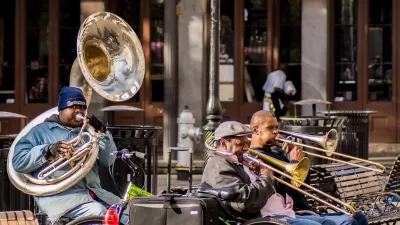
It's a story we hear a lot. Artists gave a place its cultural cachet, but they're getting priced out as gentrification sets in. Teresa Wiltz writes, "New Orleans, like much of the rest of the country, also has an affordable housing crisis — costs here have jumped 50 percent since 2000. As a result, many of the musicians tourists flock to see are forced to do the 'double-ZIP code thing': live outside the city and parachute in for gigs."
Last year, Mayor Mitch Landrieu announced a five-year housing plan to build or preserve 7,500 affordable units. That includes housing designated specifically for "service workers, artists and culture bearers."
Other cities are exploring similar options. "In New York City, Democratic Mayor Bill de Blasio announced plans in 2015 to provide 1,500 affordable housing units for artists and musicians by 2025." Dallas and Plano also have plans for arts districts with affordable living spaces.
"And this week, California is launching a pilot program to identify 10 to 15 communities that could be designated as cultural districts with housing and workspace for artists." Saddled with infrastructure costs and uncertain federal funding, cities are turning to philanthropy, tax credits, and elsewhere for the funds.
Read the full story: To keep their artists, cities explore affordable housing
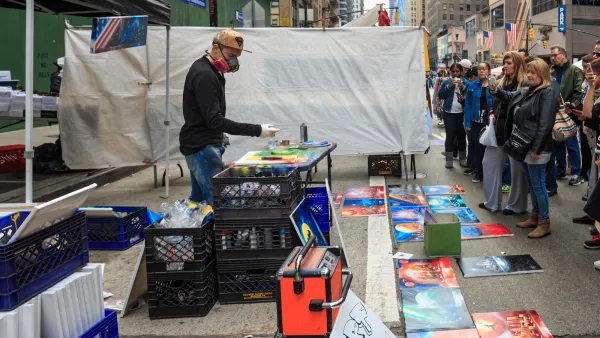
NYC has Lost 4% of its Resident Artists Since 2019
Advocates argue the city should build more affordable housing reserved for artists, who are being increasingly priced out.
August Must-Reads: Top 10 Articles From Last Month
In suburban Houston, cities are scrambling to expand water infrastructure to serve new communities. But can sprawl be part of a workable solution to the housing crisis?
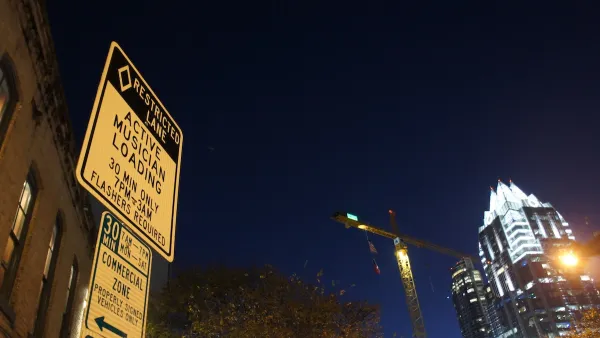
SXSW Panel Addresses Housing Affordability for Artists
Musicians are increasingly hard-pressed to find affordable housing in Austin, a city known for its music scene.

Planetizen Federal Action Tracker
A weekly monitor of how Trump’s orders and actions are impacting planners and planning in America.

California plans to bury El Niño’s downpour
If the state plays its cards right, it may be able to store a billion acre-feet of El Niño’s water in aquifers.

Desperate measures: Advocates weigh draining Lake Powell to fill Colorado River
Draining the reservoir could reduce evaporation losses by a couple hundred thousand acre-feet.

Mamdani’s pied-à-terre tax survives legal challenge
A panel of judges found that the plaintiffs failed to demonstrate injury as a result of New York City's implementation of the tax.

Eastern Nebraska is running out of electricity
Data centers and electrification are straining eastern Nebraska’s grid, throttling economic development.

Seattle passes record-breaking transit services expansion
Proposition 1 will double the city’s transit tax to add 95,000 more bus trips and preserve 180,000 bus trips annually.

FREE Course: Walkable City 1: Why Walkability?
After describing his path towards focusing on walkability as the essence of good planning, Jeff Speck marches through his five principal reasons for making more walkable places.
Reinventing Malls: Planning Alchemy—Turning Gray Fields Into Gold
The course focuses on the opportunities and imperatives that shape reinvention of mall sites.

City of Rosemead
Rutgers University, Edward J. Bloustein School of Planning and Public Policy
One Hundred Miles
University of Michigan School for Environment and Sustainability (SEAS)
Hunter College, City University of New York (CUNY)
The Architects Foundation
City of Cambridge
Montrose County
The Pocatello Development Authority