Musicians are increasingly hard-pressed to find affordable housing in Austin, a city known for its music scene.


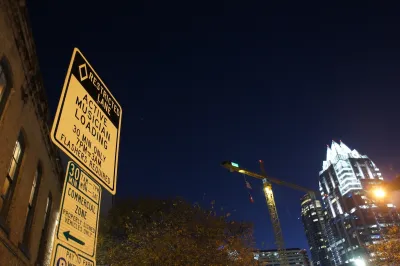
A panel discussion at the South by Southwest (SXSW) festival tackled housing affordability in Austin, zeroing in specifically on the city’s musician population and their struggles to find affordable housing and avoid conflict with noise ordinances and other rules not catered to artists.
As Brianna Caleri explains in CultureMap Austin, the panel, entitled Music Urbanism in Motion: Affordable Spaces to Preserve Austin's Cultural Pulse, discussed housing strategies and ideas from Austin, Philadelphia, and Jacksonville.
The panel participants described examples from their cities, such as programs that activate alleys and other underused spaces for community and music events to reduce vacancy and keep communities vibrant and repurposing old city buses into recording studios and practice spaces. However, “Readers who can smell gentrification a mile away can't be blamed for feeling suspicious of projects to clean up and throw events in these public spaces. How many times has a fun new festival in Austin put a park out of use for a week or more, closed roads, created massive waste, or skyrocketed hotel rates?”
According to panelist Brian Phillips, “We're trying to offer alternatives. There are zero tools. What we're doing is not perfect, but literally like, nobody has any real strategy for how you occupy spaces outside [the market's mainstream].”
For Kady Yellow of Jacksonville, solutions can come from communication and connections between artists and housing developers. “A developer's power is the ownership. Gentrification narrows down to ownership. So when artists get weary of those things ... reach out to [developers], invite them to a venue. Let them see the rawness and the realness and start to speak each other's languages.”
FULL STORY: DIY urbanism: SXSW panel discusses making Austin affordable for musicians

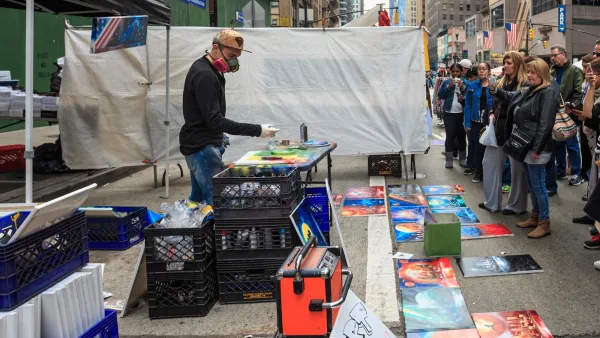
NYC has Lost 4% of its Resident Artists Since 2019
Advocates argue the city should build more affordable housing reserved for artists, who are being increasingly priced out.
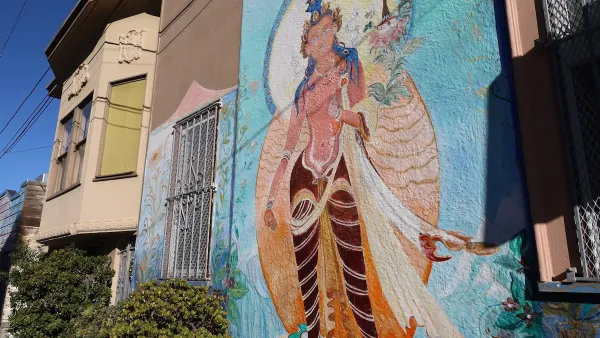
How a San Francisco Land Trust is Preserving Affordable Housing for Artists
The Artist Space Trust has received $10 million in properties bequeathed by artists that will become permanently affordable housing.
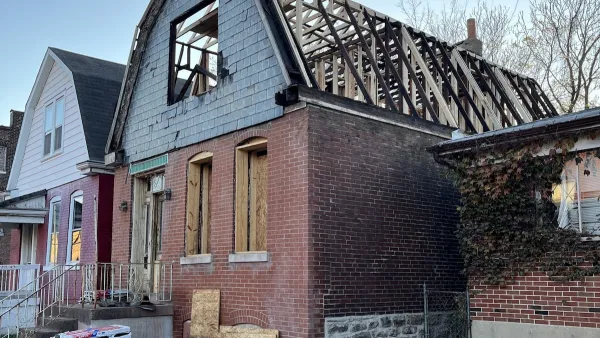
St. Louis Nonprofit Builds Housing for Struggling Artists
The St. Louis Art Place Initiative purchases city-owned vacant properties and rehabilitates them, offering homeownership opportunities to local artists.

The state-sanctioned urbicide of Austin
People don’t kill cities. Freeways do.

US to reduce Colorado River water deliveries to Mexico
A new Colorado Treaty amendment reduces Mexico’s Colorado River water allocation by 250,000 acre feet.

New Jersey’s second-largest city bans standalone data centers
Jersey City will continue to allow co-location facilities, such as those meant for research institutions that store their own data.

Amtrak not solely to blame for New Jersey commuter rail's unreliability, report finds
A new study from the Garden State Initiative found that NJ Transit’s budget grew 20% across a 4 year period, but reliability declined significantly over the same period.

EPA erases limits on planet-warming pollution from power plants
Under Monday’s plan, power plants would still have some limits on how much mercury, arsenic and other contaminants they can emit.

Phoenix announces new on-demand transit service, more frequent RAPID buses
Both new services will launch in October, and are part of Phoenix's Project Effective Access Solutions for Easing Congestion.

FREE Course: Walkable City 1: Why Walkability?
After describing his path towards focusing on walkability as the essence of good planning, Jeff Speck marches through his five principal reasons for making more walkable places.
Reinventing Malls: Planning Alchemy—Turning Gray Fields Into Gold
The course focuses on the opportunities and imperatives that shape reinvention of mall sites.

Eagle County Government
Harvard University Graduate School of Design
Nashville Planning Department
The Architects Foundation
University of Cincinnati Online
The Pocatello Development Authority
The Urban Renewal Agency of the City of Pocatello
Journal of the American Planning Association