Oklahoma is among a number of Republican-controlled states considering gas tax legislation, particularly since it faces a budget gap of $900 million. Bills to hike the tax are expected to be proposed this month, but they face formidable challenges.


Oklahoma's state gas tax of 17 cents per gallon is the nation's third lowest, according to the January 27, 2017 Tax Foundation map. They are only lower in Alaska and South Carolina.
"State taxes on motor fuel haven’t been touched since 1987," reports Joe Wertz for StateImpact Oklahoma. "There are a lot of similarities between the situation then and what Oklahoma lawmakers now face: An economy shaken by low oil prices and dwindling revenue streams to fund state government." [Listen to Wertz's report on SoundCloud].
But last year the budget hole was higher: $1.3 billion, and a minimal gas tax bill by Rep. Earl Sears, R-Bartlesville and state Senator Clark Jolley was soundly defeated in committee on a 14 to 9 vote.
Sears’ three-cent hike on fuel would only have applied when fuel was selling for less than $3 a gallon. Any hike on fuel taxes will likely include such a trigger. Sears expects such legislation to be introduced in the upcoming 2017 legislative session, which starts in February.
“I’ve been told yesterday there’s already a couple of bills,” he says. “I am confident there will be a conversation about raising the gasoline tax.”
And anti-tax activists are ready, pointing to a 2005 initiative petition where "more than 87 percent of voters rejected the proposal to raise the 14-cent-per gallon diesel tax and 17-cent per-gallon gasoline tax to 22 cents each," according to NewsOK.
As for Gov. Mary Fallin's position, this correspondent could only spot her support for hiking other taxes, e.g., cigarette and sales taxes, and expanding e-commerce taxes. Americans for Tax Reform are already expressing opposition.
High Constitutional hurdles
Like California's 1978 Proposition 13, Oklahoma's 1992 State Question 640 sets a high bar for passing tax hikes, reports Wertz in 2014 [listen here].
“You need to have a super-majority in the house and the senate, and the governor has to sign it,” says Alexander Holmes, a Regent’s Professor of Economics at the University of Oklahoma, where he chairs the Economics Department. “You have to have all three parties in order to increase taxes.”
However, "supermajority" means three-quarters with SQ 640, unlike Prop 13's two-thirds. Should the legislature pass the tax increase short of a three-quarters vote, the measure allows a second option : it can be "referred by the legislature to a vote of the people at the next general election and receives majority approval."
As the 2005 initiative illustrated, voter approval will be difficult for a gas tax. The only time voters supported a tax increase was in 2004, but SQ 713 called for replacing a sales tax on cigarettes with a per-cigarette tax of 4 cents.
Oklahoma is not alone
As noted in a post on New Year's Day gas tax changes, Carl Davis, research director at the Institute on Taxation and Economic Policy, points to possible tax increases in Alaska, Louisiana and Tennessee. And legislation to toll Indiana interstates and increase the gas tax has already been introduced.
Low gas prices = increased gasoline consumption?
"Oklahoma led the nation [in gasoline consumption] with the greatest percentage increase of 8.2 percent," notes a November 2016 post. Of course, low gas taxes don't necessary equate with low gas prices. According to Gas Buddy, Oklahoma and Ohio had the nation's fourth lowest gas prices on Feb. 5, averaging $2.063 per gallon, behind South Carolina, Tennessee and Alabama.
Ultimately, it will be up to the Oklahoma legislature, and possibly Oklahoma voters, to decide whether to increase the gas tax this year, even if the tax increase only applies as long as gas prices remain below $3 per gallon, as the provision in last year's bill provided.
Read the full story: Gas Taxes May Go Up Around The Country As States Seek To Plug Budget Holes
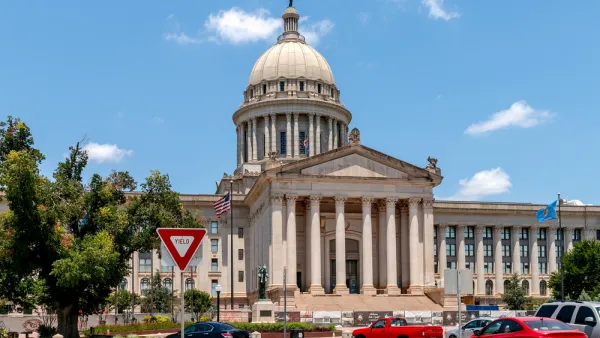
Budget Gap Spotlights Oklahoma's Onerous Three-Fourths Supermajority Requirement
California legislators have it easy compared to their counterparts in Oklahoma and Arkansas who seek to increase revenue through tax increases. A bill to hike gasoline and cigarette taxes and revise alcohol taxes faces a high hurdle.
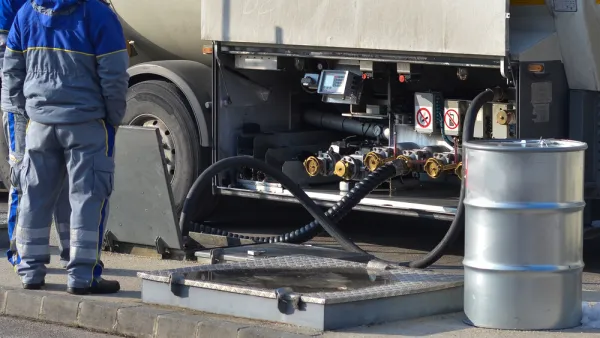
A Small but Significant Fuel Tax Hike for Arkansas
The 3 cent gas tax and 6 cent diesel tax increases are among the lowest of any states that have hiked fuel taxes since 2013, but combined with other revenue sources in the legislation, plus an upcoming sales tax ballot measure, it's historic.
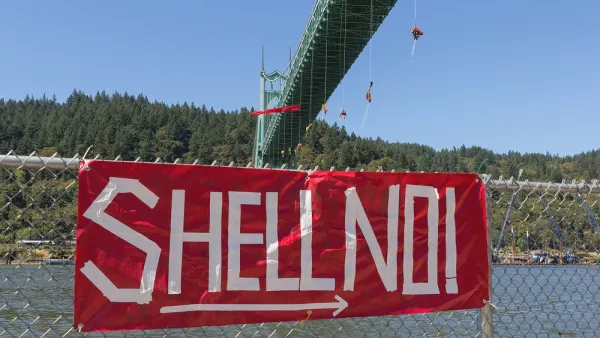
Oregon Legislature Passes Gas Tax, Includes Bike Tax
After Gov. Kate Brown signs the comprehensive funding package, Oregon will be the eighth state this year to approve legislation to increase its gas tax and the first ever to add a bike tax to fund bike and pedestrian infrastructure.

Planetizen Federal Action Tracker
A weekly monitor of how Trump’s orders and actions are impacting planners and planning in America.

California plans to bury El Niño’s downpour
If the state plays its cards right, it may be able to store a billion acre-feet of El Niño’s water in aquifers.

Desperate measures: Advocates weigh draining Lake Powell to fill Colorado River
Draining the reservoir could reduce evaporation losses by a couple hundred thousand acre-feet.

US buildings threatened, destroyed by fires set to triple by 2060
Researchers found a high fire risk for socioeconomically vulnerable neighborhoods in the American West.

LA residents may be allowed to paint their own crosswalks
Councilwoman Katy Yaroslavsky put out a motion instructing the Los Angeles Department of Public Transportation to study the feasibility of allowing volunteers to paint crosswalks.

Dallas moves to overhaul its zoning code
The city's zoning reform will allow more multi-family and mixed-use developments.

FREE Course: Walkable City 1: Why Walkability?
After describing his path towards focusing on walkability as the essence of good planning, Jeff Speck marches through his five principal reasons for making more walkable places.
Reinventing Malls: Planning Alchemy—Turning Gray Fields Into Gold
The course focuses on the opportunities and imperatives that shape reinvention of mall sites.

City of Rosemead
Rutgers University, Edward J. Bloustein School of Planning and Public Policy
One Hundred Miles
Hunter College, City University of New York (CUNY)
The Architects Foundation
University of Cincinnati Online
City of Cambridge
Montrose County
The Pocatello Development Authority