California State Senators, Ben Allen and Scott Wiener, say California transportation funding bills don't spend enough of their budget on public transit.


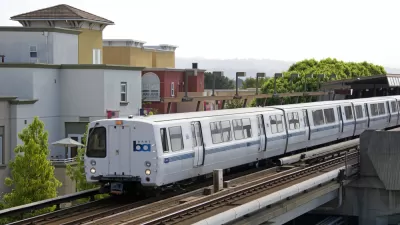
Two state senators representing parts of San Francisco and Los Angeles wrote an op-ed for the Sacramento Bee advocating for greater public transit funding. "We will never solve this problem without massive, transformational investments in public transportation that make it easier for people to get around in a safe, healthy, convenient and efficient way," write Scott Wiener and Ben Allen.
They see the two infrastructure bills—Senate Bill 1, authored by Sen. Jim Beall, and Assembly Bill 1—authored by Assemblymember Jim Frazier, as neither sufficient for the state's future nor able to sustain the maintenance of existing services. "Neither bill dedicates more than 10 percent of its funds for public transit. For context, 20 percent of the federal gas tax is dedicated to public transportation. Moreover, some of the proposed public transit funds are pre-existing while others aren't certain to ever materialize." Wiener and Allen write.
Read the full story: California’s transportation funding package must do more for public transit

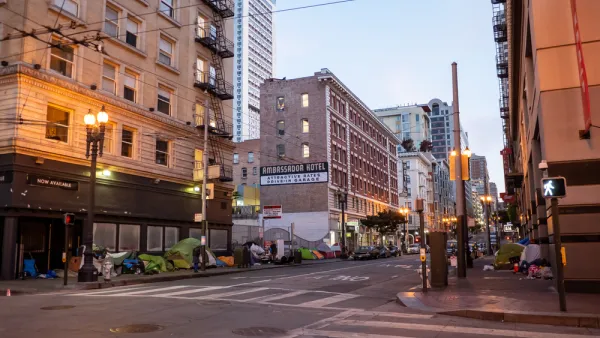
Sacramento Voters to Decide on Using Lawsuits to Reclaim Sidewalks
Measure O may be one of the first ballot measures of its kind to empower residents to take legal action against a city for illegal encampments on city property. The Sacramento City Council voted 7-2 on August 9 to place the ordinance before voters.

A Transit Ridership Role Reversal in California
Since the outset of the pandemic, the capital of car-oriented sprawl in California has become the king of public transit. Looking for lessons about the future of public transit in the United States? Look to San Francisco and Los Angeles.

California Population Grows to 39,810,000 in 2017
California added 309,000 residents last year, an 8 percent drop compared to annual increases since 2010. The state added a net 85,000 housing units, accounting for losses to wildfires.

Planetizen Federal Action Tracker
A weekly monitor of how Trump’s orders and actions are impacting planners and planning in America.

Amtrak, CN end decades-long dispute with eight-year agreement
The new operating agreement establishes an updated framework for the companies to work together, including processes to resolve disputes.

Northwest rail fans eager for Sept. 30 debut of Amtrak’s Airo fleet
Get ready for that new train smell and more seats. But they won’t go faster or run more frequently on the Cascades route in Washington and Oregon.

St. Louis Metro to test if single-car trains can reduce operating costs, maintain rider satisfaction
The pilot program will run from October to spring 2027, and begin with one single-car train operating on Metrolink’s Red and Blue lines.

Pennsylvania is building data centers in abandoned mines
Housing data centers in mines provides an alternative to destroying local forests and may spare residents from data centers’ noise and air pollution.

If Corpus Christi can’t revive desalination plant project, it may owe Texas $235 million
Earlier this month, city officials declined to pursue developing the plant for the second time in a year.

FREE Course: Walkable City 1: Why Walkability?
After describing his path towards focusing on walkability as the essence of good planning, Jeff Speck marches through his five principal reasons for making more walkable places.
Reinventing Malls: Planning Alchemy—Turning Gray Fields Into Gold
The course focuses on the opportunities and imperatives that shape reinvention of mall sites.

City of Thousand Oaks
City of Wisconsin Rapids
Harvard University Graduate School of Design
The Architects Foundation
University of Cincinnati Online
The Pocatello Development Authority
The Urban Renewal Agency of the City of Pocatello