A political feud over the image of the bicycle has just been resolved in the state of Uttar Predesh.



Rightful claim to the symbol of a bicycle belongs to politician Akhilesh Yadav, India's election commission has ruled. The case came about after a split in the Samajwadi Party left its leaders—a father and son—each seeking control over the party’s branding.
"In a democracy that is home to 287 million illiterate people, the simple party symbols that appear on ballots often matter more to voters than the candidates’ names do," explains the New York Times.
Now the elder politician, Mulayam Singh Yadav, will have to adopt one of a selection of unaffiliated symbols—like "a light bulb, a toffee, a pressure cooker, a sewing machine, ice cream, bread [or] cauliflower."
But for Yadav the younger, the bicycle represents the way of life he hopes to project to voters in the upcoming state elections.
"The cycle moves after you strike a balance, of pushing the pedal and holding the handle, and I feel that somehow the cycle teaches us something," he said in a recent speech. "If we move with as much balance as we do while riding a bicycle, we will be successful in life."
FULL STORY: Akhilesh Yadav, Indian Politician, Wins Right to Use Bicycle as Election Symbol

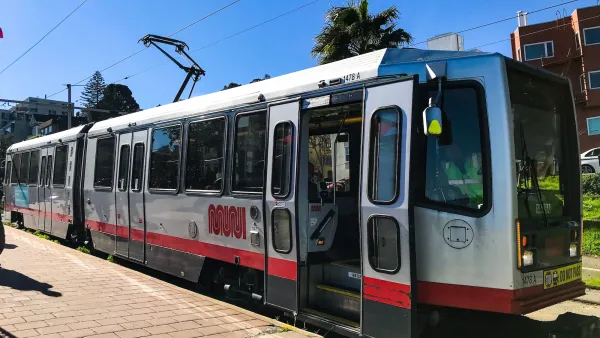
San Francisco cyclists push to allow bikes on Muni trains
The agency is one of few that bans bikes from its trains due to space constraints.
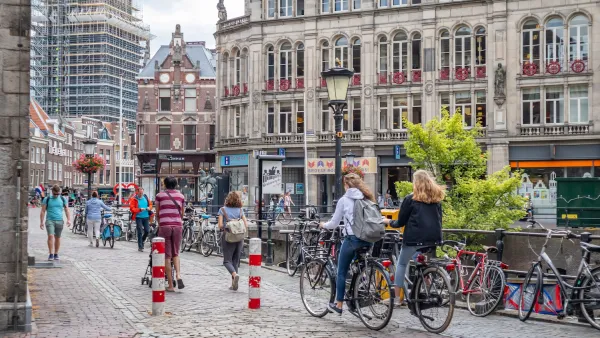
2025's 30 Most Bike-friendly Cities
Copenhagenize has released its list of top cities for cyclists. Spoiler alert: the United States doesn’t make the list.
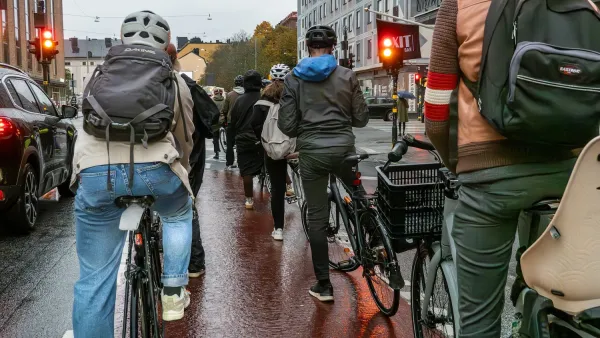
Cyclists may be Right to run Stop Signs and Red Lights. Here’s why
One researcher argues that the Idaho stop might not be such a bad idea after all.

Planetizen Federal Action Tracker
A weekly monitor of how Trump’s orders and actions are impacting planners and planning in America.

The state-sanctioned urbicide of Austin
People don’t kill cities. Freeways do.

US to reduce Colorado River water deliveries to Mexico
A new Colorado Treaty amendment reduces Mexico’s Colorado River water allocation by 250,000 acre feet.

Mamdani overhauls NYC's Vision Zero plan with 100 new policy goals
The overhaul aims to reduce traffic deaths and make streets safer for pedestrians, cyclists and drivers through lower speed limits, new safety infrastructure and more.

Amtrak not solely to blame for New Jersey commuter rail's unreliability, report finds
A new study from the Garden State Initiative found that NJ Transit’s budget grew 20% across a 4 year period, but reliability declined significantly over the same period.

EPA erases limits on planet-warming pollution from power plants
Under Monday’s plan, power plants would still have some limits on how much mercury, arsenic and other contaminants they can emit.

FREE Course: Walkable City 1: Why Walkability?
After describing his path towards focusing on walkability as the essence of good planning, Jeff Speck marches through his five principal reasons for making more walkable places.
Reinventing Malls: Planning Alchemy—Turning Gray Fields Into Gold
The course focuses on the opportunities and imperatives that shape reinvention of mall sites.

Eagle County Government
Harvard University Graduate School of Design
Nashville Planning Department
The Architects Foundation
University of Cincinnati Online
The Pocatello Development Authority
The Urban Renewal Agency of the City of Pocatello
Journal of the American Planning Association