The concept of the circular economy is starting to take hold on governments and business throughout the world. Peter Moskowitz discusses the various ways the concept is being translated into practical, real-world solutions.



Ideas about the circular economy are spreading quickly, particularly in Europe. A widely shared 2015 report from the Ellen MacArthur Foundation helped popularize the concept. In January 2016, it was a core focus of the World Economic Forum in Davos. Governments at every level have begun to grapple with what these ideas could mean for their constituents. In 2015, the European Commission adopted a multifaceted circular economy plan. Sweden recently halved its tax on repair services, encouraging residents to fix broken washing machines, bikes, clothes, and other products instead of buying new ones. London plans to publish its circular economy plan in early 2017.
Read the full story: The upside of the looming resource crisis

Mining the City
Rapid urbanization and climate change will make it harder for cities to provide crucial resources for their citizens. In this article, Arup consultants Amy Leitch and Laura Frost examine how the built environment can fill this emerging need.

In a Warmer, Wetter and More Disaster-prone World: “Nature is the Greatest Designer”
A conversation with the American Society of Landscape Architects’ CEO Torey Carter-Conneen and board president Kona Gray.
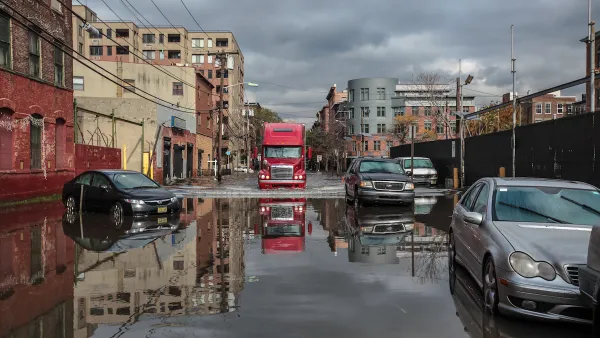
FEMA Resilience Program Cuts Grant Funding
The Building Resilient Infrastructure and Communities program funded projects from flood prevention to power station upgrades.

Planetizen Federal Action Tracker
A weekly monitor of how Trump’s orders and actions are impacting planners and planning in America.

Northwest rail fans eager for Sept. 30 debut of Amtrak’s Airo fleet
Get ready for that new train smell and more seats. But they won’t go faster or run more frequently on the Cascades route in Washington and Oregon.
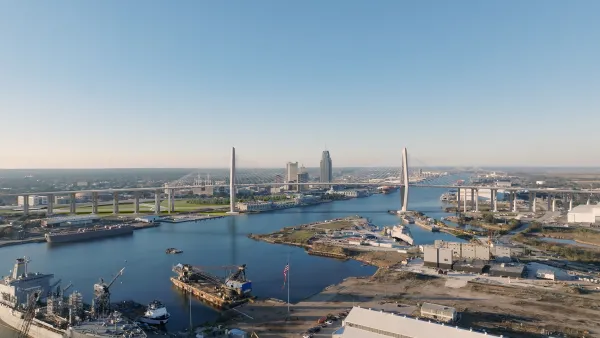
Alabama scores up to $2.5 billion federal loan for largest infrastructure project in state’s history
The Mobile River Bridge and Bayway Project aims to ease congestion at Alabama’s worst bottleneck.

Novel study finds extreme state-by-state disparity in housing construction timelines
The first comprehensive working paper on U.S. construction timelines also found that the permitting process for multi-family projects has slowed nationwide.

California may destroy its beaches trying to save homes from El Niño
Boulders and seawalls can protect homes from waves, but ultimately destroy sandy beaches.

California high-speed rail accomplishes only one legislative goal in 2026
The majority of the agency's failed pitches were never developed into written proposals.

FREE Course: Walkable City 1: Why Walkability?
After describing his path towards focusing on walkability as the essence of good planning, Jeff Speck marches through his five principal reasons for making more walkable places.
Reinventing Malls: Planning Alchemy—Turning Gray Fields Into Gold
The course focuses on the opportunities and imperatives that shape reinvention of mall sites.

City of Thousand Oaks
City of Wisconsin Rapids
Harvard University Graduate School of Design
The Architects Foundation
University of Cincinnati Online
Northern Illinois Transit Authority (NITA)
The Pocatello Development Authority
The Urban Renewal Agency of the City of Pocatello