A Santa Ana small lot development could be an example of how California could become more affordable by building more dense urban-style homes throughout the state.


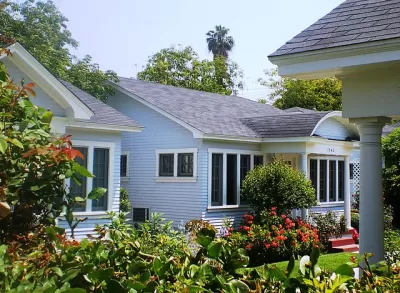
Small, closely packed houses aren't the norm in California's Santa Ana, but when Olson Co. built 62 small residences in the city's downtown, the units went so quickly, the developers raised the price of the units by $50,000. "A tightly spaced ‘infill’ development of town homes squeezed into just two and a half acres — making it an affordable housing option in a region where many young families can’t afford to buy a traditional new home," Andrew Khouri reports in The Los Angeles Times.
Many of California's most popular cities and most robust job markets are very expensive. The price of housing has been shown to impair the state's economy. If the state is to tackle this issue, one key strategy will be to build smaller, denser developments. The need for more small lot developments doesn't end at the borders of big cities, "… experts say the regional housing shortage also needs to be addressed by building more infill developments in outlying communities." This refers not just to L.A.'s Silver Lake or San Francisco's Mission District, "… many of these recent infill developments are outside such areas as Los Angeles’ Westside or Orange County’s Newport Beach with pricey real estate."
Still, infill doesn’t represent a silver bullet. Planning has to be holistic, in part because of how hard it can be to make residents excited about more density. "Approvals for denser infill projects can be challenging, especially since the available land often borders traditional subdivisions that blossomed during the region’s great post-war boom," Khouri writes.
Read the full story: One solution to Southern California's housing crisis: building in tight spaces, small lots

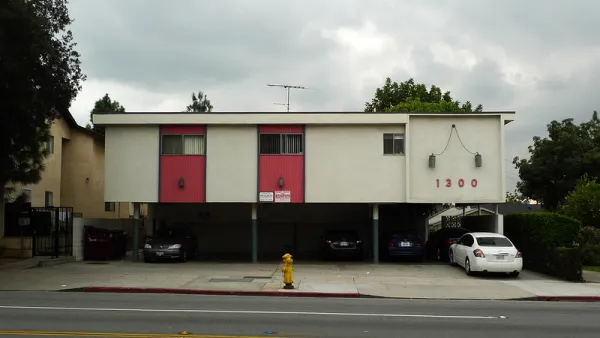
How the Iconic Dingbat Took Over Los Angeles
The low-slung, car-oriented apartment buildings represent a mid-century solution to a housing shortage and offer valuable lessons for new development.

Why Big Tech Billions Won't Dent California's Housing Crisis
New multibillion-dollar affordable housing commitments from leading tech firms may build out thousands of units, but that's nothing next to California's gargantuan housing shortage.

California Getting Way More New Jobs Than New Housing
Even with tons of building permits already issued this year, the outlook for the state’s affordability crisis is pretty grim.

Planetizen Federal Action Tracker
A weekly monitor of how Trump’s orders and actions are impacting planners and planning in America.

Amtrak, CN end decades-long dispute with eight-year agreement
The new operating agreement establishes an updated framework for the companies to work together, including processes to resolve disputes.
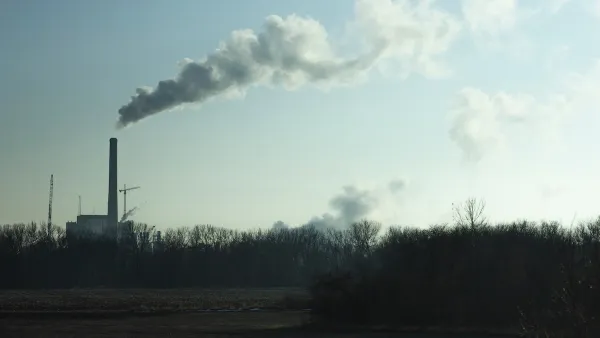
Nation's most wind-powered state turns to coal as data centers increase energy demand
For the first time in decades, Iowa has increased its generation of coal power.

Alabama scores up to $2.5 billion federal loan for largest infrastructure project in state’s history
The Mobile River Bridge and Bayway Project aims to ease congestion at Alabama’s worst bottleneck.

Trump is considering data centers on 6 states' public land — some state officials say they had no idea
If the administration approves the proposed projects, data center and data center-related developments will cover 17,600 acres of public land.

Despite court ruling, Trump is keeping nearly all wind projects in the US on hold
At least 110 wind energy projects have not heard from the government since a federal judge ruled that the Trump administration's freeze on wind turbine clearances was likely illegal.

FREE Course: Walkable City 1: Why Walkability?
After describing his path towards focusing on walkability as the essence of good planning, Jeff Speck marches through his five principal reasons for making more walkable places.
Reinventing Malls: Planning Alchemy—Turning Gray Fields Into Gold
The course focuses on the opportunities and imperatives that shape reinvention of mall sites.


KFH Group Inc.
Greater Baltimore Committee
Eagle County Government
The Architects Foundation
University of Cincinnati Online
The Pocatello Development Authority
The Urban Renewal Agency of the City of Pocatello