The state of New York this week took another step toward removing two miles of the Niagara Scenic Parkway (formerly known as the Robert Moses Parkway).


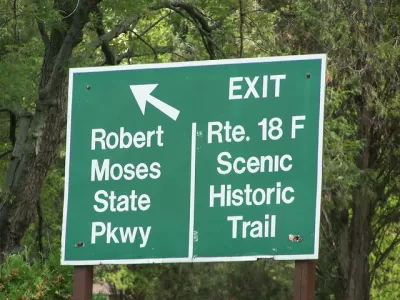
"Governor Andrew M. Cuomo today announced $3.5 million has been awarded to advance the final design for the Niagara Gorge Project," according to a press release posted on the New York State website.
The $3.5 million is a step toward the $40 million project announced by Governor Cuomo in March 2016 that will remove two miles of the Niagara Scenic Parkway—the parkway formerly known as the Robert Moses Parkway.
Once the two miles of parkway are removed, the project will restore public access to the Niagara Gorge waterfront, with a scenic trail network and a smaller road to handle local traffic. "Construction involves removing eight acres of pavement and opening up about 140 acres of green space along the Niagara Gorge rim between Niagara Falls State Park and Whirlpool and DeVeaux Woods State Parks," according to the press release.
Nancy Fischer reported on the details of the larger project proposal when it was announced earlier this year.
Read the full story: Governor Cuomo Announces $3.5 Million for Design and Engineering of Niagara Gorge Project

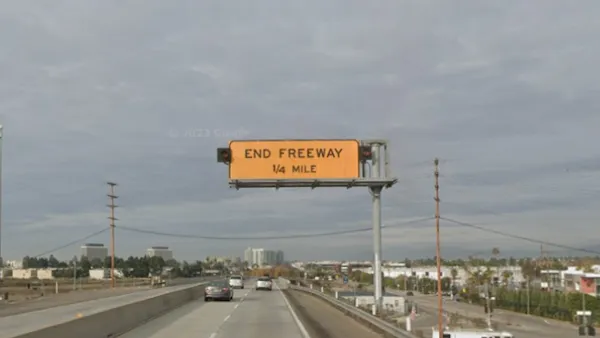
Proposal Would Transform L.A.’s ‘Freeway to Nowhere’ Into Park, Housing
A never-completed freeway segment could see new life as a mixed-use development with housing, commercial space, and one of the county’s largest parks.
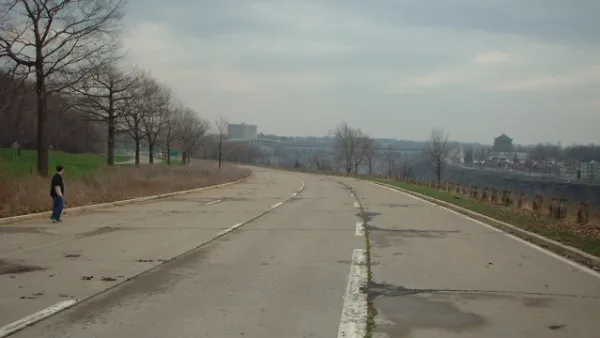
In Fitting Finale, NY Will Tear Down Robert Moses Parkway
From Niagara Falls comes news that the State of New York will rip out a two-mile stretch of the Robert Moses Parkway, which has divided city residents from the scenic Niagara Gorge for a half-century.

Historic Queens park is getting a $120M upgrade
The borough's largest park will undergo significant upgrades for accessibility, flood mitigation and historic preservation.

Planetizen Federal Action Tracker
A weekly monitor of how Trump’s orders and actions are impacting planners and planning in America.

California plans to bury El Niño’s downpour
If the state plays its cards right, it may be able to store a billion acre-feet of El Niño’s water in aquifers.

Desperate measures: Advocates weigh draining Lake Powell to fill Colorado River
Draining the reservoir could reduce evaporation losses by a couple hundred thousand acre-feet.

California city breaks ground on transit connector
The project includes three mobility hubs and a pedestrian bridge.

After public outcry, Massachusetts city releases housing development tracker
Cambridge’s tracker currently shows 250 housing projects in various stages of development.

40 years after approval, Chicago breaks ground on new park
The park honors Jean Baptiste Point du Sable, the city’s first permanent non-native settler.

FREE Course: Walkable City 1: Why Walkability?
After describing his path towards focusing on walkability as the essence of good planning, Jeff Speck marches through his five principal reasons for making more walkable places.
Reinventing Malls: Planning Alchemy—Turning Gray Fields Into Gold
The course focuses on the opportunities and imperatives that shape reinvention of mall sites.

City of Rosemead
Rutgers University, Edward J. Bloustein School of Planning and Public Policy
One Hundred Miles
Hunter College, City University of New York (CUNY)
The Architects Foundation
University of Cincinnati Online
City of Cambridge
Montrose County
The Pocatello Development Authority