Tioga County, Pennsylvania provides lessons of a post-oil-boom economy.



Laura Legere tells the story of Tioga County on either side of the Marcellus Shale boom. Since the boom, according to Legere, residents and businesses "have generally adjusted to the natural gas industry’s downward swing with equanimity."
A key characteristic of Tioga County's story is that the "drilling boom started and subsided earlier — and more abruptly — than other nearby counties and across the state." From 2008, the number of shale wells blossomed from 15 to 276 by 2010. Now the number is back down to 17.
But the county has proven resilient.
The Tioga County Development Corp. released an analysis of the lingering impact of Marcellus Shale development on the county’s economy in the summer of 2015 and found that total employment in the county was almost identical in 2014 to what it was in 2007 — although in the intervening years it had experienced gains (a 12 percent increase between 2009 and 2012) and dips (a 5 percent drop between 2007 and 2009, and another 6 percent drop between 2012 and 2014).
The article takes several angles to explain Tioga County's actions both during the boom and since. One of the keys to Tioga County's success, according to some of the locals: not changing too much to accommodate the boom.
Read the full story: After Marcellus Shale boom, picturesque Tioga County resumes quieter life

California Seals 21 Urban Oil Wells in South LA After Decades of Activism
The permanent closure of a long-troubled South Los Angeles oil site marks a hard-fought victory for residents and underscores the growing urgency of addressing hazardous idle wells in communities nationwide.

The Osage Nation’s Effort to Clean Up Abandoned Oil Wells
The Osage Nation is leading a complex and long-term initiative to identify, plug, and remediate thousands of orphaned oil wells on its reservation, protecting land, water, and community health for future generations.

The Growing Challenge of Orphan Oil Wells in America
Orphan oil wells—abandoned, undocumented, and often leaking methane—pose a widespread environmental and climate threat across the U.S., and finding them is just the beginning of a costly and urgent cleanup effort.

Planetizen Federal Action Tracker
A weekly monitor of how Trump’s orders and actions are impacting planners and planning in America.

Northwest rail fans eager for Sept. 30 debut of Amtrak’s Airo fleet
Get ready for that new train smell and more seats. But they won’t go faster or run more frequently on the Cascades route in Washington and Oregon.
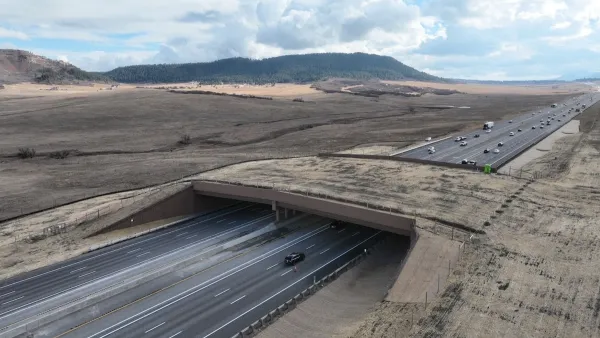
Record-breaking wildlife overpass in Colorado brings 91% reduction in animal collisions
Prior to the overpass, vehicles were hitting one deer per day on Colorado’s Interstate 25.

Detroit to transform waterfront with $2.2 billion investment
Developers will convert about 18 acres of unused parking lot space into civic spaces.

‘Going backwards:’ Baltimore mayor, students rally against state's transit funding plan
Maryland's proposed six-year plan provides no funding for Baltimore’s BMORE bus program and reduces its road maintenance funding.

Trump wants to cancel nearly 98% of funding for HUD housing support program
Multiple housing groups are suing the administration in an effort to preserve the funding.

FREE Course: Walkable City 1: Why Walkability?
After describing his path towards focusing on walkability as the essence of good planning, Jeff Speck marches through his five principal reasons for making more walkable places.
Reinventing Malls: Planning Alchemy—Turning Gray Fields Into Gold
The course focuses on the opportunities and imperatives that shape reinvention of mall sites.

City of Thousand Oaks
City of Wisconsin Rapids
Harvard University Graduate School of Design
The Architects Foundation
University of Cincinnati Online
Northern Illinois Transit Authority (NITA)
The Pocatello Development Authority
The Urban Renewal Agency of the City of Pocatello