An exploration of how adventure playgrounds enable freedom for children living in a world full of helicopter parents.


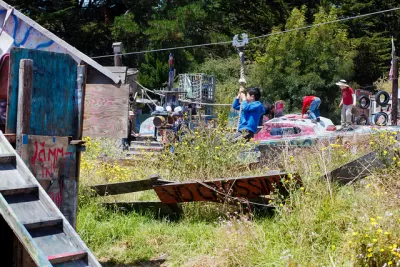
Alexandra Lange visits Kodomo Yume Park in Tokyo, where children encounter the elements of play, freedom, and risk, as an example of the adventure playground movement.
Adventure playgrounds have been in existence since the end of World War II, but the ideas behind the adventure playgrounds have more recently become a form of resistance to the practices of contemporary helicopter parents. Lange identifies the public realm as the panacea for the structured and insulated lives of kids these days.
The overprogrammed, oversterilized, overprotected lives of (some of) America’s youth are the result of a nexus of changes to work life, home life, and street life that have made bringing up babies into a series of consumer choices, from unsubsidized day care forward. It is the public realm—where the Tokyo playgrounds operate—that needs to change for American children to have unstructured afternoons and weekends, for them to bike and walk between school and the playground, to see packs of kids get together without endless chains of parental texts.
With that polemic in place, Lange tours the adventure playgrounds in Japan, providing insight into the design details and the activities of the children at play, while also critiquing the literature that has analyzed adventure playgrounds in the past.
Read the full story: WHAT IT WOULD TAKE TO SET AMERICAN KIDS FREE
Should Risky Playgrounds Make a Comeback?
From the mid-19th century to the early 1980s, playgrounds were designed public spaces that would likely horrify parents today. Swiss urban planner Gabriela Burkhalter has studied how these public spaces have evolved over the years.
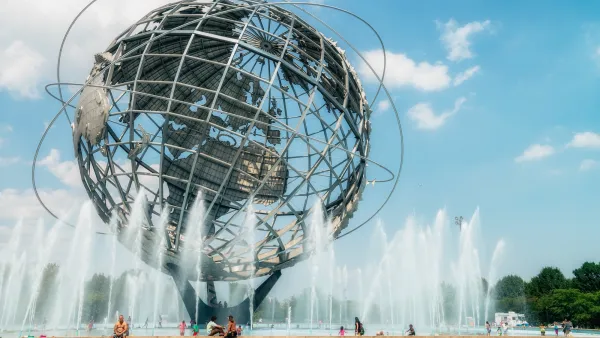
Historic Queens park is getting a $120M upgrade
The borough's largest park will undergo significant upgrades for accessibility, flood mitigation and historic preservation.
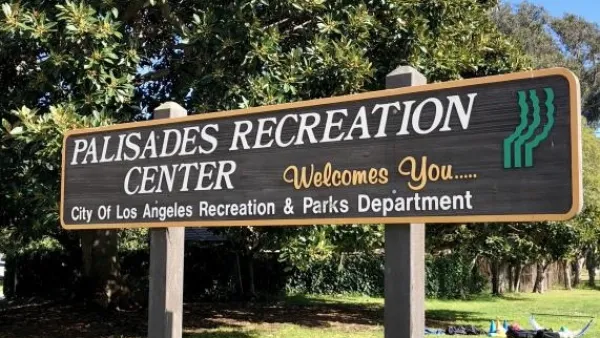
Private Donations Propel Early Restoration of Palisades Playground
Los Angeles has secured over $1.3 million in private funding to restore the Pacific Palisades playground months ahead of schedule, creating a modern, accessible space that supports community healing after recent wildfires.

Planetizen Federal Action Tracker
A weekly monitor of how Trump’s orders and actions are impacting planners and planning in America.

Washington state to charge fee to drivers with fuel-efficient cars
Revenue from the fee will go towards supporting the state’s highways.

Illinois considers spending $1 billion in taxpayer money on data center
A quantum computing campus and data center are currently under construction in Chicago.

Did data centers change how voters cast their ballots?
Texas, Ohio, and Georgia all flipped party control. But in rural counties, the effect of local data centers was mixed.

Amtrak invests in eight new Airo trainsets
The new trainsets will begin serving passengers in 2031.

HUD to end aid for mixed-immigration-status households
The new rule is projected to impact 80,000 people, nearly half of whom are children.

FREE Course: Walkable City 1: Why Walkability?
After describing his path towards focusing on walkability as the essence of good planning, Jeff Speck marches through his five principal reasons for making more walkable places.
Reinventing Malls: Planning Alchemy—Turning Gray Fields Into Gold
The course focuses on the opportunities and imperatives that shape reinvention of mall sites.

City of Charlotte
City of Rosemead
Rutgers University, Edward J. Bloustein School of Planning and Public Policy
University of Michigan School for Environment and Sustainability (SEAS)
Hunter College, City University of New York (CUNY)
The Architects Foundation
University District Partnership