In San Diego, a battle is taking place between residents of historic Barrio Logan and proponents of an NFL stadium which threatens it. Actor Mario Lopez has been hired to sell the stadium proposal.



Barrio Logan "is one of San Diego’s most historically significant and culturally important neighborhoods. . . [I]t has national prominence for its role in the Chicano / Mexican-American civil rights movement." Like many ethnic working class urban neighborhoods across the country in the second half of the twentieth century, it was bisected by a freeway and bridge construction in which thousands of residents were displaced. It was also rezoned for industrial uses, which impacted the health of its residents.
Barrio Logan residents would not accept these assaults as defeat. Residents and their allies fought off one assault after another, with acts of civil disobedience and occupations to stand-off authorities. Most famously, the neighborhood stopped bulldozers preparing a site for construction of a highway patrol station underneath the Coronado Bridge ramps and created one of most unique and artistically beautiful urban parks in the country. Chicano Park is adorned with murals on the bridge pylons which illustrate Mexican and Native American history, and the Chicano experience in the U.S. Started as an outlaw park, it is now designated a National Register Historic Site.
A threat of another assault on Barrio Logan has arrived at its doorstep. If approved, it’s likely to be the final crushing blow to the neighborhood. A National Football League stadium combined with a convention facility, without parking, may be placed at the edge of Barrio Logan. The “Convadium” is being placed on the ballot as “Measure C” in order to avoid community and environmental review in favor of a city-wide election based on the populist message of “keep the Chargers in San Diego.” The stadium will undoubtedly place huge pressures on the neighborhood to accommodate traffic and parking. This will likely translate into demolition of existing residences and businesses for surface parking, widened freeways, roads, bridges, and ramps. The neighborhood, already burdened with the city’s highest asthma and respiratory illness rates due to air pollution from the adjacent I-5 freeway, Coronado bridge, and shipyard industries, will now be expected to accommodate traffic for football games, conventions, concerts, and other events attended by as many as attended by 70,000 thousand people.
The Spanos family, owners of the NFL Chargers and proponents of the stadium, are aware of the sensitivity of the stadium location in the City's Latino community. Among other things, they have hired San Diego-raised celebrity Mario Lopez to promote the stadium ballot initiative in television advertisements.
On the other hand, HBO's Bill Simmons and famous San Diego skateboarder Tony Hawk filmed a segment ridiculing the Spanos / Chargers stadium proposal.
For more details about Barrio Logan's significance to the Chicano civil rights movement and the stadium proposal, please visit the source article.
FULL STORY: Barrio Logan vs Stadium: why it matters

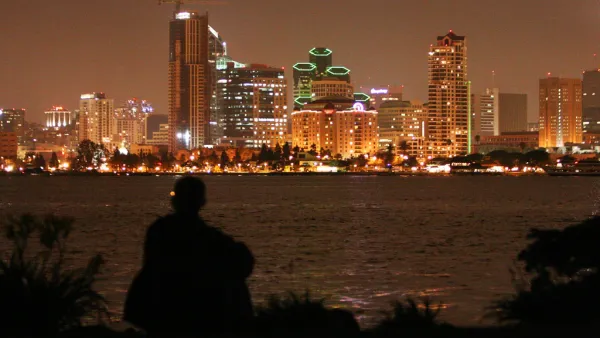
A Peek at the Future Downtown San Diego Without a New Charger Stadium
With two November ballot initiatives proposing to rezone a large part of downtown San Diego for a combined NFL stadium and convention facility, the community and a team of architects worked furiously to complete a more urban vision for the site.
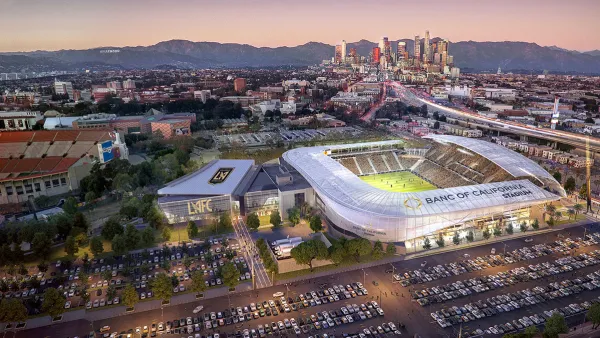
Sports Stadiums as a Battleground for Affordable Housing
Thanks to new enforcement powers, California's Department of Housing and Community Development can now cite cities for failing to meet affordable housing requirements in stadium redevelopment projects.
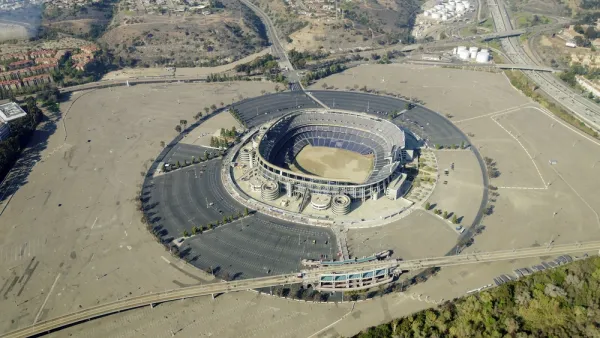
AIA San Diego Op-Ed on Chargers' Stadium Ballot Initiative: 'Not So Fast'
The San Diego Chapter of the American Institute of Architecture believes the NFL Chargers’ downtown stadium proposal is full of risk and lost opportunities. AIA - SD opines the existing stadium site is superior both for the fan and the taxpayer.

The state-sanctioned urbicide of Austin
People don’t kill cities. Freeways do.

US to reduce Colorado River water deliveries to Mexico
A new Colorado Treaty amendment reduces Mexico’s Colorado River water allocation by 250,000 acre feet.

New Jersey’s second-largest city bans standalone data centers
Jersey City will continue to allow co-location facilities, such as those meant for research institutions that store their own data.

Amtrak not solely to blame for New Jersey commuter rail's unreliability, report finds
A new study from the Garden State Initiative found that NJ Transit’s budget grew 20% across a 4 year period, but reliability declined significantly over the same period.

EPA erases limits on planet-warming pollution from power plants
Under Monday’s plan, power plants would still have some limits on how much mercury, arsenic and other contaminants they can emit.

Phoenix announces new on-demand transit service, more frequent RAPID buses
Both new services will launch in October, and are part of Phoenix's Project Effective Access Solutions for Easing Congestion.

FREE Course: Walkable City 1: Why Walkability?
After describing his path towards focusing on walkability as the essence of good planning, Jeff Speck marches through his five principal reasons for making more walkable places.
Reinventing Malls: Planning Alchemy—Turning Gray Fields Into Gold
The course focuses on the opportunities and imperatives that shape reinvention of mall sites.

Eagle County Government
Harvard University Graduate School of Design
Nashville Planning Department
The Architects Foundation
University of Cincinnati Online
The Pocatello Development Authority
The Urban Renewal Agency of the City of Pocatello
Journal of the American Planning Association