New policies may be needed to encourage more responsible development and keep builders from constructing structures that will inevitably be flooded.


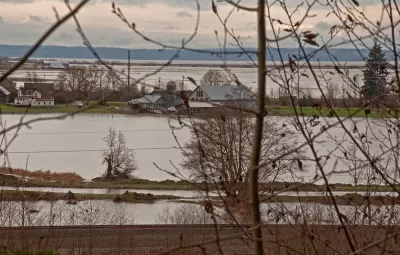
While floods can happen quickly, and the specifics of any individual flood can be surprising, they do happen regularly. According to a report from the Pew Charitable Trusts, "Flooding is the most costly and most common natural disaster in the United States."
Some of the cost may be mitigated by regulation and development. Some properties face flooding again and again, and the costs of these disasters add up. According to the story, "1 in 10 repeatedly flooded properties have received payments worth more than their value." Because some areas are more likely to flood than others, the piece argues there may be a way to create laws that lessen the property damage. It goes on to say, "The Pew Charitable Trusts supports proactive policy solutions that will break the cycle of repeated flooding and rebuilding in order to better prepare people and property for natural disasters, improve public safety, and put the NFIP [National Flood Insurance Program] on stronger financial footing."
What is not covered in the Pew piece is the political cost of keeping those who have suffered a natural disaster, or many disasters, from rebuilding. Even if policies might make logical sense, they may be difficult for public servants to enact.
FULL STORY: Repeatedly Flooded Properties Cost Billions

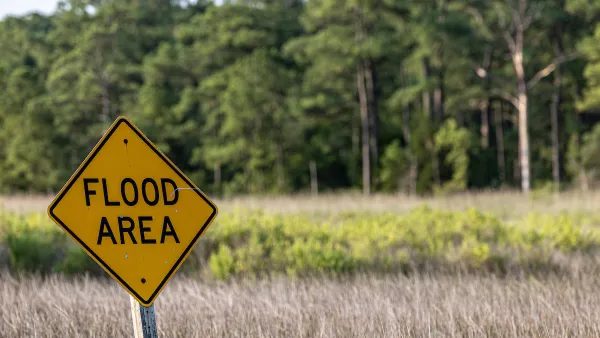
Future Floods in Focus: Using AI and Physics to Visualize Disaster Risks
MIT researchers have developed a groundbreaking AI-powered tool that integrates physics-based models to generate realistic satellite images of future flooding, offering communities a powerful way to visualize and prepare for disasters.
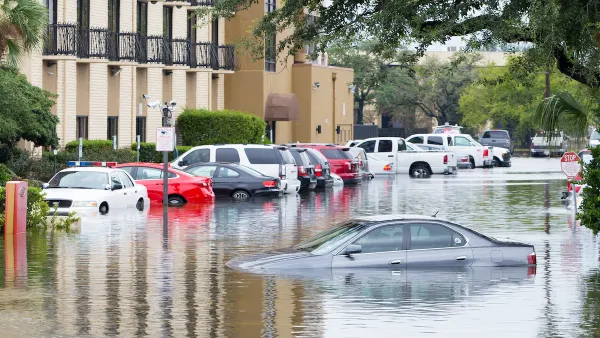
Migration to Disaster-Prone Areas Persists
Regions at high risk for flooding, wildfires, and other climate-fueled disasters continue to see rapid population growth.
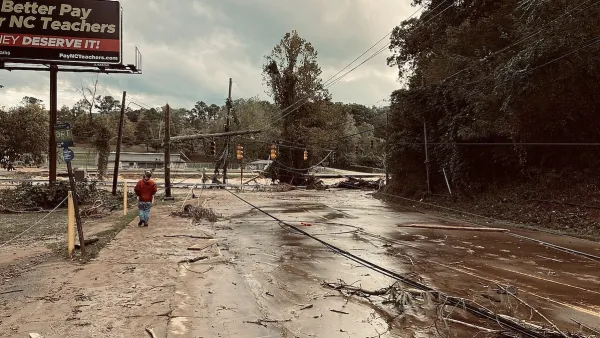
‘Climate Havens’ Not Safe From Hurricane Helene’s Destruction
Parts of North Carolina previously considered immune to the impact of hurricanes experienced historic flooding in the aftermath of the storm.

Planetizen Federal Action Tracker
A weekly monitor of how Trump’s orders and actions are impacting planners and planning in America.

The state-sanctioned urbicide of Austin
People don’t kill cities. Freeways do.

US to reduce Colorado River water deliveries to Mexico
A new Colorado Treaty amendment reduces Mexico’s Colorado River water allocation by 250,000 acre feet.

5 New England states march closer to 800 megawatt wind energy project
Securing federal approval for the project may be complicated under the Trump administration, which has historically been hostile towards domestic wind power.

Baltimore to break ground on $50 million Transit Priority Project
The project will bring faster bus trips, safer streets and better bike connections to Baltimore.

Airbnb launches $250 million 'last-dollar financing' housing accelerator, makes first investment in Austin
The company will put $6.4 million towards affordable housing development in Texas’ capital.

FREE Course: Walkable City 1: Why Walkability?
After describing his path towards focusing on walkability as the essence of good planning, Jeff Speck marches through his five principal reasons for making more walkable places.
Reinventing Malls: Planning Alchemy—Turning Gray Fields Into Gold
The course focuses on the opportunities and imperatives that shape reinvention of mall sites.

Eagle County Government
Harvard University Graduate School of Design
Nashville Planning Department
The Architects Foundation
University of Cincinnati Online
The Pocatello Development Authority
The Urban Renewal Agency of the City of Pocatello
Journal of the American Planning Association