With the EPA's proposed Clean Energy Rule on pause in the Supreme Court, the Dallas News takes a deep dive into the state's preparation for a new era of regulation.


Tom Benning provides feature length coverage of the complicated role of Texas "in the ongoing debate over President Barack Obama’s signature proposal to cut power plants’ carbon dioxide emissions."
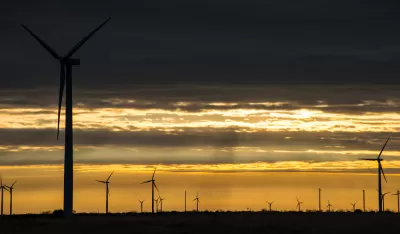
After the Supreme Court tabled the Clean Power Rule in February, the world "awaits the legal fate of the Clean Power Plan." On one side of the debate in Texas: the state's traditional strength in the oil industry. And on the other: the state's potential to become a leader in the burgeoning wind energy market.
"With both sides digging in," writes Benning, "Texas could help answer a key question raised recently in oral arguments before a federal appeals court: Just how transformational is the Clean Power Plan?"
Already, Texas has transitioned away from coal in its energy portfolio. Wind energy has gone from zero percent of the state's energy portfolio in 1994 to nine percent in 2014. Some also project the state s more than ready for the regulatory changes the Clean Power Plan. The Environmental Defense Fund "recently updated its analysis to show that Texas would actually exceed the plan’s goals under 'business-as-usual conditions.'"
But as Benning notes in detail, there are many in Texas who think the Obama Administration's designs for a clean energy future will have a negative impact on the Texas economy.
Read the full story: If Obama's climate change plan is upheld in court, what would it mean for Texas?

Desperate measures: Advocates weigh draining Lake Powell to fill Colorado River
Draining the reservoir could reduce evaporation losses by a couple hundred thousand acre-feet.

Eastern Nebraska is running out of electricity
Data centers and electrification are straining eastern Nebraska’s grid, throttling economic development.

Malls are becoming the midtowns of the future
Mall and office park redevelopments are a generational opportunity to create new nodes of urbanity.

NYC breaks ground on anti-flooding infrastructure project
New York City's new system will reduce stormwater flows to local sewers by 90%.

One Kentucky town’s secret to affordable housing
The Smoketown Community Land Trust has already built seven affordable homes for community members.

Houston gains petal-shaped cooling infrastructure to make streets more ‘delightful’
The city has installed the pavilions along 15 blocks in Houston.

FREE Course: Walkable City 1: Why Walkability?
After describing his path towards focusing on walkability as the essence of good planning, Jeff Speck marches through his five principal reasons for making more walkable places.
Reinventing Malls: Planning Alchemy—Turning Gray Fields Into Gold
The course focuses on the opportunities and imperatives that shape reinvention of mall sites.

City of Rosemead
Rutgers University, Edward J. Bloustein School of Planning and Public Policy
One Hundred Miles
University of Michigan School for Environment and Sustainability (SEAS)
Hunter College, City University of New York (CUNY)
The Architects Foundation
City of Cambridge
Montrose County
The Pocatello Development Authority