A state-by-state breakdown of the U.S. Environmental Protection Agency's proposed carbon reduction rule reveals that some states will have to go far beyond the 30 percent goals for the country overall.


"When the EPA announced it will require states to reduce emissions of carbon dioxide to 30 percent below 2005 levels by 2030, it wasn’t applying that exact target to everyone," explain Chris Kardish and Kevin Tidmarsh.
In fact, some states will have to cut more or less than 30 percent, "because the agency set up a formula that looks at states' most recent emissions along with other factors such as their ability to shift to natural gas or expected closings of coal plants when setting a 2030 goal."
"That method led to great variation among states, from a 14-percent target in Rhode Island to about 72 percent in Washington state."
The article includes a map that shows the required cut for each state.
Read the full story: How Much Each State Has to Cut Carbon Emissions Under New EPA Regulations

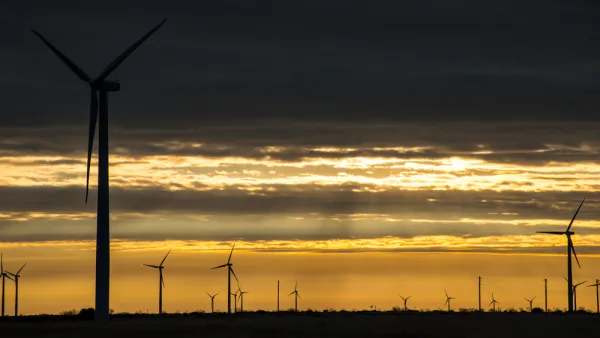
Is Texas Ready for the Clean Energy Rule?
With the EPA's proposed Clean Energy Rule on pause in the Supreme Court, the Dallas News takes a deep dive into the state's preparation for a new era of regulation.
President Obama's Clean Power Plan Is Nation's Strongest Climate Initiative
Just over a year ago President Obama's draft Clean Power Plan was unveiled. That proposal has been finalized and the president promoted it at a press event on Monday. The final rule is both stronger and more lenient that the original proposal.
EPA Releases Carbon-Cutting Rule for Existing Power Plants
EPA Administrator Gina McCarthy announced on Monday the long-awaited proposed rule to reduce the largest source of carbon dioxide emissions. It calls for cuts of 30 percent by 2030, with the baseline year of 2005, to be finalized next year.

Planetizen Federal Action Tracker
A weekly monitor of how Trump’s orders and actions are impacting planners and planning in America.

Amtrak, CN end decades-long dispute with eight-year agreement
The new operating agreement establishes an updated framework for the companies to work together, including processes to resolve disputes.

Judges permit Denver to divert 77,000 acre feet from the Colorado River for reservoir expansion
Overuse and climate change have caused the Colorado River’s water levels to plummet.

NYC DOT wants faster, more permanent street upgrades
The city is examining ways to build more concrete infrastructure without getting entangled in 'decades-long' projects.

'Something we’ve never seen before:' rising utility rates could strain city finances nationwide
Data centers, climate change and other factors have caused utility rates in the United States to increase by 38% since 2020.

Trump to overrule local leaders, lease millions of acres of America’s Pacific Island territories’ seafloors to mining companies
International law says that the Indigenous people of America’s territories have a right to prior and informed consent regarding projects that impact their countries.

FREE Course: Walkable City 1: Why Walkability?
After describing his path towards focusing on walkability as the essence of good planning, Jeff Speck marches through his five principal reasons for making more walkable places.
Reinventing Malls: Planning Alchemy—Turning Gray Fields Into Gold
The course focuses on the opportunities and imperatives that shape reinvention of mall sites.

Harvard University Graduate School of Design
KFH Group Inc.
Greater Baltimore Committee
The Architects Foundation
University of Cincinnati Online
The Pocatello Development Authority
The Urban Renewal Agency of the City of Pocatello