Providence, Rhode Island is looking ways to make Kennedy Plaza, located in the city's downtown, safe for all users. Increased law enforcement in only one way to achieve that goal, according to an op-ed in the Providence Journal.



"[Providence's] Kennedy Plaza has received a lot of attention lately — most of it focused on disturbances, panhandling and bad behavior," according to a column by Cliff Wood, executive director of the Downtown Providence Parks Conservancy (DPPC).
Wood shifts the focus of the conversation about the state of Kennedy Plaza, first by reminding readers of the importance of public space: "Public spaces are integral to the health and vitality of our city, and keeping them clean and safe is essential for all of its citizens."
After Wood lists the many partnerships his organization is working with to improve and maintain the parks in downtown Providence, Wood explains the importance of programming to his mission:
One of the most important principles of place-making, and one of our core beliefs at the DPPC, is that the best way to transform a space is by transforming the way people use it.
Wood's op-ed is written as a response to recent news of increased law enforcement presence in Kennedy Plaza, including a news article from early September by Amanda Milkovits. Although Woods recognizes the importance of law enforcement in keeping public spaces safe, "ultimately the best way to keep a public space free of negative activity is to fill it with positive activity."
Read the full story: Cliff Wood: Good things happening in Kennedy Plaza
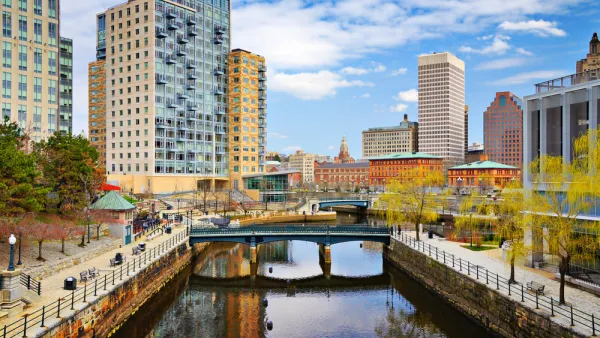
Providence Plans Ambitious Public Space Makeover
Take a virtual tour of the new public spaces proposed in the Providence Unified Vision Plan.
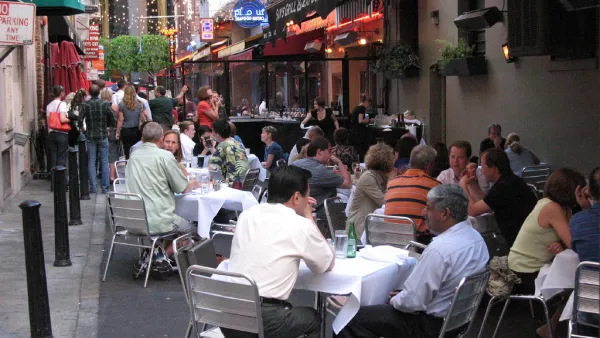
Four Cities Making the Most of Alley Spaces
Urbanful examines four cities making the most of scare public spaces by reactivating their alleys with programming and pedestrian-friendly designs.
Key to Successful Parks: More Female Visitors
The example of Holladay Park in Portland is examined for lessons in improving public spaces through the help of private sector consultants.

Planetizen Federal Action Tracker
A weekly monitor of how Trump’s orders and actions are impacting planners and planning in America.

California plans to bury El Niño’s downpour
If the state plays its cards right, it may be able to store a billion acre-feet of El Niño’s water in aquifers.

Desperate measures: Advocates weigh draining Lake Powell to fill Colorado River
Draining the reservoir could reduce evaporation losses by a couple hundred thousand acre-feet.

Mamdani’s pied-à-terre tax survives legal challenge
A panel of judges found that the plaintiffs failed to demonstrate injury as a result of New York City's implementation of the tax.

Eastern Nebraska is running out of electricity
Data centers and electrification are straining eastern Nebraska’s grid, throttling economic development.

Seattle passes record-breaking transit services expansion
Proposition 1 will double the city’s transit tax to add 95,000 more bus trips and preserve 180,000 bus trips annually.

FREE Course: Walkable City 1: Why Walkability?
After describing his path towards focusing on walkability as the essence of good planning, Jeff Speck marches through his five principal reasons for making more walkable places.
Reinventing Malls: Planning Alchemy—Turning Gray Fields Into Gold
The course focuses on the opportunities and imperatives that shape reinvention of mall sites.

City of Rosemead
Rutgers University, Edward J. Bloustein School of Planning and Public Policy
One Hundred Miles
University of Michigan School for Environment and Sustainability (SEAS)
Hunter College, City University of New York (CUNY)
The Architects Foundation
City of Cambridge
Montrose County
The Pocatello Development Authority