Recent suggestions from Philadelphia's City Council threaten the city's rebound and could turn swaths of Philadelphia into suburbia, argues Inga Saffron in a recent opinion piece.


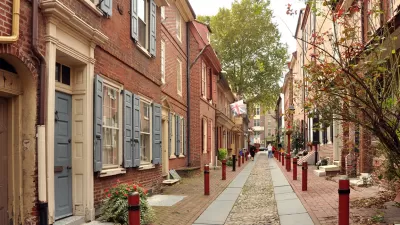
City Council members have put forward proposals that may threaten the walkability and attractiveness of metro Philadelphia. According to The Philadelphia Inquirer's Inga Saffron, these proposals threaten Philadelphia's recovery by recommending outdated ideas on how to plan neighborhoods.
Among a number of proposals, Saffron first points to one from Councilmember Jannie Blackwell, "Who is pushing legislation that would double the amount of parking required in new developments." Blackwell found an ally in her push for parking in City Council President, Darrell Clarke, who, when describing the kind of development he would like, points the city toward his own district, which has many car-first developments. "If you wander thorough Clarke's district, you can see several of these mini-suburbs. They are the legacy of the early 1990s, when Philadelphia was at its lowest point," Saffron cautions.
The author would prefer that Philadelphia envision development that values keeping more people in the city. She points out how the current proposals are completely at odds with the president's pro-development playbook. While these council members talk a good game about affordable housing, Saffron warns, "Low-density development sabotages their stated goal of creating affordable housing."
Read the full story: Changing Skyline: City Council's Clarke and Blackwell push outdated proposal to turn Philadelphia into suburbia
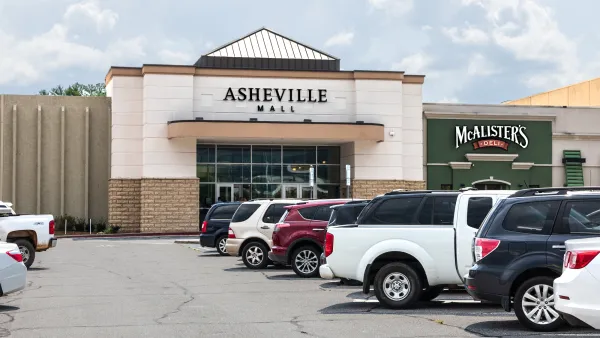
Asheville reconsiders parking minimums as surface parking eats up over a third of downtown real estate
Housing advocates say parking requirements are unnecessary and induce sprawl.
Austin as a Model for Parking Reform
The Texas capital’s new parking law signals a shift in thinking about the relationship between land use, transportation, and housing affordability.
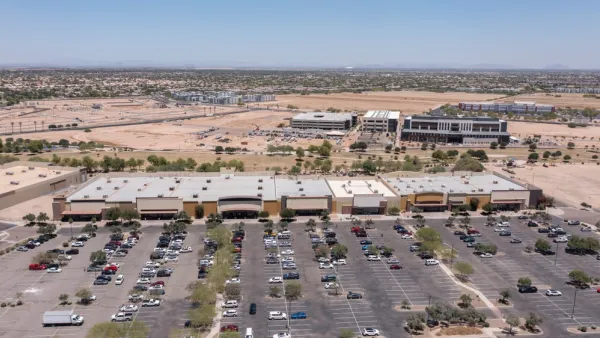
The Tragedy of Parking
Parking minimums and other zoning laws have made American cities untenable for any other type of transportation. It’s time we find a new way to zone our cities.

Desperate measures: Advocates weigh draining Lake Powell to fill Colorado River
Draining the reservoir could reduce evaporation losses by a couple hundred thousand acre-feet.

Eastern Nebraska is running out of electricity
Data centers and electrification are straining eastern Nebraska’s grid, throttling economic development.

Move over, LA: St. Louis gears up for Olympics, invests millions in downtown redevelopment
The Missouri city will host the 2028 Olympic soccer group stage and knockout matches.

Mass. votes against statewide minimum lot size for single-family homes
Over 2 million residents voted on Question 7; it was decided by just over 30,000 votes.

Maryland’s $15 billion bridge project gains key approval
The Maryland Transit Authority said the project will create over 60,000 jobs and add $23 billion to the local economy.

‘No clear next steps’ for Chicago's permanent festival grounds
Eleventh Ward Ald. Nicole Lee has suggested Soldier Field as a possible location for the permanent event space.

FREE Course: Walkable City 1: Why Walkability?
After describing his path towards focusing on walkability as the essence of good planning, Jeff Speck marches through his five principal reasons for making more walkable places.
Reinventing Malls: Planning Alchemy—Turning Gray Fields Into Gold
The course focuses on the opportunities and imperatives that shape reinvention of mall sites.

City of Rosemead
Rutgers University, Edward J. Bloustein School of Planning and Public Policy
One Hundred Miles
University of Michigan School for Environment and Sustainability (SEAS)
Hunter College, City University of New York (CUNY)
The Architects Foundation
City of Cambridge
Montrose County
The Pocatello Development Authority