However, neither state will ask voters to increase the gas tax. Instead, they ask voters to assure that gas tax and other transportation-derived revenues are spent on transportation. Neither state has raised the tax in over 25 years.


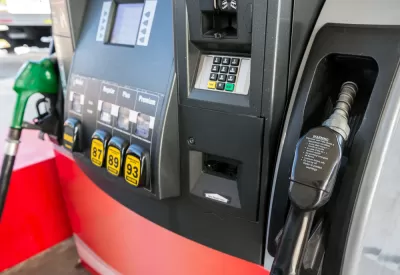
"Voters in Illinois and New Jersey will determine on Election Day whether money raised from transportation-related activities should be protected from the general budget," reports Daniel C. Vock, Governing’s transportation and infrastructure reporter. These types of constitutional restrictions on how revenue derived from transportation funding sources can be spent are referred to as 'lockboxes.'
The measures say nothing about the inverse of the measures' intentions: preventing the taking of general funds and using them for transportation purposes, which common sense would indicate as more likely to occur as the gasoline excise tax hasn't been raised in either state for more than a quarter of a century according to the Institute on Taxation and Economic Policy.
In fact, New Jersey Gov. Chris Christie did just that in August by signing an executive order that replenishes the state's insolvent Transportation Trust Fund "with money from elsewhere in the state budget," reported New Jersey 101.5.
The Illinois measure claims that transportation funds have been diverted according to the FAQ [#3] for the Safe Roads Constitutional Amendment (written by the Citizens to Protect Transportation Funding, which is staffed by the labor-management organization, The Indiana, Illinois, Iowa Foundation For Fair Contracting):
Over the last decade, the state has diverted more than $6 billion away from transportation projects that should have been spent on them.
For the actual ballot measure, see Ballotpedia: Illinois Transportation Taxes and Fees Lockbox Amendment (2016). It is based on Illinois House Joint Resolution Constitutional Amendment (HJRCA 36).
The Chicago Sun-Times editorial board opposes the measure. "A lockbox is nothing but an admission of failure, and we urge you to vote the idea down November," they write. Similarly, the Chicago Tribune blasted the "Safe Roads Constitutional Amendment," suggesting that it be called "The Illinois Crony Protection Amendment of 2016" instead. They write:
Budgeting for bridges doesn't belong in a constitution. It's a key but routine goal that governors, members of the General Assembly and local governing bodies can enforce on their own — without making the Illinois Constitution a playpen for some verrry special interests.
In response, James R. Reilly of the Metropolitan Planning Council wrote that it would be difficult to advocate for increasing transportation revenues "unless the public can be assured that the funds will go to the intended purpose."
The MPC supports hiking the state gas tax by 30 cents a gallon and increasing registration fees by 50 percent.
According to Ballotpedia, "in order for a legislatively referred constitutional amendment to win in Illinois, it must be approved by at least 60 percent of those voting on the question or by a majority of those who cast a ballot for any office in that election."
In New Jersey, the transportation funding situation may arguably be the worst in the nation. On June 30, Republican Governor Chris Christie was forced to declare a 'state of emergency' and shut down many road projects because the state's Transportation Trust Fund has run out of funds, and "owes $30 billion in principal and interest."
The state senate and Gov. Christie are at an impasse as to how much to cut other taxes, in particular the sales tax, in order to pass a 23-cent increase to the 14.5-cent gas tax, the second lowest in the nation. The deal is known as a tax shift because it plays funding the government against funding roads.
According to Ballotpedia, Public Question 2: New Jersey Dedication of All Gas Tax Revenue to Transportation (2016), was "a prerequisite for the legislature to raise the gas tax."
"Most gas tax revenue is already constitutionally dedicated to transportation projects, but state Assembly Speaker Vincent Prieto's legislation [PDF] addresses the roughly $40 million that is not — as well as any revenue from a future gas tax increase," reported Samantha Marcus for NJ Advance Media for NJ.com last January.
"Thirty states have constitutional restrictions on how the revenues in transportation funds can be spent, according to the Council of State Governments," adds Vock.
Hat tip to AASHTO Daily Transportation Update
FULL STORY: In Cash-Strapped States, Voters Could Protect Transportation Funds

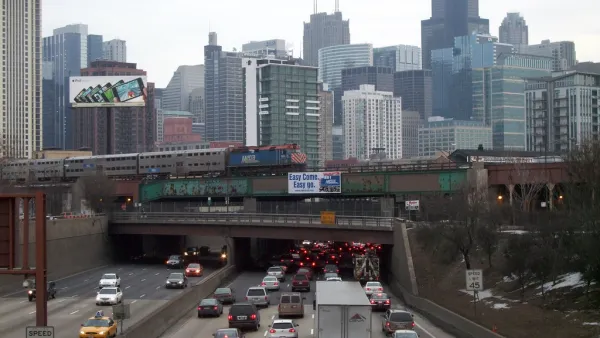
Illinois Voters to Decide on Transportation Trust Fund in November
Instead of voting on new taxes to reduce transportation revenue shortfalls, Illinois voters will decide on a constitutional amendment to ensure that transportation fees and taxes are only spent on roads and transit, the so-called "lockbox" measure.
The Critical Role of Down-Ballot Races in State Transportation Funding
The overwhelming majority of states that increased gas taxes last year were Republican-controlled. In states where the legislature is split, it's more difficult to approve transportation funding legislation. Down-ballot races may prove decisive.
Landmark Agreement Reached to Increase New Jersey Gas Tax by 23 Cents
A day after a fatal NJ Transit train crash at the Hoboken Terminal, Republican Gov. Chris Christie and Democratic leaders of the legislature announced the agreement to raise the tax by 159 percent; the first increase to the *14.5-cent tax since 1990.

The state-sanctioned urbicide of Austin
People don’t kill cities. Freeways do.

US to reduce Colorado River water deliveries to Mexico
A new Colorado Treaty amendment reduces Mexico’s Colorado River water allocation by 250,000 acre feet.

New Jersey’s second-largest city bans standalone data centers
Jersey City will continue to allow co-location facilities, such as those meant for research institutions that store their own data.

Amtrak not solely to blame for New Jersey commuter rail's unreliability, report finds
A new study from the Garden State Initiative found that NJ Transit’s budget grew 20% across a 4 year period, but reliability declined significantly over the same period.

EPA erases limits on planet-warming pollution from power plants
Under Monday’s plan, power plants would still have some limits on how much mercury, arsenic and other contaminants they can emit.

Phoenix announces new on-demand transit service, more frequent RAPID buses
Both new services will launch in October, and are part of Phoenix's Project Effective Access Solutions for Easing Congestion.

FREE Course: Walkable City 1: Why Walkability?
After describing his path towards focusing on walkability as the essence of good planning, Jeff Speck marches through his five principal reasons for making more walkable places.
Reinventing Malls: Planning Alchemy—Turning Gray Fields Into Gold
The course focuses on the opportunities and imperatives that shape reinvention of mall sites.

Eagle County Government
Harvard University Graduate School of Design
Nashville Planning Department
The Architects Foundation
University of Cincinnati Online
The Pocatello Development Authority
The Urban Renewal Agency of the City of Pocatello
Journal of the American Planning Association