A cynical person might say that this is why we can't have nice things.


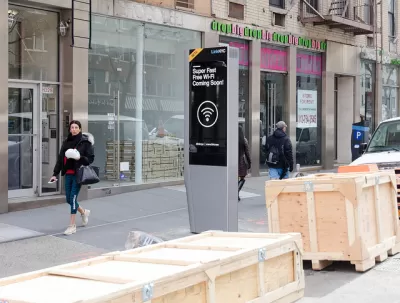
According to an article by Patrick McGeehan LinkNYC network will shut off the Internet browsers on the Wi-Fi kiosks located around the city.
The Wi-Fi kiosks were designed to replace phone booths and allow users to consult maps, maybe check the weather or charge their phones. But they have also attracted people who linger for hours, sometimes drinking and doing drugs and, sometimes, boldly watching pornography on the sidewalks.
It was only February that the LinkNYC kiosks were announced to great fanfare, "designed to replace more than 7,500 public pay phones and bring free Wi-Fi and phone service to every neighborhood." In reality, the kiosks created more problems than benefits. Turning off the browsing function on the 400 kisoks already installed in Manhattan is considered a temporary solution. In the meantime, users can still access fast Wi-Fi, Google Maps, free phone calls, and charging of electronic devices.
Read the full story: Free Wi-Fi Kiosks Were to Aid New Yorkers. But There’s an Unsavory Side.

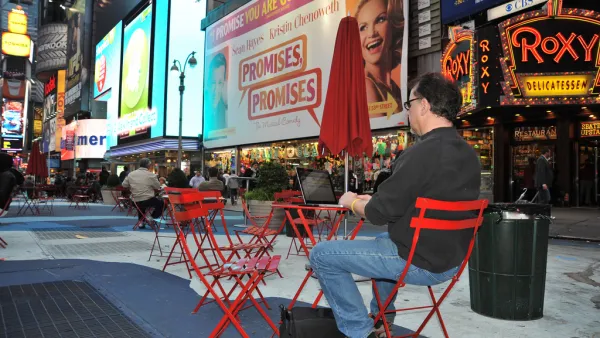
A Primer on New York City’s Fast, Free Public Wi-Fi
New York City’s new public Wi-Fi system is fast—really fast. But before you logon, remember to take all those encryption precautions you've heard about for years.
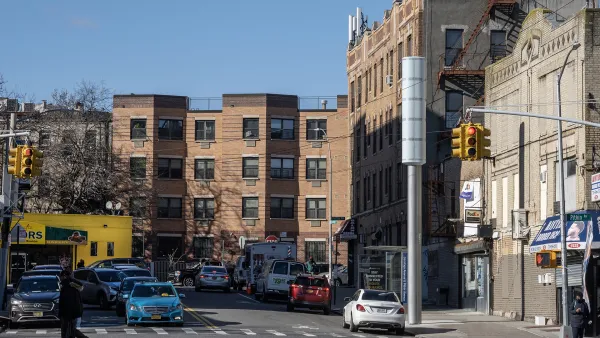
NYC's Link5G Towers Face Neighborhood Opposition
More than 2,000 32-foot towers are coming to New York City street corners to improve 5G connectivity throughout the city, and residents aren’t happy, citing incompatible design and visual distraction as a threat to safety.
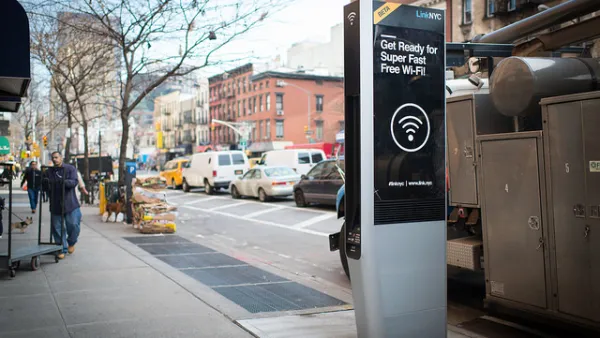
'Smart Cities' and Surveillance
The big city isn't such an anonymous place anymore.

Planetizen Federal Action Tracker
A weekly monitor of how Trump’s orders and actions are impacting planners and planning in America.

Amtrak, CN end decades-long dispute with eight-year agreement
The new operating agreement establishes an updated framework for the companies to work together, including processes to resolve disputes.

Judges permit Denver to divert 77,000 acre feet from the Colorado River for reservoir expansion
Overuse and climate change have caused the Colorado River’s water levels to plummet.

Philadelphia to invest $2 billion into upgrading city airports as PHL places last in customer satisfaction
Modernizations to Philadelphia's airports will include baggage system upgrades and a new automated parking garage guidance system.

The LA housing policies making developers turn away from the city
Despite LA’s housing shortage, developers say the city’s "mansion-tax" and pandemic-era policies make it an unappealing place to build housing.

New density bill would require 7 California cities to establish regional transit hubs
The bill would also require major cities in California to permit high-rise residential buildings.

FREE Course: Walkable City 1: Why Walkability?
After describing his path towards focusing on walkability as the essence of good planning, Jeff Speck marches through his five principal reasons for making more walkable places.
Reinventing Malls: Planning Alchemy—Turning Gray Fields Into Gold
The course focuses on the opportunities and imperatives that shape reinvention of mall sites.

City of Wisconsin Rapids
Harvard University Graduate School of Design
KFH Group Inc.
The Architects Foundation
University of Cincinnati Online
The Pocatello Development Authority
The Urban Renewal Agency of the City of Pocatello