New York City’s new public Wi-Fi system is fast—really fast. But before you logon, remember to take all those encryption precautions you've heard about for years.



The Wi-Fi revolution in New York is now visible, as the Wi-Fi kiosks for the city's LinkNYC network have begun to replace public telephone boxes around the city, with 500 in place by summer. The public Wi-Fi system is set to create a seamless wireless internet network across the city, creating what Wall Street Journal reporter Joanna Stern describes as "the future of public Wi-Fi." But with access, come some precautions, Stern warns.
I was feeling great about how much more secure my data would be until I spoke to Mark Wuergler, a security professional at Immunity Inc., who gets paid to find vulnerabilities in high-value networks.
“An attack is inevitable on New York City’s system,” he says. “It is too big of a trophy.”
Security experts advise users of the system to ensure their connection is encrypted, or to be even safer through the use of a VPN. Alternatively, or in addition to these precautions, is the need for multiple passwords across sites and as Stern advises, two-factor authenticated logins for sensitive sites.
FULL STORY: The Future of Public Wi-Fi: What to Do Before Using Free, Fast Hot Spots

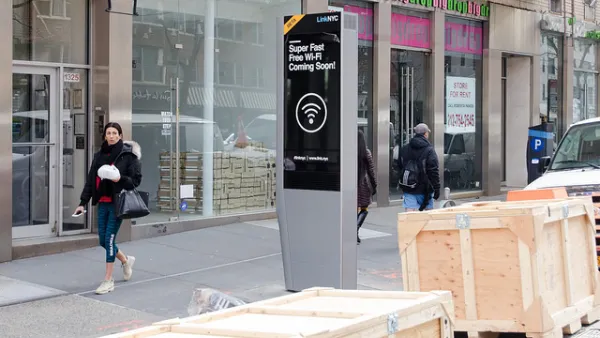
No More Browsing the Internet at LinkNYC WiFi Kiosks
A cynical person might say that this is why we can't have nice things.
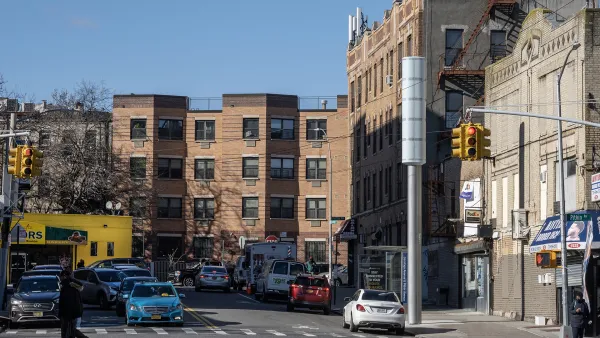
NYC's Link5G Towers Face Neighborhood Opposition
More than 2,000 32-foot towers are coming to New York City street corners to improve 5G connectivity throughout the city, and residents aren’t happy, citing incompatible design and visual distraction as a threat to safety.
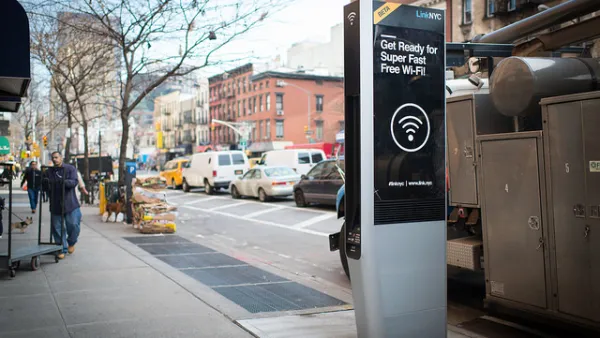
'Smart Cities' and Surveillance
The big city isn't such an anonymous place anymore.

The state-sanctioned urbicide of Austin
People don’t kill cities. Freeways do.

US to reduce Colorado River water deliveries to Mexico
A new Colorado Treaty amendment reduces Mexico’s Colorado River water allocation by 250,000 acre feet.

New Jersey’s second-largest city bans standalone data centers
Jersey City will continue to allow co-location facilities, such as those meant for research institutions that store their own data.

Amtrak not solely to blame for New Jersey commuter rail's unreliability, report finds
A new study from the Garden State Initiative found that NJ Transit’s budget grew 20% across a 4 year period, but reliability declined significantly over the same period.

EPA erases limits on planet-warming pollution from power plants
Under Monday’s plan, power plants would still have some limits on how much mercury, arsenic and other contaminants they can emit.

Phoenix announces new on-demand transit service, more frequent RAPID buses
Both new services will launch in October, and are part of Phoenix's Project Effective Access Solutions for Easing Congestion.

FREE Course: Walkable City 1: Why Walkability?
After describing his path towards focusing on walkability as the essence of good planning, Jeff Speck marches through his five principal reasons for making more walkable places.
Reinventing Malls: Planning Alchemy—Turning Gray Fields Into Gold
The course focuses on the opportunities and imperatives that shape reinvention of mall sites.

Eagle County Government
Harvard University Graduate School of Design
Nashville Planning Department
The Architects Foundation
University of Cincinnati Online
The Pocatello Development Authority
The Urban Renewal Agency of the City of Pocatello
Journal of the American Planning Association