With pubs across the country closing at an alarming rate, communities across England are using a recently adopted law to save their local pubs.


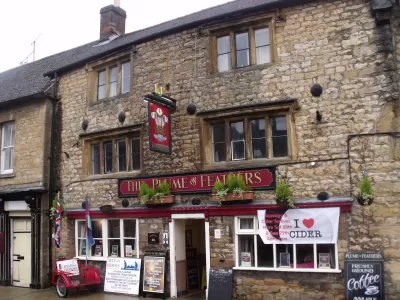
The 2011 Localism Act is giving new life to neighborhood pubs in England facing closure. Writing in The Spectator, Geoffrey Wheatcroft reports that the 2011 law has allowed for organized communities to prevent the closure of their beloved pubs by essentially turning them into co-operatives. Residents of the town of South Stoke (near Bath), have used the law to try to save their local, The Packhorse, which was shuttered four years ago by the large pub operations company that had owned it.
Under the 2011 Localism Act, the Packhorse was declared an asset of community value, the first time this had been done by Bath and North-East Somerset Council (known as ‘Banes’, and sometimes the bane of one’s life, but on this occasion on the side of the angels). Then the Pack Horse South Stoke Ltd was registered as a society under the 2014 Co-operative and Community Benefit Societies Act, selling £500 shares. More than 1,600 pubs are now protected under the 2011 Act, according to the Campaign for Real Ale, and several dozen are being kept open by local co-operatives.
Residents of South Stoke continue to raise funds for the purchase of The Packhorse, with £76,150 still needed to take it over.
Read the full story: The law that’s letting local heroes save their village pubs


Arlington's 'pop-up park' activates a vacant plaza
Third spaces don't have to be permanent.
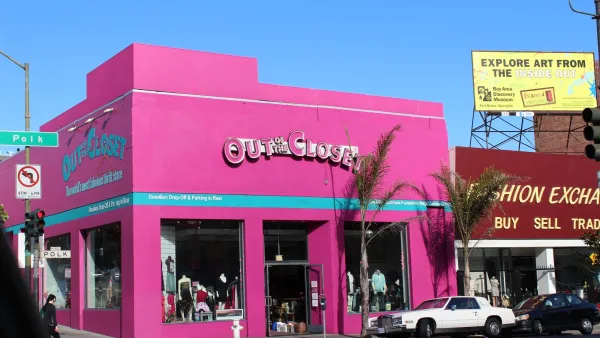
Thrift stores, public libraries and genderless bathrooms: How public amenities become trans infrastructure
Amenities like ample public transit, affordable retail and non-gendered bathroom spaces can make cities more safe and welcoming for transgender residents — and everyone else.

San Francisco weighs patio smoking ban
Business owners say the ban could force patrons onto sidewalks and disrupt long-standing bar culture, while proponents of the ordinance say second-hand smoke is a threat to patrons and workers.

Planetizen Federal Action Tracker
A weekly monitor of how Trump’s orders and actions are impacting planners and planning in America.

Amtrak, CN end decades-long dispute with eight-year agreement
The new operating agreement establishes an updated framework for the companies to work together, including processes to resolve disputes.

Northwest rail fans eager for Sept. 30 debut of Amtrak’s Airo fleet
Get ready for that new train smell and more seats. But they won’t go faster or run more frequently on the Cascades route in Washington and Oregon.

Brightline Florida files for bankruptcy
The transit company is over $5 billion in debt.

St. Louis Metro to test if single-car trains can reduce operating costs, maintain rider satisfaction
The pilot program will run from October to spring 2027, and begin with one single-car train operating on Metrolink’s Red and Blue lines.

Pennsylvania is building data centers in abandoned mines
Housing data centers in mines provides an alternative to destroying local forests and may spare residents from data centers’ noise and air pollution.

FREE Course: Walkable City 1: Why Walkability?
After describing his path towards focusing on walkability as the essence of good planning, Jeff Speck marches through his five principal reasons for making more walkable places.
Reinventing Malls: Planning Alchemy—Turning Gray Fields Into Gold
The course focuses on the opportunities and imperatives that shape reinvention of mall sites.

City of Thousand Oaks
City of Wisconsin Rapids
Harvard University Graduate School of Design
The Architects Foundation
University of Cincinnati Online
The Pocatello Development Authority
The Urban Renewal Agency of the City of Pocatello