Libraries around the country are expanding their services in an effort to become ‘third spaces’ for the community.


Could a revival of public libraries as community spaces fill the growing need for ‘third spaces?’ In a piece for Governing, Alan Ehrenhalt argues that it very well could.
As coffee shops seek to limit public access to their amenities and public space becomes increasingly privatized, public libraries could once again serve as key gathering places.
An increasing number of libraries have opened cafes to enhance local sociability. Many have placed job-training centers inside. Seattle’s main library contains a satellite City Hall. Charlotte is building an indoor-outdoor library to attract more customers year-round. The library in Athens, Ga., has become a focal point for chess tournaments. The one in Evanston, Ill., has created an entire sports complex. The library in Upper Providence Township in Pennsylvania has installed a teaching kitchen.
With these changes (and others, such as allowing talking in some previously quiet library spaces), libraries hope to remain relevant by offering both resources and community.
Read the full story: Are Libraries the New ‘Third Places’ We’re Looking For?
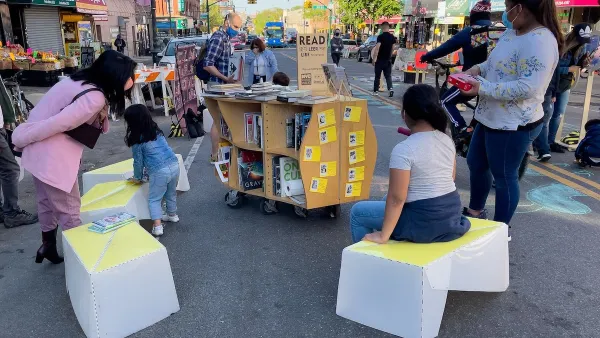
Third Spaces and Public Life
Public parks, libraries, and other social infrastructure foster community connections and stave off loneliness. Why are they increasingly deprioritized in civic life?
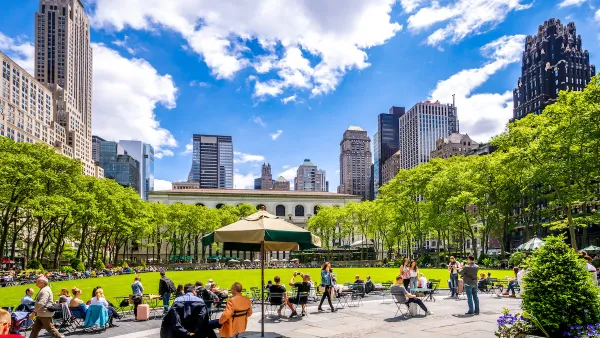
In Praise of the Endangered ‘Third Space’
The public spaces where people can spend time among strangers without buying something are crucial to healthy cities—and are quickly disappearing.
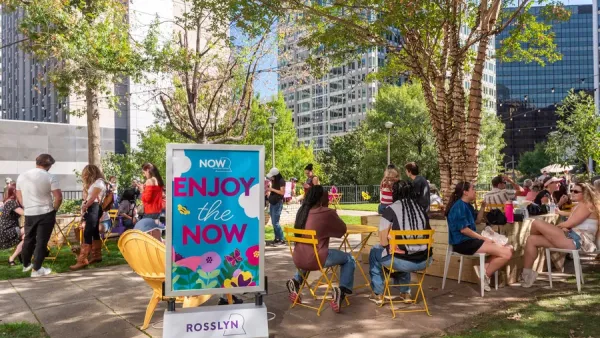
Arlington's 'pop-up park' activates a vacant plaza
Third spaces don't have to be permanent.

Washington state to charge fee to drivers with fuel-efficient cars
Revenue from the fee will go towards supporting the state’s highways.

Illinois considers spending $1 billion in taxpayer money on data center
A quantum computing campus and data center are currently under construction in Chicago.

Trump to blast ‘hydrocarbon highway’ through ‘world’s longest art gallery’
Environmental and historic preservation groups are suing to stop the project.

Data center, mining project swarm to long-awaited Alaska railroad line
The state-owned railroad approved final plans for the spur line this week; the project is expected to cost $311 million, mostly funded by the federal government

U.S. Army plan to explode reactive lead waste in Iowa postponed indefinitely
The Army will detonate the lead inside underground concrete chambers.

Data centers may drain 4 billion gallons of water annually from U.S.’s driest state
Nevada already has three dozen data centers; several dozen more are planned.

FREE Course: Walkable City 1: Why Walkability?
After describing his path towards focusing on walkability as the essence of good planning, Jeff Speck marches through his five principal reasons for making more walkable places.
Reinventing Malls: Planning Alchemy—Turning Gray Fields Into Gold
The course focuses on the opportunities and imperatives that shape reinvention of mall sites.

City of Charlotte
City of Rosemead
Rutgers University, Edward J. Bloustein School of Planning and Public Policy
University of Michigan School for Environment and Sustainability (SEAS)
Hunter College, City University of New York (CUNY)
The Architects Foundation
University District Partnership