The reservoir on the Colorado located above the Grand Canyon is dropping fast. A new study proposes a contingency plan to reduce the risk of catastrophe.


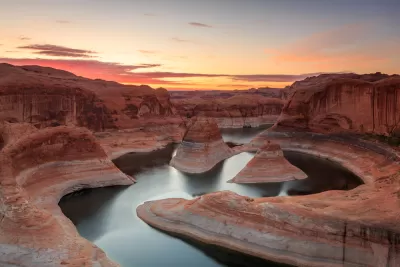
Tony Davis shares the news of a new study warning that Lake Powell "could virtually dry up in as few as six years if the region gets a repeat of the dry spell it experienced from 2000 to 2005." The lake was almost full prior to the drought during that time period—this time its only half full (depending on how you look at it).
According to Davis, the lake is already only 85 feet above a threshold that would trigger Upper Basin states (i.e., Colorado, New Mexico, Utah, and Wyoming) delivering water from other reservoirs into Lake Powell. Thirty-five feet lower than that and "there wouldn’t be enough water flowing through Glen Canyon Dam’s turbines to generate power."
The study also includes the beginnings of a contingency plan that would create a "three-legged stool" to protect the reservoir.
One leg would involve reducing water demand by farmers and cities in the Upper Basin. The second would step up cloud-seeding programs to try to boost snowfall in the region. The third would transfer some water stored in the smaller Upper Basin reservoirs to Lake Powell.
The feature-length article includes a lot more detail about the function of Lake Powell, including sections about the reservoir's primary purpose as a storage facility and the unprecedented climate trends of recent years
A collection of water districts and groups financed the study.
Read the full story: Lake Powell could dry up in as little as six years, study says

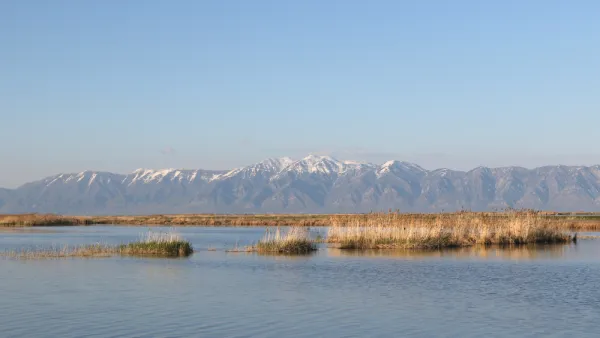
This Is What Really, Really Cheap Water Is Actually Costing Utah
The state's widespread practice of supplying unlimited untreated water to homes may be part of the reason it has to spend billions on a new pipeline and dam.
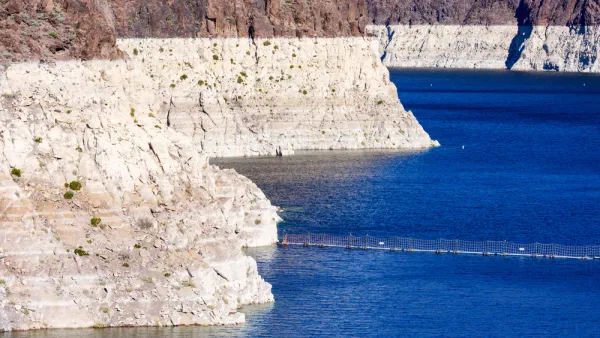
Colorado River Water Crisis Deepens
The states that rely on the Colorado’s water must make drastic cuts in water usage to maintain use of the West’s most important—and most threatened—water source.
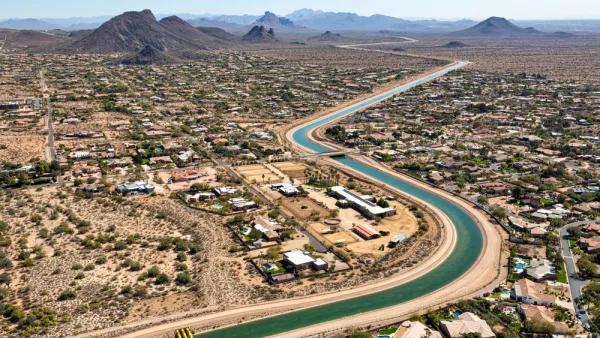
Booming Arizona Must Confront its Water Problem
Even as more people and companies flock to the state for its climate and economic opportunities, Arizona's water supplies are facing historic shortages.

Planetizen Federal Action Tracker
A weekly monitor of how Trump’s orders and actions are impacting planners and planning in America.

Amtrak, CN end decades-long dispute with eight-year agreement
The new operating agreement establishes an updated framework for the companies to work together, including processes to resolve disputes.

Northwest rail fans eager for Sept. 30 debut of Amtrak’s Airo fleet
Get ready for that new train smell and more seats. But they won’t go faster or run more frequently on the Cascades route in Washington and Oregon.

LAX SkyLink opening delayed again, contractor won’t commit to new deadline
The project was supposed to open its doors to the public in 2023.

Caltrain may slash over one-third of its stations
If Bay Area voters reject two transit tax measures, Caltrain, BART and AC Transit will see steep service cuts.

A 'dangerous' precedent: North Carolina successfully pressures communities into voting for toll roads
Two mayors resigned from the Charlotte Regional Transportation Planning Organization after it voted in favor of the toll roads.

FREE Course: Walkable City 1: Why Walkability?
After describing his path towards focusing on walkability as the essence of good planning, Jeff Speck marches through his five principal reasons for making more walkable places.
Reinventing Malls: Planning Alchemy—Turning Gray Fields Into Gold
The course focuses on the opportunities and imperatives that shape reinvention of mall sites.

City of Thousand Oaks
City of Wisconsin Rapids
Harvard University Graduate School of Design
The Architects Foundation
University of Cincinnati Online
The Pocatello Development Authority
The Urban Renewal Agency of the City of Pocatello