That is, not very well.


The Economist follows on recent news about a jump in traffic fatalities around the United States to offer some international perspective: "By most counts America has the worst road-safety record in the rich world."
The article includes more detail about how the United States compares to the rest of the world:
Its rate of 10.9 deaths per 100,000 people per year is almost twice as high as Belgium’s, the next-worst well-off country, and roughly level with that of Mexico. One of the main reasons that the United States sits atop this grim ranking is because Americans drive far more often than the rich-world average. When miles travelled are taken into account, America was actually a bit safer than Japan, Slovenia and Belgium in 2013 (the most recent year with comparable data).
Despite that significant caveat, The Economist also notes that many countries are improving the safety of their roads
Read the full story: America’s road-safety record is the worst in the rich world
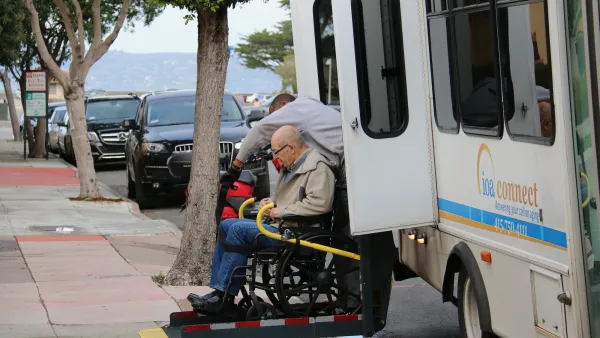
Seniors Account for 32% of Traffic Deaths in the Bay Area
Road safety interventions would help protect seniors and other vulnerable groups from traffic violence.
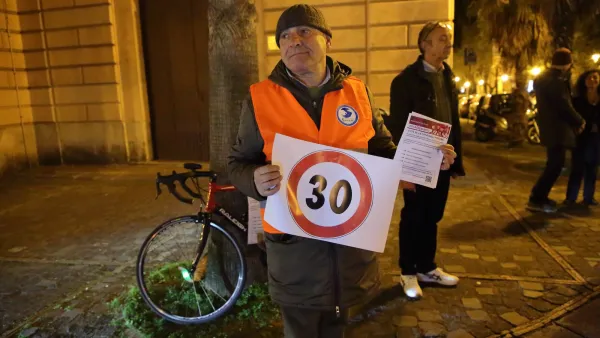
Rome is Latest European Capital to Drop Speed Limit to 30KPH
Traffic fatalities in Bologna, the first major Italian city to lower their speed limit, dropped by 50 percent in the first year.
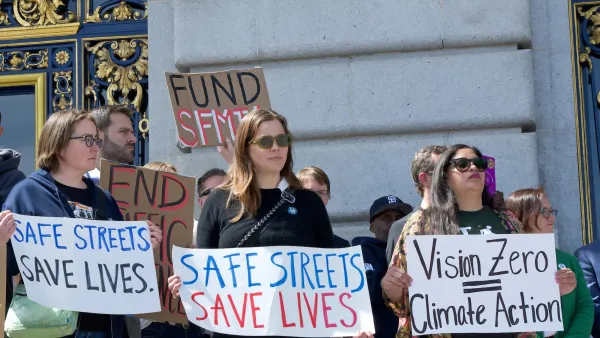
San Francisco Cut Traffic Deaths Almost in Half in 2025
The city credits its Vision Zero strategy and new traffic cameras for reducing the number of deaths and serious injuries on its roads.

Desperate measures: Advocates weigh draining Lake Powell to fill Colorado River
Draining the reservoir could reduce evaporation losses by a couple hundred thousand acre-feet.

Eastern Nebraska is running out of electricity
Data centers and electrification are straining eastern Nebraska’s grid, throttling economic development.

Malls are becoming the midtowns of the future
Mall and office park redevelopments are a generational opportunity to create new nodes of urbanity.

NYC breaks ground on anti-flooding infrastructure project
New York City's new system will reduce stormwater flows to local sewers by 90%.

One Kentucky town’s secret to affordable housing
The Smoketown Community Land Trust has already built seven affordable homes for community members.

Houston gains petal-shaped cooling infrastructure to make streets more ‘delightful’
The city has installed the pavilions along 15 blocks in Houston.

FREE Course: Walkable City 1: Why Walkability?
After describing his path towards focusing on walkability as the essence of good planning, Jeff Speck marches through his five principal reasons for making more walkable places.
Reinventing Malls: Planning Alchemy—Turning Gray Fields Into Gold
The course focuses on the opportunities and imperatives that shape reinvention of mall sites.

City of Rosemead
Rutgers University, Edward J. Bloustein School of Planning and Public Policy
One Hundred Miles
University of Michigan School for Environment and Sustainability (SEAS)
Hunter College, City University of New York (CUNY)
The Architects Foundation
City of Cambridge
Montrose County
The Pocatello Development Authority