Urban renewal of the 1960s built large amounts of public housing in the formerly industrial neighborhood of Moss Park in Toronto. Now, the neighborhood and its eponymous park have become home to some of the most impoverished people in the city.


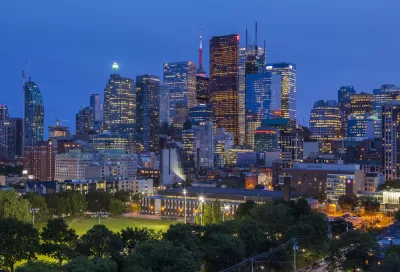
Geoffrey Vandeville reports on the public outreach process ongoing in the proposed redevelopment of Moss Park in Toronto, the park at the center of the neighborhood with the same name, known for "drugs, sex work and fighting."
"Although in its early stages, the plan — which comes at an estimated $80-100 million cost — has critics saying it will speed up the gentrification of the area," writes Vandeville. The city and The 519, a community organization that advocates on behalf of LGBTQ people, have undertaken a public outreach process that includes a community portrait series as means to gather input. The results have produced a variety of feedback:
In an update on the plan this month, the city and The 519 listed some other ideas for the new park and community centre, reflecting a diversity of wants and needs: a zipline, pet pool, bocce ball court, addiction counseling and mental health services.
According to Vandeville, the public consultation ends on September 30, and the redevelopment proposal is expected before the City Council by the end of the year.
Read the full story: Moss Park development sparks gentrification concerns
Neighborhood's Unchecked Facelift Highlights Poor Planning
Poor planning is allowing uncontrolled and rapid gentrification to destroy Toronto's Liberty Village neighborhood, according to this article from The Toronto Star.
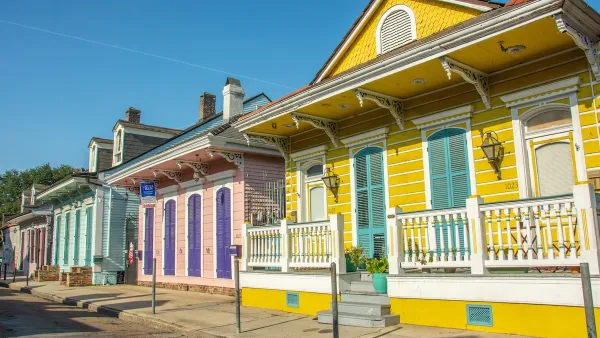
20 Years After Katrina, New Orleans is More Unaffordable Than Ever
The city’s post-hurricane redevelopment has failed to include its most vulnerable residents.

A Bronx Community Fights to Have its Voice Heard
After organizing and giving input for decades, the community around the Kingsbridge Armory might actually see it redeveloped — and they want to continue to have a say in how it goes.

Planetizen Federal Action Tracker
A weekly monitor of how Trump’s orders and actions are impacting planners and planning in America.

California plans to bury El Niño’s downpour
If the state plays its cards right, it may be able to store a billion acre-feet of El Niño’s water in aquifers.

Desperate measures: Advocates weigh draining Lake Powell to fill Colorado River
Draining the reservoir could reduce evaporation losses by a couple hundred thousand acre-feet.

Mamdani’s pied-à-terre tax survives legal challenge
A panel of judges found that the plaintiffs failed to demonstrate injury as a result of New York City's implementation of the tax.

Eastern Nebraska is running out of electricity
Data centers and electrification are straining eastern Nebraska’s grid, throttling economic development.

Seattle passes record-breaking transit services expansion
Proposition 1 will double the city’s transit tax to add 95,000 more bus trips and preserve 180,000 bus trips annually.

FREE Course: Walkable City 1: Why Walkability?
After describing his path towards focusing on walkability as the essence of good planning, Jeff Speck marches through his five principal reasons for making more walkable places.
Reinventing Malls: Planning Alchemy—Turning Gray Fields Into Gold
The course focuses on the opportunities and imperatives that shape reinvention of mall sites.

City of Rosemead
Rutgers University, Edward J. Bloustein School of Planning and Public Policy
One Hundred Miles
University of Michigan School for Environment and Sustainability (SEAS)
Hunter College, City University of New York (CUNY)
The Architects Foundation
City of Cambridge
Montrose County
The Pocatello Development Authority