The board of the Southeast Michigan Regional Transit Authority found a compromise and managed to get a regional transit plan onto the ballot for voters to consider in November.


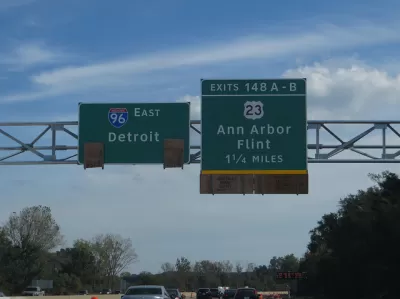
"A plan to bring regional transportation to southeast Michigan will now go to the voters," reports Eric. D Lawrence.
"After a near-death experience last month for the plan, it got new life this week when the Regional Transit Authority of Southeast Michigan at a special board meeting in Detroit [Thursday, August 4] agreed to place the plan on the November ballot," adds Lawrence.
Matt Helms reported on the previous failure of the proposed regional transit plan. The deal that brought the plan back to life involved the creation of a "funding allocation committee to review major decisions affecting revenue allocation and changes to the master plan," according to Lawrence. "The committee will include one member from each county -- Macomb, Oakland, Wayne and Washtenaw -- and the City of Detroit." Megan Owens, executive director of Transportation Riders United, is quoted in the article describing the committee as a step backward for the plan, opening the possibility of "every county and the city to look parochially."
As for the plan, it "will include bus rapid transit, expanded standard bus service as well as express routes to Detroit Metro Airport and a commuter rail line connecting Detroit and Ann Arbor.
Read the full story: Regional transit board OKs master plan to let voters decide
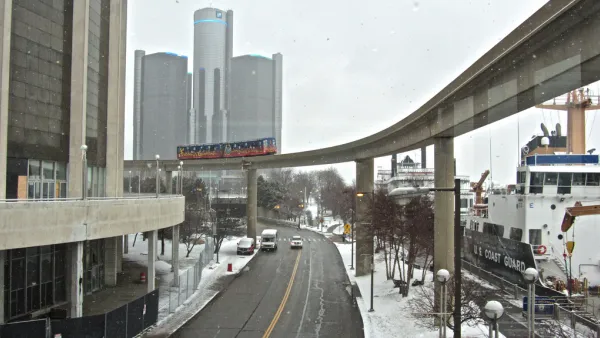
Regional Transit in Detroit: An Idea Whose Time Has Not Yet Come
Transit supporters in the Detroit region suffered a setback last week, but the hope is that they've only lost a battle, not the war, for regional transit.
Metro Detroit's Millage Tax Comes Within Half a Percentage Point of Passing
A $4.6 billion transit plan proposed by the Regional Transit Authority of Southeast Michigan received 49.5 percent of the vote on November 8. The millage tax would have funded bus rapid transit and regional rail within a four-county region.
Detroit's Failed Regional Transit Plan Strikes a Blow to the City's Revival
Voters in the Detroit region had a chance to reverse 40 years of neglect for regional transit. Instead, they kicked the can down the road.

Planetizen Federal Action Tracker
A weekly monitor of how Trump’s orders and actions are impacting planners and planning in America.

California plans to bury El Niño’s downpour
If the state plays its cards right, it may be able to store a billion acre-feet of El Niño’s water in aquifers.

Desperate measures: Advocates weigh draining Lake Powell to fill Colorado River
Draining the reservoir could reduce evaporation losses by a couple hundred thousand acre-feet.

Housing is the top priority of Seattle’s sole new councilmember
Jenks campaigned on building 1,000 new units of affordable housing.

New tax cuts may slash $1.5 billion in funding for Miami transit, public parks
Amendment 3 will save Miami-Dade homeowners $2,700 in 2028.

Arizona, Wisconsin, Pennsylvania hope to finally advance climate goals post-midterms
The three states have spent years under Republican or divided control.

FREE Course: Walkable City 1: Why Walkability?
After describing his path towards focusing on walkability as the essence of good planning, Jeff Speck marches through his five principal reasons for making more walkable places.
Reinventing Malls: Planning Alchemy—Turning Gray Fields Into Gold
The course focuses on the opportunities and imperatives that shape reinvention of mall sites.

City of Rosemead
Rutgers University, Edward J. Bloustein School of Planning and Public Policy
One Hundred Miles
University of Michigan School for Environment and Sustainability (SEAS)
Hunter College, City University of New York (CUNY)
The Architects Foundation
City of Cambridge
Montrose County
The Pocatello Development Authority