Craft beer aficionados take note. Bloomington, Illinois now allows businesses selling artisanal products to manufacture their goods on-site. The ruling blurs a distinction between industrial and commercial zoning.



In a bid to support local entrepreneurs, the city of Bloomington, Illinois has opened business districts to small-scale production of items like beers, candles, and soap, reports Maria Nagle. "Before the change approved by the City Council, the city's code allowed for only a giant leap: work at home as a hobby or go to a manufacturing district to open as a business."
Opponents of the change included nearby residents concerned about the materials these businesses might use. Nevertheless, "the change approved by a unanimous vote of the council applies to any business that produces 'on the premises articles for sale of artisan quality or effect or handmade workmanship.'"
The decision represents a shift toward a wider mix of uses that embraces small business, a trend that could stave off economic stagnation in smaller cities. "'[The proposed change] is presenting a new category which is basically a retail category that is supported by onsite production,' said Community Development Director Tom Dabareiner in his presentation to the council."
Read the full story: City OKs artisanal production in business districts


How Planners Can Liberate the Next Amazon
The path to business success occasionally passes through the garage—famously demonstrated by industry titans like Amazon or Hewlett Packard. Zoning codes should encourage, not obstruct, these kinds of American success stories.
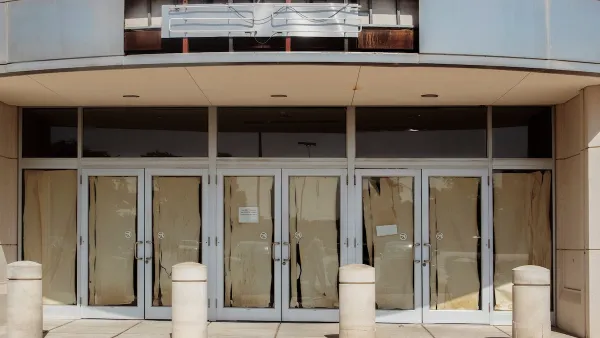
How to Repurpose Vacant Storefronts
Loosening restrictions on clean light manufacturing can revive dormant storefronts and revitalize communities.
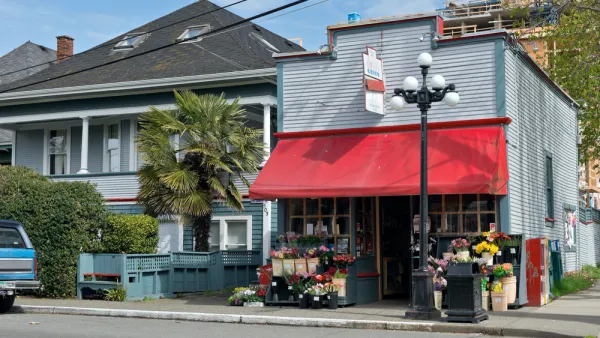
Home-Based Businesses Could Save the Post-Pandemic Economy
Seattle's city council considers reducing 'arbitrary' and 'exclusionary' limits on home-based businesses.

Planetizen Federal Action Tracker
A weekly monitor of how Trump’s orders and actions are impacting planners and planning in America.

Amtrak, CN end decades-long dispute with eight-year agreement
The new operating agreement establishes an updated framework for the companies to work together, including processes to resolve disputes.

Judges permit Denver to divert 77,000 acre feet from the Colorado River for reservoir expansion
Overuse and climate change have caused the Colorado River’s water levels to plummet.

Idaho may see an 18% drop in federal surface transit funding — the largest estimated cut in the US
Transit systems in rural communities are much more reliant on federal funding to provide their services.

How ‘post-disaster gentrification’ alters neighborhoods after natural calamities
After hurricanes, fires or other calamities, the original residents of a community are often replaced by younger, wealthier residents.

Maryland local governments examine if they should have more power to raise property taxes
Maryland’s housing market is out of reach for the majority of moderate-income residents.

FREE Course: Walkable City 1: Why Walkability?
After describing his path towards focusing on walkability as the essence of good planning, Jeff Speck marches through his five principal reasons for making more walkable places.
Reinventing Malls: Planning Alchemy—Turning Gray Fields Into Gold
The course focuses on the opportunities and imperatives that shape reinvention of mall sites.

Harvard University Graduate School of Design
KFH Group Inc.
Greater Baltimore Committee
The Architects Foundation
University of Cincinnati Online
The Pocatello Development Authority
The Urban Renewal Agency of the City of Pocatello