A recent study discovered that towns and cities around the country had removed the pavement on thousands of roads in the last five years.


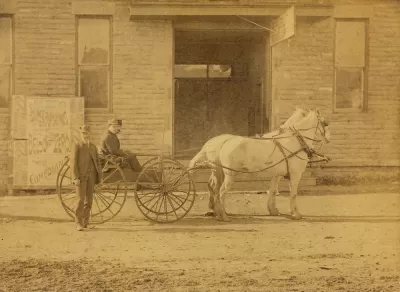
Aarian Marshall reports on a trend among cash-strapped towns: un-paving roads. According to Marshall, "rural areas all over the country are embracing this kind of strategic retreat." In fact, "Transportation agencies in at least 27 states have unpaved roads, according to a new report from the National Highway Cooperative Highway Research program."
Marshall's exploration of the trend centers on the city of Montpellier, Vermont, which is at the leading edge of the ongoing transportation budget experiment. The results of the experiment are still playing themselves out. For instance, unintended consequences of un-paving might include drivers switching from fuel-efficient cars, like a Prius, to a more durable sports utility vehicle.
However, the experiment is taking a scientific approach. "There are serious engineers and scientists—entire academic institutes, even—who study how to un-pave in smart ways. Crews can even tamp down dust problems by regularly applying water-absorbing calcium chloride, organic petroleum, and vegetable oils and animal fats," reports Marshall.
Read the full story: Cash-Strapped Towns Are Un-Paving Roads They Can’t Afford to Fix
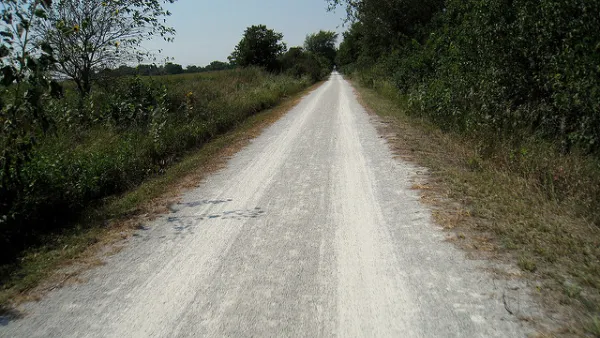
Omaha Stripped Away Pavement from Residential Streets, Controversy Ensues
Decades ago, developers installed sub-standard asphalt on residential streets in Omaha, with the understanding that residents, not the city, would maintain them.
Pennsylvania 12-year transportation plan commits $13B for transit
The state's new mid-range transportation strategy includes nearly $17 billion for roads and bridges and $367 million for multimodal projects.

Study: Pavement covers 40% of Phoenix
A new study reveals how ultrafine particles emitted by pavement worsen air quality.

Planetizen Federal Action Tracker
A weekly monitor of how Trump’s orders and actions are impacting planners and planning in America.

California plans to bury El Niño’s downpour
If the state plays its cards right, it may be able to store a billion acre-feet of El Niño’s water in aquifers.

Desperate measures: Advocates weigh draining Lake Powell to fill Colorado River
Draining the reservoir could reduce evaporation losses by a couple hundred thousand acre-feet.

Los Angeles just elected an urban planner as its mayor
Transportation analysts are optimistic that Raman will be more aggressive in addressing transit issues than Bass.

Mamdani’s pied-à-terre tax survives legal challenge
A panel of judges found that the plaintiffs failed to demonstrate injury as a result of New York City's implementation of the tax.

Eastern Nebraska is running out of electricity
Data centers and electrification are straining eastern Nebraska’s grid, throttling economic development.

FREE Course: Walkable City 1: Why Walkability?
After describing his path towards focusing on walkability as the essence of good planning, Jeff Speck marches through his five principal reasons for making more walkable places.
Reinventing Malls: Planning Alchemy—Turning Gray Fields Into Gold
The course focuses on the opportunities and imperatives that shape reinvention of mall sites.

City of Rosemead
Rutgers University, Edward J. Bloustein School of Planning and Public Policy
One Hundred Miles
University of Michigan School for Environment and Sustainability (SEAS)
Hunter College, City University of New York (CUNY)
The Architects Foundation
City of Cambridge
Montrose County
The Pocatello Development Authority