The auto may no longer be "the quintessential symbol of American mobility, status and independence," opines Robert J. Samuelson for The Washington Post, as the latest demographic and auto ownership data point to a change in American mobility.



"Now there are signs that the car and its many offshoots (SUVs, pickup trucks) are losing their grip on the American psyche and pocketbook," writes Samuelson, economics columnist for The Post.
The car culture may be dying or, at any rate, slumping into a prolonged era of eclipse. The only question is whether the signs of change can be believed. It’s not clear.
Clearly SUVs and light trucks have not lost favor with American passenger vehicle consumers, as 2015 sales numbers show. Samuelson's observations do appear to hold up, though, for compact cars, hybrids, and electric vehicles, sadly (from an environmental perspective), as "crossovers replace the family car."
Fewer drivers
"Just recently, the Federal Highway Administration (FHWA) published figures — first reported on the Atlantic magazine’s CityLab website — indicating that the number of licensed drivers 16 or younger in 2014 had dropped 37 percent since 2009 and, at 1.08 million, was 'the lowest number since the 1960s," writes Samuelson.
More impressive, the trend seems long term. A report from the Highway Loss Data Institute [supported by the auto insurance industry] cites studies showing that from 1983 to 2010 the share of 16-year-olds with a license fell from 46 percent to 28 percent; over the same period, the share of licensed 17-year-olds declined from 69 percent to 46 percent .
"It's not only young adults who are delaying in getting drivers licenses, but a drop in licenses among [almost] all age groups according to a new analysis of license data from 1983-2014 by the University of Michigan Transportation Research Institute," notes a January post here. "The only age group to show a slight increase (in drivers licenses) since 2008 is the 70-and-older crowd," according to UMTRI."
Auto ownership
Samuelson provides various reasons for the decline in youths with drivers licenses, debated here as well, and points to "a new study by Federal Reserve economists Christopher Kurz, Geng Li and Daniel Vine...[that] suggests that most potential young buyers couldn’t afford a new vehicle or didn’t want to incur the debt and operating expenses of doing so. Economic considerations dominated." Of course, there's a major difference between getting a license and owning a motor vehicle.
Whether it be economic or cultural, the trends are pointing to a lessening in the nation's systemic auto addiction. But Samuelson ends on a sober tone.
"We simply don’t know," he writes, referring to the future of American mobility.
What we do know is that we are, to a large extent, prisoners of the past. The car created today’s residential geography, and it cannot be repealed simply or swiftly.
Hat tip to Kenyon Karl.
FULL STORY: Opinions: Is the car culture dying?

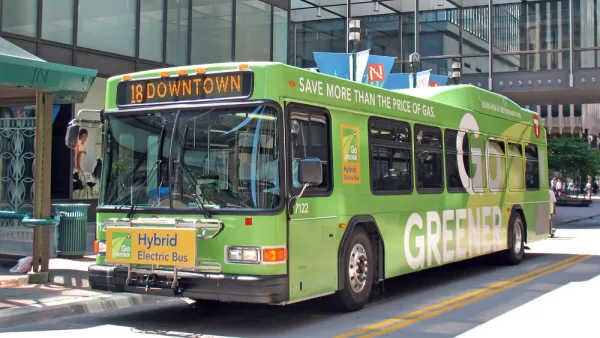
Fuel Efficiency Just Became Much More Important
Two widely cited University of Michigan transportation researchers urge consumers to drive more fuel efficient vehicles to reduce their own carbon emissions as President Trump works to relax vehicle fuel economy standards.
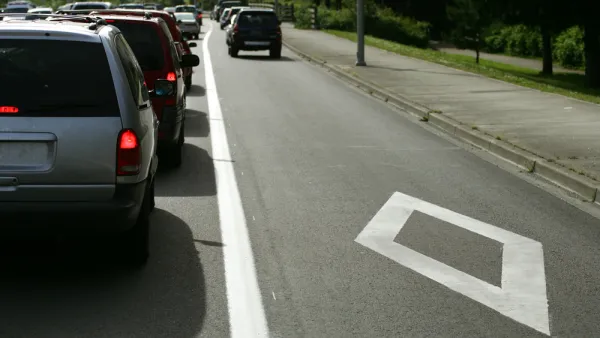
2016: Year of the Sports Utility Vehicle
Last year set two notable vehicle records. First, the most cars ever sold, at 17.54 million. Second, light trucks accounted for almost 61 percent of all sales. Sales of more fuel efficient car fell, though electric vehicle sales increased.
Demographic Changes Spell Trouble Ahead for Auto Industry
It's not only young adults who are delaying in getting drivers licenses, but a drop in licenses among all age groups according to a new analysis of license data from 1983-2014 by the University of Michigan Transportation Research Institute.

Planetizen Federal Action Tracker
A weekly monitor of how Trump’s orders and actions are impacting planners and planning in America.

The state-sanctioned urbicide of Austin
People don’t kill cities. Freeways do.

US to reduce Colorado River water deliveries to Mexico
A new Colorado Treaty amendment reduces Mexico’s Colorado River water allocation by 250,000 acre feet.

5 New England states march closer to 800 megawatt wind energy project
Securing federal approval for the project may be complicated under the Trump administration, which has historically been hostile towards domestic wind power.

Baltimore to break ground on $50 million Transit Priority Project
The project will bring faster bus trips, safer streets and better bike connections to Baltimore.

Airbnb launches $250 million 'last-dollar financing' housing accelerator, makes first investment in Austin
The company will put $6.4 million towards affordable housing development in Texas’ capital.

FREE Course: Walkable City 1: Why Walkability?
After describing his path towards focusing on walkability as the essence of good planning, Jeff Speck marches through his five principal reasons for making more walkable places.
Reinventing Malls: Planning Alchemy—Turning Gray Fields Into Gold
The course focuses on the opportunities and imperatives that shape reinvention of mall sites.

Eagle County Government
Harvard University Graduate School of Design
Nashville Planning Department
The Architects Foundation
University of Cincinnati Online
The Pocatello Development Authority
The Urban Renewal Agency of the City of Pocatello
Journal of the American Planning Association