Several key factors, not the least of which was cheap gas, combined to make 2015 a record year for new passenger vehicle sales, smashing the 2009 record of 10.4 million sales and edging-out the prior record of 17.40 million sales in 2000.


Other than the record number of vehicles sold, 17.5 million, what is most notable about 2015 sales is the changing composition of the American passenger vehicle fleet. As the caption under the accompanying graphic states, "car sales remained relatively flat, about 1 million more light trucks and SUVs were wold in 2015, a 13 percent jump from 2014." See below for more precise data.
"But because so much of buyers’ money went toward larger, gas-gulping trucks and SUVs, the sales boom conflicts with (an) administration campaign designed to encourage more efficient engines and less use of gasoline," write Drew Harwell and Steven Mufson for The Washington Post.
(T)he average fuel efficiency of new vehicles sold declined in 2015 to 25 miles a gallon, and U.S. consumption of gasoline rose 3 percent in 2015. [See related post.]
Increased SUV sales may imperil meeting President Obama's fuel efficiency goal—54.5 mpg by 2025.
Sales of slimmer passenger cars fell 2 percent last year compared with 2014, while sales of light trucks and SUVs soared 13 percent, estimates from industry researcher Autodata show.
It could have been worse. Unlike 2000, when larger SUVs like the Ford Explorer were best-sellers, Americans chose lighter SUVs like the Honda CR-V, which now compose the largest segment of the market at 14 percent, according to The Associated Press. While more fuel efficient than other light truck types (SUVs, pickup trucks and vans weighing <10,000 pounds per U.S. DOT [pdf]), these models are nonetheless displacing more fuel efficient subcompacts, compacts, hybrids, and electric vehicles.
According to AP, electric vehicle (EV) sales plummeted. The world's best-selling EV, the Nissan Leaf, saw U.S. sales drop 43 percent to "17,269, down from 30,200," from 2014, reports Auto Blog.
However, all was not bad for EV sales. "Tesla sold more than 50,000 Model S sedans in 2015, a new annual record," reports BGR.com.
As for those bike and transit-riding, Uber-using millennials living in dense cities who have no use for owning automobiles, they are now causing a "demographic shift" in auto sales, states the moderator in her video interview of TrueCar's Eric Lyman, who indicates that they are now a key driver in auto-sales.
Finally, most auto manufacturers reported record sales. One notable exception was Volkswagen, due to the "defeat device" scandal that is now the subject of a civil complaint filed by U.S. Department of Justice. AFP reports that their U.S. sales fell 5 percent in 2015, not bad considering the "25 percent drop registered in November after VW stopped selling diesel vehicles shown to have been equipped for years with software that intentionally subverted clean-air regulations."
FULL STORY: U.S. car sales hit record high in 2015

End of the Line for Honda's CNG-Fueled Cars, Civic Hybrid, and Accord Plug-In
Honda announced that low gas prices contributed to low demand for the Civic Natural Gas, the only compressed natural gas (CNG)-powered car for sale, the Civic Hybrid, and their first plug-in hybrid-electric vehicle, the Accord.
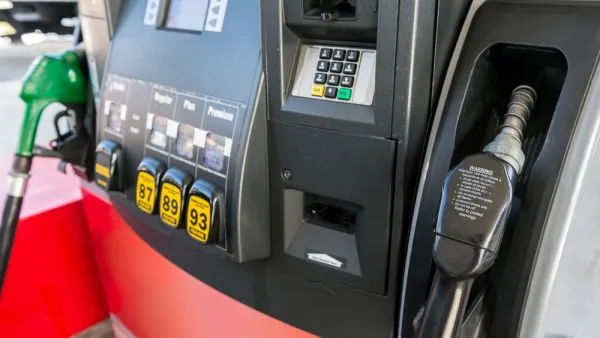
U.S. Gasoline Consumption Might Decline Despite Love Affair with SUVs
Gasoline consumption in the U.S. peaked in 2007, but began climbing in late 2014 with the decline in gas prices. Last year almost set a new record, but increases in gas prices, fuel efficiency and more EVs could reverse the direction—but when?
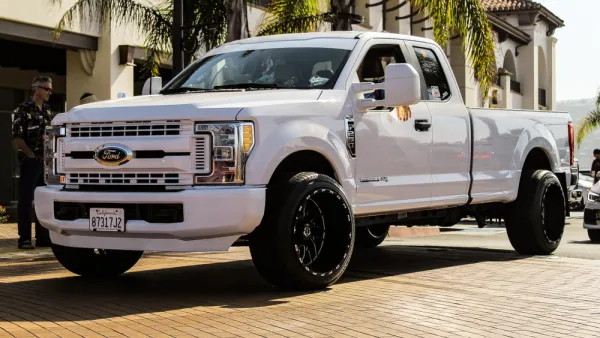
Climate Concerns Largely Absent in Auto Showrooms
A consumer survey found that less than a third of respondents considered carbon emissions or the environment when they last purchased a motor vehicle, yet three-quarters of Americans consider climate change a major problem or crisis.

The state-sanctioned urbicide of Austin
People don’t kill cities. Freeways do.

US to reduce Colorado River water deliveries to Mexico
A new Colorado Treaty amendment reduces Mexico’s Colorado River water allocation by 250,000 acre feet.

New Jersey’s second-largest city bans standalone data centers
Jersey City will continue to allow co-location facilities, such as those meant for research institutions that store their own data.

Amtrak not solely to blame for New Jersey commuter rail's unreliability, report finds
A new study from the Garden State Initiative found that NJ Transit’s budget grew 20% across a 4 year period, but reliability declined significantly over the same period.

EPA erases limits on planet-warming pollution from power plants
Under Monday’s plan, power plants would still have some limits on how much mercury, arsenic and other contaminants they can emit.

Phoenix announces new on-demand transit service, more frequent RAPID buses
Both new services will launch in October, and are part of Phoenix's Project Effective Access Solutions for Easing Congestion.

FREE Course: Walkable City 1: Why Walkability?
After describing his path towards focusing on walkability as the essence of good planning, Jeff Speck marches through his five principal reasons for making more walkable places.
Reinventing Malls: Planning Alchemy—Turning Gray Fields Into Gold
The course focuses on the opportunities and imperatives that shape reinvention of mall sites.

Eagle County Government
Harvard University Graduate School of Design
Nashville Planning Department
The Architects Foundation
University of Cincinnati Online
The Pocatello Development Authority
The Urban Renewal Agency of the City of Pocatello
Journal of the American Planning Association