If the proposed parking minimums had been in place over the past eight years, one-fifth of new development in the area would have been impossible, according to analysis reported by Bike Portland.


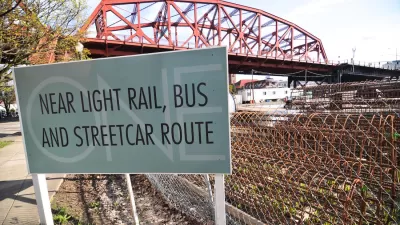
"Five days after the [Portland] city council seemed headed for a vote to mandate garages in larger transit-oriented apartment buildings in the Northwest District, it’s put the proposal on hold," reports Michael Andersen.
The political victory came after a large mobilization of residents who have clearly studied the teachings of Donald Shoup. "The decision came after opponents of mandatory parking organized a letter-writing campaign and then outnumbered supporters nearly three to one at the council’s Wednesday hearing," adds Andersen.
In an earlier article detailing the parking requirements before the council vote put them to rest, Andersen explained that the requirements "would have illegalized 23 percent of the new housing supply in northwest Portland" built in the last eight years. The failed ordinance would have extended parking requirements found outside the central city to the Northwest District. That is, according to Andersen, "buildings with 31 to 40 homes would need at least one parking space for every five units. Buildings with 41 to 50 homes would need one space for every four units. Buildings with 51 or more homes would need one space for every three units."
Read the full story: Council pulls parking mandate after affordability advocates pile into hearing
Oregon’s Under-the-Radar Parking Revolution
Thanks to parking reforms at the state level, Oregon cities are rapidly eliminating parking requirements, paving the way for more affordable housing construction and higher density.

Toronto City Council Removes Most Minimum Parking Requirements
The parking reform movement has a major new feather in its cap: the Toronto City Council has this week adopted sweeping changes to the parking requirements of the city's zoning bylaws.

Parking Minimums on the Chopping Block in Richmond, Virginia
Richmond, Virginia has decided to study the idea of removing parking minimums to lower the cost of housing and make more efficient use of land in the city.

Planetizen Federal Action Tracker
A weekly monitor of how Trump’s orders and actions are impacting planners and planning in America.

Washington state to charge fee to drivers with fuel-efficient cars
Revenue from the fee will go towards supporting the state’s highways.

Illinois considers spending $1 billion in taxpayer money on data center
A quantum computing campus and data center are currently under construction in Chicago.

Senate passes bill overhauling permitting
The bill still needs to pass the House.

Did data centers change how voters cast their ballots?
Texas, Ohio, and Georgia all flipped party control. But in rural counties, the effect of local data centers was mixed.

Amtrak invests in eight new Airo trainsets
The new trainsets will begin serving passengers in 2031.

FREE Course: Walkable City 1: Why Walkability?
After describing his path towards focusing on walkability as the essence of good planning, Jeff Speck marches through his five principal reasons for making more walkable places.
Reinventing Malls: Planning Alchemy—Turning Gray Fields Into Gold
The course focuses on the opportunities and imperatives that shape reinvention of mall sites.

City of Charlotte
City of Rosemead
Rutgers University, Edward J. Bloustein School of Planning and Public Policy
University of Michigan School for Environment and Sustainability (SEAS)
Hunter College, City University of New York (CUNY)
The Architects Foundation
University District Partnership