Bike advocates are hoping that the Houston Bike Plan can achieve full council approval in July. The Houston Chronicle hopes the bike plan will be for everyone (not just hipsters).


"Once you're far from the serene paths of Buffalo Bayou Park and downtown's B-Cycle stations, the true picture of cycling in Houston begins to emerge," according to the Houston Chronicle Editorial Board. "Cyclists in Houston are more working class than urban hipster, and they pedal more out of necessity than choice."
The reason for the perspective is the release of a final draft of the Houston Bike Plan earlier this month. The final draft makes changes to an earlier draft released in February. According to a separate article by Dug Begley, the bike plan added 133 more miles of bike trails or shared use paths between drafts. The final draft calls for a total of "1,789 miles of bike-friendly paths and trails, including 668 miles separated from automobile traffic," according to Begley.
Which brings us back to the editorial. Back in February, the bike plan was pitched as a tool to attract casual riders. The editorial board hopes, however, that those riding their bikes to work because they can't afford to drive, will be given more opportunities to do so safely.
Read the full story: Editorial: For biking to work
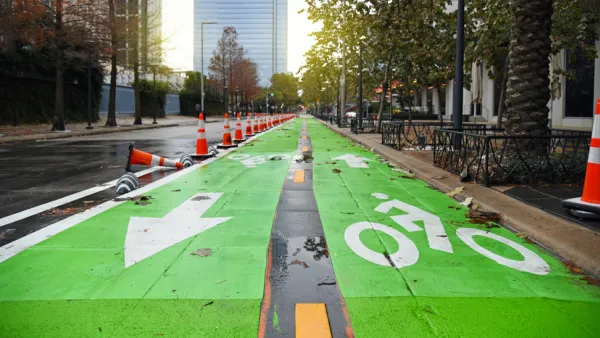
Bike Infrastructure Makeover Underway in Houston
It might surprise people outside of Texas to hear about the progress of new, high quality bike infrastructure in the city of Houston.

Houston Bike Plan Gets the Funding it Needed
Houston finally has the funding in place to work toward its vision for a bike-friendly city.
A Call for Better Bike Infrastructure in Houston
It's been a deadly Autumn for bike riders in Houston, and bike advocates are pushing the city to make streets safer for all users.

Planetizen Federal Action Tracker
A weekly monitor of how Trump’s orders and actions are impacting planners and planning in America.

Eastern Nebraska is running out of electricity
Data centers and electrification are straining eastern Nebraska’s grid, throttling economic development.

Move over, LA: St. Louis gears up for Olympics, invests millions in downtown redevelopment
The Missouri city will host the 2028 Olympic soccer group stage and knockout matches.

Dallas releases zoning code overhaul to officials
The drafted overhaul is over 400 pages long.

NYC renovations for dangerous, ‘mercilessly crammed’ street delayed until 2027
Construction was supposed to begin this fall.

San Diego’s Midway Rising project gets greenlight from city council
The project looks to become the largest affordable housing development in California's history.

FREE Course: Walkable City 1: Why Walkability?
After describing his path towards focusing on walkability as the essence of good planning, Jeff Speck marches through his five principal reasons for making more walkable places.
Reinventing Malls: Planning Alchemy—Turning Gray Fields Into Gold
The course focuses on the opportunities and imperatives that shape reinvention of mall sites.

City of Rosemead
Rutgers University, Edward J. Bloustein School of Planning and Public Policy
One Hundred Miles
University of Michigan School for Environment and Sustainability (SEAS)
Hunter College, City University of New York (CUNY)
The Architects Foundation
City of Cambridge
The Pocatello Development Authority
The Urban Renewal Agency of the City of Pocatello