A project launched several years ago in New York City is making its way to cities around the world—much like the bacteria that the world's billions of transit users transfer around the surfaces of subway trains, stations, and buses.


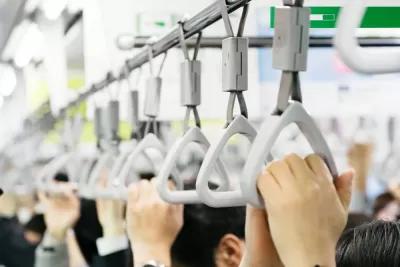
The Centre for Genomic Regulation put out a press release earlier this month announcing the latest developments in the MetaSUB research project: an unprecedented study of urban mass-transit systems and cities around the world with the goal of creating to establish a "DNA map" of the microbiomes found in mass transit systems.
According to the press release, "[m]ass transit systems represent unique urban biomes, microbiomes, and metagenomes," enabled by "perhaps one of the world’s largest, high-traffic, and universal built environments."
The release notes the invisible importance of the microbiome in the biological makeup of humans ("bacterial cells in and on our bodies outnumber human cells by a 10:1 ratio," for instance). According to the release, "[t]he data produced by the consortium will benefit city planners, public health officials, and designers, as well as the discovery of new species, biological systems, and biosynthetic gene clusters (BGCs), thus enabling an era of more quantified, responsive, and 'smarter cities.'"
June 21 was the "Global City Sampling Day" for the MetaSUB project. Barcelona is the latest large city to join the project, which began in 2013 in New York City. The New York City effort already produced a widely circulated microbiome map of that city's subway system.
Read the full story: MAPPING THE SUBWAY’S MICROBIOME

Poking around the New York Subway for Germs
Researchers from Weill Cornell Medical College have spent the last 18 months scouring the New York Subway in the search for a DNA profile of the system. They even created a map of the 15,152 microbes they found.
Strange Bedfellows: Germs and Architecture
A study from the University of Oregon has laid the foundation for a new level of architectural outcome: how the materials of buildings can facilitate healthy kinds of bacteria while managing the pernicious sort.
Seattle Creates 4 ‘Low-pollution Neighborhoods’
The pilot program is designed to reduce air pollution and increase access to transit and safe walking and biking infrastructure.

Planetizen Federal Action Tracker
A weekly monitor of how Trump’s orders and actions are impacting planners and planning in America.

‘Going backwards:’ Baltimore mayor, students rally against state's transit funding plan
Maryland's proposed six-year plan provides no funding for Baltimore’s BMORE bus program and reduces its road maintenance funding.

Detroit to transform waterfront with $2.2 billion investment
Developers will convert about 18 acres of unused parking lot space into civic spaces.

HUD, USDA agree on framework to simplify housing environmental review standards
Their agreement is a requirement of the 21st Century ROAD to Housing Act.

Cost of water rising at a faster pace than inflation, median household income
California and Maryland residents have seen their water bills grow especially high.

NYC building owners overwhelmingly comply with new emissions limits
The New York City Department of Buildings is fining owners who did not file emissions reports.

FREE Course: Walkable City 1: Why Walkability?
After describing his path towards focusing on walkability as the essence of good planning, Jeff Speck marches through his five principal reasons for making more walkable places.
Reinventing Malls: Planning Alchemy—Turning Gray Fields Into Gold
The course focuses on the opportunities and imperatives that shape reinvention of mall sites.

planning NEXT
City of Thousand Oaks
City of Wisconsin Rapids
The Architects Foundation
University of Cincinnati Online
Northern Illinois Transit Authority (NITA)
The Pocatello Development Authority
The Urban Renewal Agency of the City of Pocatello