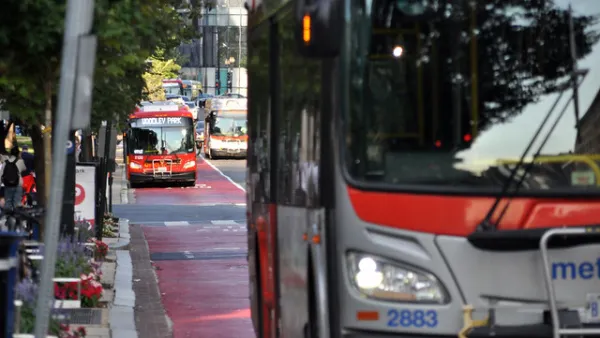
Washington, D.C. is the latest place to find traffic lanes emblazoned with a bright red coat of paint to welcome transit while barring cars.



"DC's first bright red bus lanes now adorn four blocks of Georgia Avenue, near Howard University," reports Dan Malouf, after "DDOT crews added the red surface earlier this month."
DDOT added the red lanes to help speed "Metrobus' busy 70-series line through what was the slowest section of Georgia Avenue north of downtown."
Malouf's reports anecdotal evidence that cars are staying out of the lanes, while also noting that "DDOT is in the process of collecting actual data, comparing the car violation rate now to the rate from before the red surface was added."
The article includes more details about the red lanes as well as the intended message communicated by such infrastructure decisions. Meanwhile in San Francisco, similar red transit-only lines face public scrutiny earlier this week.
Read the full story: ❤ Georgia Avenue’s new red-surface bus lanes

Watch D.C.'s New Red Bus Lanes in Action
Streetfilms documents the early results of an ambitious transit pilot project in Washington, D.C.
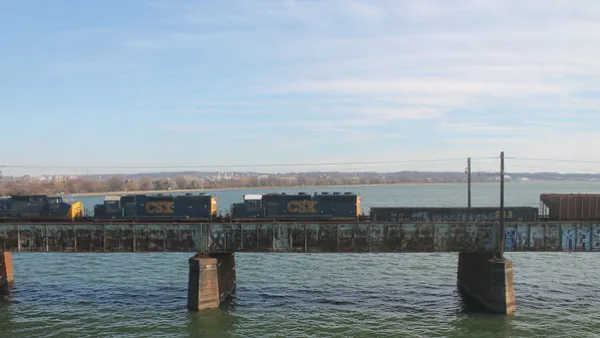
Key Virginia Rail Bridge Project Completes Environmental Review
A $1.9 billion project to add a second set of rail tracks to the Long Bridge that connects Virginia to D.C. is ready to move forward with a recently completed Environmental Impact Statement.
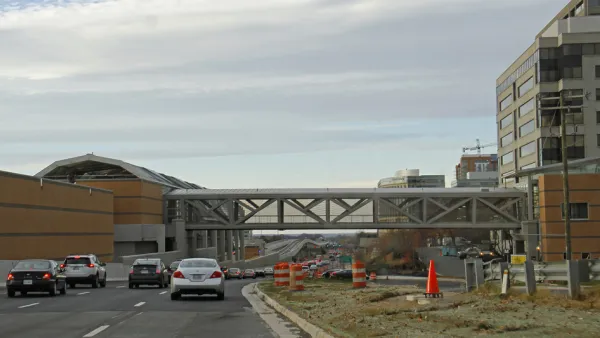
5 Transit Projects to Watch in the D.C. Region in 2020
Light rail, bus rapid transit, subway cell service, and more.

Planetizen Federal Action Tracker
A weekly monitor of how Trump’s orders and actions are impacting planners and planning in America.

‘Going backwards:’ Baltimore mayor, students rally against state's transit funding plan
Maryland's proposed six-year plan provides no funding for Baltimore’s BMORE bus program and reduces its road maintenance funding.

Detroit to transform waterfront with $2.2 billion investment
Developers will convert about 18 acres of unused parking lot space into civic spaces.

MTA invests $1.1 billion in ‘nearly-impossible’-to-evade fare gates
The new technology marks the Metropolitan Transit Authority's first turnstile redesign in decades.

HUD modernizes 50-year-old manufactured housing framework
The Next Generation Manufactured Housing Action Plan establishes new energy-efficiency standards for manufactured homes, and new guidelines for anchoring them.

New CA housing laws tear down development red tape
Recently-signed legislation makes building starter homes and ADUs cheaper and faster in California.

FREE Course: Walkable City 1: Why Walkability?
After describing his path towards focusing on walkability as the essence of good planning, Jeff Speck marches through his five principal reasons for making more walkable places.
Reinventing Malls: Planning Alchemy—Turning Gray Fields Into Gold
The course focuses on the opportunities and imperatives that shape reinvention of mall sites.

One Hundred Miles
County of Mendocino
planning NEXT
The Architects Foundation
University of Cincinnati Online
Montrose County
Northern Illinois Transit Authority (NITA)
The Pocatello Development Authority