A recent study of the Airbnb rental units in Seattle shows a growing supply of short-term rental units, which is also cutting into the city's available rental housing stock.


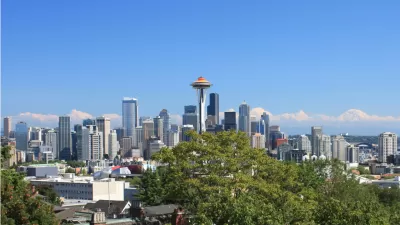
Gene Balk shares the details of a new study of the impacts of Airbnb on the housing market of Seattle. Howard Greenwich, a senior policy adviser at the housing-advocacy group Puget Sound Sage, and web developer Tom Slee scraped data from the Airbnb site to find the following results during the month of April:
…there were 2,817 listings for whole units, or entire houses or apartments (there were also 1,353 private or shared rooms in Seattle). Most of these are placed by folks renting out their own home to make some extra cash while they’re away. But 1,003 of these units — 36 percent — were listed by hosts who did not reside there.
The study also compared Airbnb rental units between September 2015 and April 2016, finding quick growth in short-term rentals around Downtown, Capitol Hill, and Fremont, among other neighborhoods. For the whole city, Airbnb grew by 665 units in that time, for a 31 percent increase.
Read the full story: Can’t find a home in Seattle? Airbnb rentals may be to blame
British Columbia Cracks Down on Short-Term Rentals
Provincial leaders say the new rules could open up as many as 19,000 units for long-term rental.
Will New York’s Strict Short-Term Rental Rules Work?
Some owners are reluctant to put short-term rental units back on the long-term rental market, but the number of permitted units has dropped dramatically.
A ‘Black Market’ for Short-Term Rentals Grows in NYC
While many owners are listing their rentals on other websites, others are moving them back to the long-term rental market.

Planetizen Federal Action Tracker
A weekly monitor of how Trump’s orders and actions are impacting planners and planning in America.

California plans to bury El Niño’s downpour
If the state plays its cards right, it may be able to store a billion acre-feet of El Niño’s water in aquifers.

Desperate measures: Advocates weigh draining Lake Powell to fill Colorado River
Draining the reservoir could reduce evaporation losses by a couple hundred thousand acre-feet.

Los Angeles just elected an urban planner as its mayor
Transportation analysts are optimistic that Raman will be more aggressive in addressing transit issues than Bass.

Mamdani’s pied-à-terre tax survives legal challenge
A panel of judges found that the plaintiffs failed to demonstrate injury as a result of New York City's implementation of the tax.

Eastern Nebraska is running out of electricity
Data centers and electrification are straining eastern Nebraska’s grid, throttling economic development.

FREE Course: Walkable City 1: Why Walkability?
After describing his path towards focusing on walkability as the essence of good planning, Jeff Speck marches through his five principal reasons for making more walkable places.
Reinventing Malls: Planning Alchemy—Turning Gray Fields Into Gold
The course focuses on the opportunities and imperatives that shape reinvention of mall sites.

City of Rosemead
Rutgers University, Edward J. Bloustein School of Planning and Public Policy
One Hundred Miles
University of Michigan School for Environment and Sustainability (SEAS)
Hunter College, City University of New York (CUNY)
The Architects Foundation
City of Cambridge
Montrose County
The Pocatello Development Authority