LADOT’s first artist-in-residence will engage the city’s many subcultures, and its lively art scene, in his effort to improve pedestrian safety.


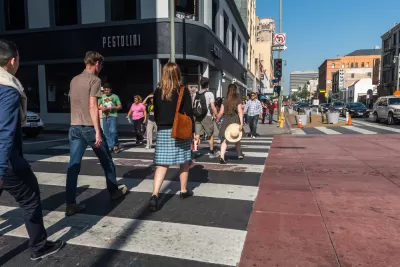
Los Angeles, the city ranked most dangerous for pedestrians, according to one analysis, has appointed an artist-in-residence to help meet its target of eliminating traffic deaths by the year 2025.
Alan Nakagawa, who worked in Los Angeles Metro’s public art department for more than 25 years, spoke to Gizmodo about his plans to use sound art and oral history to raise awareness about traffic safety and the need to "share the road."
Notably, Nakagawa will tailor his projects to reflect cultural and community differences across the city. He plans to work at the neighborhood level, prioritizing areas with more traffic deaths, to explore the "regional vernacular" of how people use streets:
For example, Central American communities might share bikes informally within their own neighborhoods, while others lock their bikes up inside. “We have our own cultural differences due to migrants in Southern California, which is another level of mobility to navigate,” he told Gizmodo.
Nakagawa also wants to convert part of the Caltrans headquarters—a state building known unflatteringly as the Death Star—into a public space and gallery that would participate in Downtown L.A.’s monthly art walks.
Since joining LADOT in 2014, general manager Seleta Reynolds has worked to infuse design, art, and tech into agency operations. She’s not alone: New York City’s DOT has also hired artists to highlight pedestrian safety, and Seattle recently partnered with a startup to create transit-themed public art on sidewalks.
FULL STORY: Los Angeles Is Hiring a Sound Artist to Help Make its Streets Safer

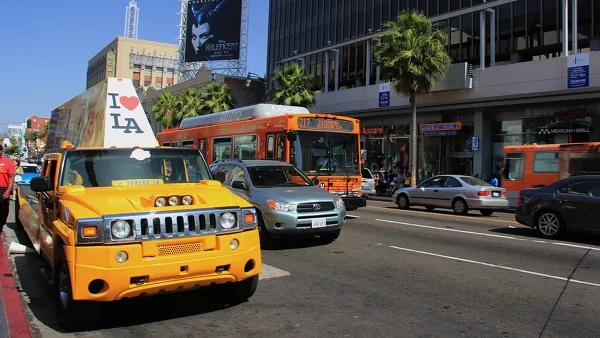
Mobility as a Symphony: Los Angeles Prepares for Transportation of the Future
LADOT is rehearsing now for the day it has to manage autonomous vehicles alongside delivery drones and air taxis.
An Interview with the General Manager of the Los Angeles DOT
What's it like to lead the department of transportation in a city trying to overcome decades of car-centric planning? Let LADOT General Manager Seleta Reynolds tell it in her own words.
Vision Zero Hero: L.A. to Hire an Artist for Traffic Safety Work
Applications are due on November 6 for a novel position in the world of traffic safety: artist in residence at the Los Angeles Department of Transportation.

Planetizen Federal Action Tracker
A weekly monitor of how Trump’s orders and actions are impacting planners and planning in America.

The state-sanctioned urbicide of Austin
People don’t kill cities. Freeways do.

US to reduce Colorado River water deliveries to Mexico
A new Colorado Treaty amendment reduces Mexico’s Colorado River water allocation by 250,000 acre feet.

Mamdani overhauls NYC's Vision Zero plan with 100 new policy goals
The overhaul aims to reduce traffic deaths and make streets safer for pedestrians, cyclists and drivers through lower speed limits, new safety infrastructure and more.

Amtrak not solely to blame for New Jersey commuter rail's unreliability, report finds
A new study from the Garden State Initiative found that NJ Transit’s budget grew 20% across a 4 year period, but reliability declined significantly over the same period.

EPA erases limits on planet-warming pollution from power plants
Under Monday’s plan, power plants would still have some limits on how much mercury, arsenic and other contaminants they can emit.

FREE Course: Walkable City 1: Why Walkability?
After describing his path towards focusing on walkability as the essence of good planning, Jeff Speck marches through his five principal reasons for making more walkable places.
Reinventing Malls: Planning Alchemy—Turning Gray Fields Into Gold
The course focuses on the opportunities and imperatives that shape reinvention of mall sites.

Eagle County Government
Harvard University Graduate School of Design
Nashville Planning Department
The Architects Foundation
University of Cincinnati Online
The Pocatello Development Authority
The Urban Renewal Agency of the City of Pocatello
Journal of the American Planning Association