Expanding on the complete streets policies that have come before it, the new Minneapolis complete streets policy prioritizes users: first pedestrians, then bikes, then transit, and, finally, cars.


"Minneapolis, a city known for its bike lanes, now officially has a 'complete streets' policy saying that walkers, cyclists and drivers should be considered in street design," reports Steve Brandt.
According to Brandt, the Minneapolis goes a step further than predecessor cities in approving a complete streets policy, by "giving priority to pedestrians, followed by cyclists and transit riders and, finally, drivers." Concerned drivers are assured that all modes must still have "acceptable service levels."
As for how the new policy will be applied in practice, Brandt explains that "[t]he policy will apply to all city transportation projects and guide capital spending. It also will be used in review of private development for factors such as how it affects sidewalks and greening of the right of way."
FULL STORY: Minneapolis adopts 'complete streets' policy

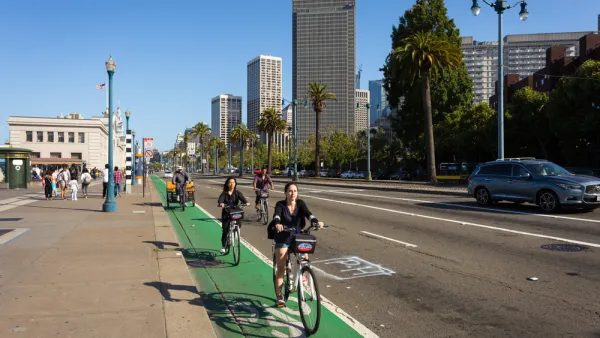
Caltrans Issues New Complete Streets Policy
A policy released by the California Department of Transportation in December will require Complete Streets elements in all state road projects.
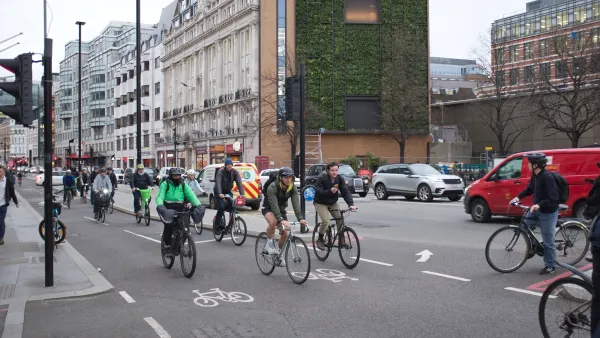
Study: Induced Demand Works for Bikes and Transit, too
If you build it — bike infrastructure, bus lanes, and sidewalks, that is — they will come.
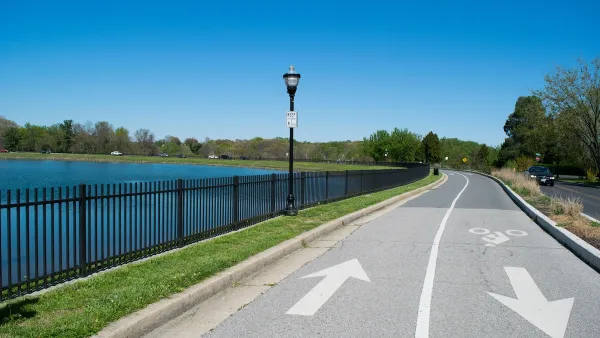
Maryland Budget Cuts Funding for Complete Streets
The future of the state’s ambitious bike, pedestrian, and transit plans could be in jeopardy, with reduced funding from both state and federal sources.

Planetizen Federal Action Tracker
A weekly monitor of how Trump’s orders and actions are impacting planners and planning in America.

The state-sanctioned urbicide of Austin
People don’t kill cities. Freeways do.

US to reduce Colorado River water deliveries to Mexico
A new Colorado Treaty amendment reduces Mexico’s Colorado River water allocation by 250,000 acre feet.

5 New England states march closer to 800 megawatt wind energy project
Securing federal approval for the project may be complicated under the Trump administration, which has historically been hostile towards domestic wind power.

Baltimore to break ground on $50 million Transit Priority Project
The project will bring faster bus trips, safer streets and better bike connections to Baltimore.

Airbnb launches $250 million 'last-dollar financing' housing accelerator, makes first investment in Austin
The company will put $6.4 million towards affordable housing development in Texas’ capital.

FREE Course: Walkable City 1: Why Walkability?
After describing his path towards focusing on walkability as the essence of good planning, Jeff Speck marches through his five principal reasons for making more walkable places.
Reinventing Malls: Planning Alchemy—Turning Gray Fields Into Gold
The course focuses on the opportunities and imperatives that shape reinvention of mall sites.

Eagle County Government
Harvard University Graduate School of Design
Nashville Planning Department
The Architects Foundation
University of Cincinnati Online
The Pocatello Development Authority
The Urban Renewal Agency of the City of Pocatello
Journal of the American Planning Association